
What Homeowners Should Know: Mold Removal in Viera During Rainy Season
Rainy season in Viera doesn’t ease in quietly. Storms build fast, rain falls hard, and humidity lingers long after the skies clear. For homeowners, that combination creates one of the most common triggers for mold growth.
A minor roof leak. A clogged AC drain line. Water intrusion around a window frame. In Florida’s climate, moisture doesn’t need much time to turn into a mold issue.
If you live in Viera or nearby communities like Rockledge, Melbourne, or Merritt Island, understanding how mold removal works during rainy season — and what to watch for — can prevent small problems from becoming larger remediation projects.
Why Rainy Season Increases Mold Risk in Viera
Viera homes are typically newer construction, but that doesn’t eliminate moisture vulnerability.
Rainy season brings:
- Heavy afternoon thunderstorms
- Wind-driven rain intrusion
- Elevated outdoor humidity
- Continuous AC operation
When water enters a home during this period, drying is slower. Humid air prevents evaporation, allowing moisture to linger inside drywall, insulation, and framing.
Even a small leak can create conditions where mold develops within 24–48 hours.
Homes near Stadium Parkway and Murrell Road often experience attic moisture buildup after repeated storm systems.
Early Signs You Should Not Ignore
Mold growth usually begins out of sight.
Watch for these early warning signs during rainy season:
- Persistent musty odors
- Ceiling stains after storms
- Peeling paint or bubbling drywall
- Warped baseboards
- Condensation buildup near windows
- Increased indoor humidity
In Viera homes, attic moisture is especially common after heavy rainfall. Many homeowners don’t notice attic dampness until stains appear on ceilings below.
Addressing these signs early prevents larger remediation efforts.
Where Mold Commonly Develops During Rainy Months
In Viera residential homes, we frequently find mold growth in:
- Attic insulation after roof leaks
- Around HVAC air handlers
- Behind bathroom walls
- Under carpet padding
- Near window framing
Because many Viera homes are slab-on-grade, moisture can also migrate beneath flooring after prolonged rain.
Hidden areas are often the most affected.
Why DIY Mold Cleanup Rarely Works
During rainy season, wiping away visible mold does not solve the underlying issue.
Store-bought cleaners may lighten staining, but they do not:
- Remove mold inside porous materials
- Eliminate trapped moisture
- Address hidden growth
- Prevent recurrence
Mold removal must begin with moisture correction.
In Viera and nearby Palm Bay, we often inspect homes where surface cleaning was attempted but mold returned because damp materials were never fully dried.
The Mold Removal Process During Rainy Season
Professional mold removal follows a structured process designed to control moisture and prevent spread.
Step 1: Moisture Detection
Before removal begins, identifying the source of moisture is critical.
This may include checking:
- Roof systems
- Attic insulation
- HVAC drain lines
- Window seals
- Wall cavities
Without resolving the moisture source, mold will return.
Step 2: Containment
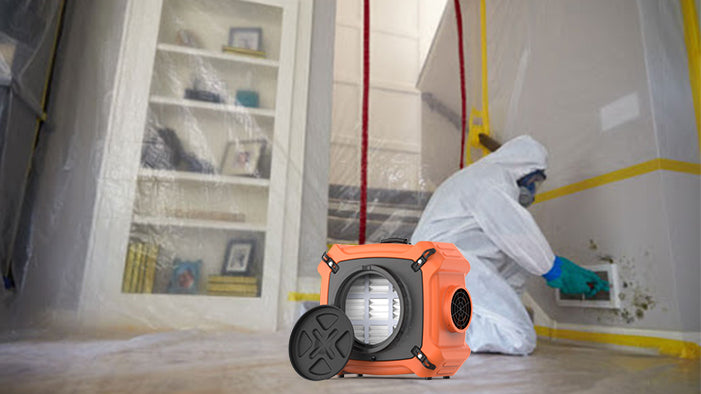
Affected areas are isolated to prevent spores from spreading to clean parts of the home.
Negative air pressure may be established to control airflow.
Step 3: Air Filtration
HEPA air scrubbers capture airborne spores during remediation.
Rainy season humidity can increase airborne spore activity, making filtration especially important.
Step 4: Removal of Contaminated Materials
If drywall, insulation, or carpet padding is heavily affected, those materials may need controlled removal.
Only damaged sections are addressed.
Step 5: Cleaning and Treatment
Remaining surfaces are cleaned and treated using professional antimicrobial solutions.
Step 6: Controlled Drying
Commercial dehumidifiers and air movers dry structural materials completely.
Drying is monitored until safe moisture levels are reached.
HVAC Systems and Rainy Season Mold
Air conditioning systems operate heavily during Viera’s rainy months.
Common moisture issues include:
- Clogged condensate drain lines
- Wet duct insulation
- Overflowing drain pans
- Excess indoor humidity
If mold develops near the air handler, spores can circulate throughout the home.
Air duct cleaning and HVAC evaluation may be necessary as part of mold removal.
Maintaining AC systems is a key preventative measure.
Attic Mold After Storms
Attics are especially vulnerable during rainy season.
Repeated storms can lead to:
- Wet insulation
- Damp wood framing
- Poor ventilation
- Trapped humid air
In Rockledge and West Melbourne homes similar in construction to Viera properties, attic mold is often discovered months after a storm-related roof issue.
Post-storm attic inspections reduce risk significantly.
Preventing Mold During Rainy Season
Homeowners in Viera can reduce mold risk by:
- Inspecting roofs before and after storm season
- Cleaning gutters regularly
- Checking attic insulation after heavy rain
- Flushing AC drain lines twice per year
- Keeping indoor humidity below 55%
- Sealing window frames properly
Even small maintenance tasks make a measurable difference during peak rainy months.
Why Local Experience Matters
Mold removal in Viera requires understanding:
- Brevard County storm intensity
- Coastal humidity retention
- Slab-on-grade construction
- Florida attic ventilation patterns
Homes in Viera behave differently than homes in dry regions.
Palm Bay Mold Removal regularly assists homeowners across Viera, Melbourne, Rockledge, Merritt Island, Titusville, and Palm Bay during rainy season mold events.
Local familiarity allows faster identification of common leak and moisture patterns.
A Practical Next Step
If your Viera home has experienced water intrusion during rainy season — or you notice subtle changes like odor or ceiling staining — early evaluation is the safest choice.
Mold removal works best when moisture is identified and corrected quickly.
In Florida’s humid climate, waiting rarely improves the situation.
Prompt inspection, proper containment, and controlled drying keep rainy season mold from becoming a larger structural issue.