West Melbourne Water Damage Restoration After Plumbing Leaks: Warning Signs and Prevention
Plumbing leaks are one of the most common causes of water damage in West Melbourne homes. Sometimes it’s obvious—a burst pipe under a sink or a washing machine hose that suddenly fails. But more often, the problem starts small: a slow drip behind a wall, a loose fitting, or a supply line that leaks just enough to keep materials damp.
The challenge is that water damage from plumbing leaks doesn’t always show up right away. Moisture can spread quietly into drywall, flooring, and insulation, and by the time stains or odors appear, the damage may already be significant.
Understanding the warning signs and how restoration works can help homeowners in West Melbourne, Palm Bay, and nearby communities like Melbourne and Rockledge protect their homes and prevent long-term problems.
What Water Damage from Plumbing Leaks Really Is
When a plumbing leak occurs, water rarely stays in one place. It travels through materials and follows gravity, often spreading farther than expected.
Water from plumbing leaks can affect:
- Drywall and wall cavities
- Cabinets and baseboards
- Subflooring beneath tile or carpet
- Insulation inside walls
- Adjacent rooms through flooring or framing
Because many plumbing lines run behind walls or under floors, damage may remain hidden for days or even weeks.
That’s why water damage restoration focuses not only on visible wet areas but also on moisture that can’t be seen.
Why Plumbing Leaks Cause Serious Problems in West Melbourne
Florida’s climate makes water damage more complicated than in cooler regions.
Homes in West Melbourne face conditions that slow drying and increase the risk of mold:
- High humidity year-round
- Warm temperatures that accelerate mold growth
- Air conditioning systems that can spread humid air
- Frequent rain and storms that increase overall moisture levels
Even a small leak can keep building materials damp long enough for damage to develop.
Homes in nearby Merritt Island and Satellite Beach often experience similar conditions, especially during summer when humidity remains high.
Warning Signs Homeowners Should Never Ignore
Plumbing leaks often leave clues before major damage appears. Recognizing these signs early can prevent expensive repairs.
Common warning signs include:
- Musty or damp odors near kitchens or bathrooms
- Warped or swollen cabinets
- Bubbling or peeling paint
- Discoloration on walls or ceilings
- Soft spots in flooring
Another sign many homeowners notice is higher humidity in one part of the home, especially near plumbing fixtures.
If any of these symptoms appear, moisture detection can help determine whether water damage is present behind surfaces.
Hidden Damage That Often Goes Unnoticed
One of the biggest risks with plumbing leaks is moisture that spreads into areas homeowners rarely check.
Water can travel into:
- Wall cavities
- Subflooring
- Closet corners
- Adjacent rooms
- HVAC closets or ductwork
In West Melbourne homes, water often migrates along framing or beneath flooring, making the affected area larger than expected.
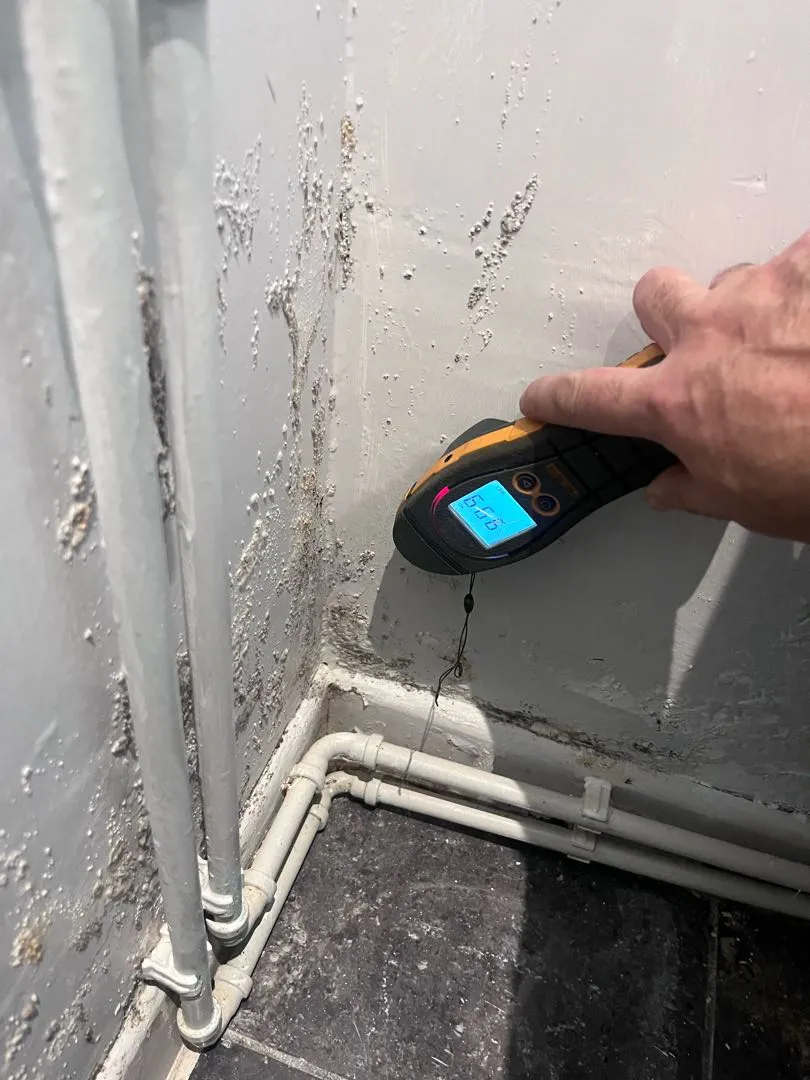
Moisture detection during inspection helps identify these hidden areas so drying can be completed properly.
Why DIY Drying Often Falls Short
When a leak is discovered, many homeowners try to dry the area using fans or towels. While this helps with surface moisture, deeper materials often remain damp.
DIY drying limitations include:
- Limited airflow into walls or flooring
- Humid air slowing evaporation
- Moisture trapped in insulation or wood
- Incomplete drying leading to odors or mold
Professional restoration uses controlled airflow and dehumidification to remove moisture from structural materials, not just surfaces.
This step is critical to preventing long-term damage.
The Water Damage Restoration Process Step by Step
Proper restoration follows a structured process designed to remove moisture completely.
Step 1: Inspection and Moisture Detection
Technicians evaluate affected areas and use moisture meters to determine how far water has spread.
This helps identify hidden damage.
Step 2: Water Extraction
Standing water is removed using specialized equipment. Early extraction reduces the amount absorbed by building materials.
Step 3: Structural Drying
Air movers and dehumidifiers are placed strategically to remove moisture from:
- Drywall
- Wood framing
- Subfloors
- Insulation
Drying continues until moisture readings return to normal levels.
Step 4: Cleaning and Sanitizing
Surfaces are cleaned to remove residues and prevent odors.
This step helps restore indoor air quality.
Step 5: Repairs and Restoration
Damaged materials may be repaired or replaced to restore the home to its original condition.
This ensures the structure remains safe and stable.
Mold Risks After Plumbing Leaks
Mold growth is one of the most common consequences of untreated water damage.
Mold can begin developing within 24 to 48 hours in warm, humid environments like West Melbourne.
Areas most at risk include:
- Carpet padding
- Baseboards
- Wall cavities
- Ceiling corners
Mold inspection and testing may be recommended if odors persist or moisture readings remain elevated after drying.
Preventing mold is one of the main reasons thorough drying is so important.
HVAC Systems and Plumbing-Related Moisture
Water damage can also affect ventilation systems.
Moisture may reach:
- Air handler compartments
- Duct insulation
- Return air cavities
If musty odors appear when the AC runs, duct inspection may be recommended.
Homes in Palm Bay and Rockledge often experience similar issues, especially when leaks occur near utility rooms or air handlers.
Maintaining dry duct systems helps protect indoor air quality.
Prevention: How Homeowners Can Reduce the Risk
Preventing plumbing-related water damage often comes down to routine maintenance and early detection.
Helpful steps include:
- Inspecting under sinks regularly
- Replacing aging supply lines
- Checking washing machine hoses annually
- Monitoring water heaters and shutoff valves
- Addressing small leaks immediately
Installing water leak detection devices can also help alert homeowners before damage spreads.
Quick action is the most effective way to reduce repair costs.
Why Local Experience Matters
Water damage behaves differently in Florida than in many other parts of the country. Homes in West Melbourne and surrounding Brevard County communities face:
- Long humid drying periods
- Frequent storms and heavy rainfall
- Continuous AC usage
- Coastal moisture conditions
Professionals familiar with local conditions understand how moisture behaves in local building materials and how to dry structures effectively.
Palm Bay Mold Removal has assisted homeowners throughout West Melbourne, Melbourne, Palm Bay, and Merritt Island, helping identify leaks early and restore homes before moisture leads to larger structural or mold problems.
A Practical Next Step for Homeowners
Plumbing leaks may seem minor at first, but they can cause significant damage if moisture isn’t removed properly. If you notice stains, odors, or dampness near plumbing areas, having the situation inspected early can prevent larger repairs later.
Water damage restoration isn’t just about drying—it’s about protecting the structure of your home and maintaining healthy indoor air quality.
Taking action quickly is one of the simplest ways to keep a small leak from turning into a major problem.