West Melbourne Air Duct Cleaning After Roof Leaks: Inspection and Repair Guide
Roof leaks in West Melbourne can cause more than just visible water damage—they often compromise indoor air quality and create ideal conditions for mold growth in air ducts. When water enters a home through damaged roofing or flashings, it can saturate attics, ceilings, and ductwork, allowing mold and bacteria to proliferate. For homeowners and property managers, understanding air duct cleaning after roof leaks is essential to prevent health risks, maintain HVAC efficiency, and protect the property.
Building on insights from Palm Bay mold inspection services after water damage, this guide provides a detailed walkthrough of air duct cleaning in West Melbourne following roof leaks. It covers causes, warning signs, inspection methods, cleaning and repair processes, preventive measures, and cost considerations.
Understanding Air Duct Contamination After Roof Leaks
Water intrusion from roof leaks can compromise duct systems in several ways:
- Moisture accumulation: Water can drip into ductwork, saturating insulation and interior surfaces.
- Mold growth: Damp ducts provide a perfect environment for mold spores to colonize.
- Airborne contaminants: HVAC systems can circulate mold spores, dust, and allergens throughout the home.
- Structural damage: Prolonged exposure to water may degrade metal ductwork or duct insulation.
Even minor roof leaks that go unnoticed can result in hidden contamination, making professional inspection and cleaning critical.
Common Causes of Air Duct Contamination
Several factors contribute to duct contamination following roof leaks:
- Storm damage: High winds, heavy rainfall, or hurricanes can compromise roof integrity and allow water into ducts in attics or ceiling spaces.
- Aging roofs and flashings: Worn shingles or deteriorated sealants allow moisture penetration.
- Clogged gutters or downspouts: Water overflow can seep under roof edges and enter duct openings.
- AC condensation issues: Water dripping from condensate lines can enter ducts if improperly sealed or maintained.
- Poor ventilation: Attics and crawl spaces with limited airflow retain moisture, promoting microbial growth.
Recognizing these causes helps homeowners proactively protect duct systems after roof leaks.
Early Warning Signs of Contaminated Ducts
Homeowners should monitor for the following indicators:
- Musty or moldy odors circulating through the HVAC system
- Visible water stains or mold near duct openings, vents, or registers
- Reduced HVAC efficiency or inconsistent airflow
- Dust or debris buildup on vent covers
- Respiratory irritation, sneezing, or allergy flare-ups
- Moisture or condensation in attic ductwork
Prompt identification reduces the risk of widespread contamination and costly repairs.
Step 1: Professional Inspection
A comprehensive inspection is essential to assess the extent of duct contamination and water damage:
Visual Assessment
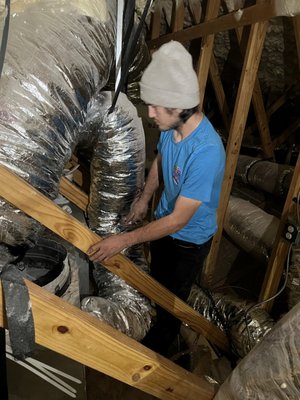
Inspectors check attic ductwork, ceiling vents, and registers for signs of water intrusion, mold growth, or damage.
Moisture Detection
Moisture meters and infrared cameras identify hidden water in duct insulation, ceilings, and surrounding structures.
Air Quality Testing
Air samples reveal the presence of mold spores and other airborne contaminants circulating through the system.
Documentation
Inspection reports provide homeowners with details of affected areas, contamination levels, and recommended cleaning and repair strategies.
Professional inspection ensures no hidden water or microbial growth is overlooked.
Step 2: Containment and Safety Measures
To prevent contamination during duct cleaning:
- Seal off affected areas with plastic sheeting
- Turn off HVAC systems to avoid spreading spores
- Technicians wear protective clothing, masks, and gloves
- Furniture and personal belongings in affected zones are protected
Proper containment minimizes cross-contamination and ensures safe cleaning operations.
Step 3: Air Duct Cleaning Process
Effective duct cleaning involves several key steps:
Debris Removal
- Brushes and vacuums remove dust, dirt, and loose mold from duct surfaces.
- Specialized high-powered vacuums prevent spores from dispersing into the home.
Surface Sanitization
- EPA-approved antimicrobial solutions are applied to kill mold and inhibit regrowth.
- Duct interior surfaces, registers, and HVAC components are treated for thorough sanitization.
Drying and Dehumidification
- Industrial air movers and dehumidifiers remove residual moisture from ducts and surrounding attic spaces.
- Continuous monitoring ensures ducts are fully dry, preventing further mold growth.
Professional cleaning restores indoor air quality, improves HVAC efficiency, and safeguards residents’ health.
Step 4: Repairs and Restoration
After cleaning, repairs address any structural or water-related damage:
- Replace or repair damaged duct insulation or metal components
- Seal duct joints to prevent future leaks
- Repair ceiling or attic areas affected by roof leaks
- Reinstall vent covers and ensure unobstructed airflow
Complete restoration ensures ductwork and HVAC systems function optimally while preventing future contamination.
Hidden Areas Often Overlooked
Water intrusion can affect hidden duct system components:
- Attic plenums and main trunk lines
- Ceiling and wall cavities connected to vents
- Flexible duct insulation and joints
- Registers in crawl spaces or elevated ceilings
Advanced tools such as infrared cameras, moisture meters, and microbial testing equipment help detect these hidden issues.
Health Implications of Contaminated Ducts
Mold and water-contaminated ducts can negatively affect indoor air quality:
- Allergic reactions including sneezing, coughing, and eye irritation
- Asthma flare-ups or respiratory discomfort
- Musty odors reducing comfort and quality of living spaces
- Long-term exposure increasing susceptibility to respiratory infections
Professional inspection and duct cleaning protect residents and maintain a healthy indoor environment.
Costs of Air Duct Cleaning After Roof Leaks
Costs vary depending on home size, duct length, and severity of contamination:
- Standard duct cleaning: $300–$600
- Duct cleaning with mold remediation: $1,000–$3,000
- Extensive cleaning and repair with structural restoration: $5,000+
Early intervention minimizes long-term costs and prevents further water damage or microbial growth.
Preventive Measures for Homeowners
To reduce the risk of duct contamination after roof leaks:
- Inspect roofs regularly for damaged shingles, flashing, or seals
- Keep gutters and downspouts clear to prevent water overflow
- Maintain HVAC systems and clean condensate lines
- Use dehumidifiers in attics, crawl spaces, and high-humidity areas
- Schedule routine air duct inspections and cleaning
- Repair leaks promptly to prevent hidden water intrusion
- Ensure proper attic ventilation to reduce moisture accumulation
Preventive measures protect indoor air quality and maintain HVAC system efficiency.
Why Local Expertise Matters
West Melbourne’s humid climate, frequent storms, and coastal weather patterns require local expertise:
- Professionals understand common water intrusion points and construction vulnerabilities
- Local technicians detect hidden mold and water damage efficiently
- Preventive strategies are tailored to Florida’s environmental conditions
- Timely, professional intervention ensures effective cleaning and long-term protection
Local companies like Palm Bay Mold Removal provide expert inspection, cleaning, and restoration services to safeguard West Melbourne homes.
Practical Steps for Homeowners
- Inspect roof and attic for leaks, water stains, or condensation.
- Schedule professional air duct inspection if contamination is suspected.
- Contain affected areas during cleaning to prevent spore spread.
- Clean ducts thoroughly, including registers, plenums, and HVAC components.
- Dry ducts and surrounding areas completely using industrial air movers and dehumidifiers.
- Repair structural damage and ductwork affected by water.
- Implement preventive maintenance: roof inspections, gutter cleaning, AC maintenance, and regular duct cleaning.
- Monitor indoor air quality to prevent future issues.
Following these steps ensures safe, healthy, and efficient HVAC systems while protecting indoor air quality.
Final Thoughts
Air duct cleaning after roof leaks is essential for West Melbourne homeowners to prevent mold growth, maintain indoor air quality, and protect structural integrity. Professional inspection, cleaning, drying, and preventive measures address both visible and hidden contamination effectively.
Building on lessons from Palm Bay mold inspection after water damage, West Melbourne property owners can appreciate the importance of early detection, local expertise, and proactive maintenance. Investing in professional air duct cleaning and preventive strategies ensures long-term comfort, safety, and property value.