
Water Damage Restoration Services in Satellite Beach After Roof Leaks: How to Prevent Future Damage
In Satellite Beach, roof leaks are not unusual. Between strong coastal winds, heavy seasonal rain, salt air exposure, and hurricane activity, roofing systems take constant stress. Sometimes the damage is obvious after a storm. Other times, water seeps in slowly through flashing gaps or worn shingles, and homeowners don’t notice until a stain appears on the ceiling.
By the time interior signs show up, moisture may have already traveled through attic insulation, drywall, and framing. In Florida’s humid climate, that trapped moisture doesn’t dry quickly on its own. Without proper restoration, it can lead to structural deterioration and mold development.
Water damage restoration after roof leaks is not just about drying visible areas. It’s about identifying hidden moisture, stabilizing humidity, and preventing the problem from returning.
Here’s what Satellite Beach homeowners should understand about the restoration process — and how to protect their homes long-term.
Why Roof Leaks Are So Common in Satellite Beach
Satellite Beach sits directly along the Atlantic coast. Coastal homes deal with:
Wind-driven rain
Salt air corrosion
Frequent storms
High year-round humidity
Intense sun exposure
Salt air gradually weakens flashing and fasteners. High winds can lift shingles just enough to allow rain intrusion without obvious exterior damage.
Homes in nearby Indian Harbour Beach and Cocoa Beach face similar coastal conditions, but roof age and ventilation design play a major role in how moisture spreads once it enters.
Even small leaks can cause widespread interior damage if not addressed quickly.
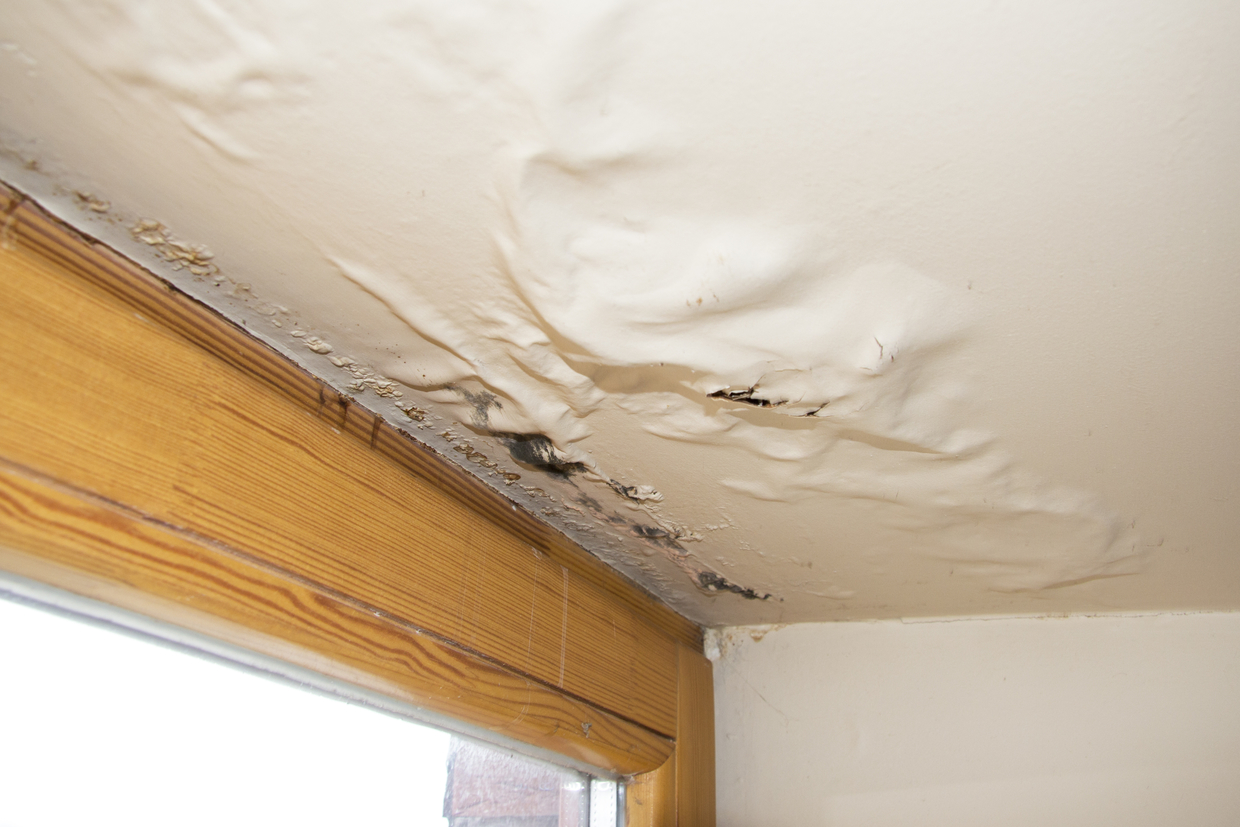
Early Signs of Roof Leak Water Damage
Homeowners should look for:
Ceiling stains that expand over time
Peeling paint near roof lines
Soft drywall
Musty odors in upper rooms
Damp attic insulation
Dark streaking on roof decking
Sometimes stains appear far from the actual entry point because water travels along framing before becoming visible.
Ignoring minor discoloration often leads to larger restoration projects.
Step-by-Step Water Damage Restoration Process
Step 1: Confirm Roof Repair Is Complete
Before restoration begins, the roof leak must be fully repaired.
This may involve:
Replacing damaged shingles
Repairing flashing
Sealing roof penetrations
Clearing clogged gutters
Improving roof drainage
Drying efforts will not be effective if water continues entering the home.
Palm Bay Mold Removal often verifies that the roofing system is stable before beginning interior restoration work in Satellite Beach homes.
Step 2: Moisture Detection and Mapping
Water rarely stays confined to one location.
Moisture meters measure dampness in:
Drywall
Ceiling cavities
Framing
Subfloors
Attic insulation
Thermal imaging may be used to detect hidden moisture pathways.
Mapping defines wet and dry boundaries.
Surface dryness does not confirm structural dryness.
Step 3: Water Extraction
If standing water is present, professional extraction removes it quickly.
High-powered equipment removes more moisture than household tools.
Rapid removal reduces saturation depth and limits material damage.
Step 4: Removal of Saturated Materials
Porous materials such as:
Insulation
Drywall
Carpet padding
may need selective removal if they cannot dry effectively.
Leaving saturated insulation in an attic often leads to recurring moisture problems.
Targeted removal limits repair costs.
Step 5: Controlled Drying and Dehumidification
Drying requires:
Commercial dehumidifiers
High-velocity air movers
Humidity monitoring
Airflow balancing
Satellite Beach’s coastal humidity slows natural evaporation.
Indoor humidity should remain below 60 percent during drying.
Verification readings confirm when materials are stable.
Rebuilding should not begin until moisture levels normalize.
Preventing Mold After Roof Leaks
Florida’s warm climate creates ideal conditions for mold if materials remain damp beyond 24 to 48 hours.
Restoration professionals evaluate:
Attic insulation condition
Roof decking moisture
HVAC duct insulation
Ceiling cavity humidity
If contamination is suspected, further inspection may be recommended.
Early drying significantly reduces mold risk.
HVAC and Ventilation Considerations
Roof leaks often affect attic duct systems.
Inspection may include:
Checking duct insulation
Inspecting condensate drain lines
Replacing air filters
Balancing airflow
Poor ventilation traps moisture inside attic spaces.
Improving attic airflow reduces recurrence risk.
Slab and Interior Moisture Migration
In some cases, roof leak moisture travels downward into lower wall sections.
Slab foundations may absorb some moisture depending on duration.
Professional moisture detection confirms whether subfloors or lower walls are affected.
Controlled drying prevents long-term structural damage.
Long-Term Prevention Strategies
Satellite Beach homeowners can reduce future roof-leak damage by:
Scheduling annual roof inspections
Checking attic insulation after major storms
Monitoring indoor humidity
Cleaning gutters regularly
Ensuring proper attic ventilation
Addressing minor ceiling stains immediately
Maintaining indoor humidity below 60 percent helps reduce condensation-related damage.
Routine maintenance is significantly less expensive than full restoration.
Why Local Experience Matters
Satellite Beach homes face unique environmental pressure. Salt air accelerates material wear. Coastal storms stress roofing systems. High humidity slows drying.
Professionals familiar with Brevard County construction understand flat and pitched roof designs common in Satellite Beach neighborhoods.
Palm Bay Mold Removal has worked extensively throughout Satellite Beach and surrounding communities, addressing roof-leak-related water damage specific to Florida’s coastal climate.
Protecting Your Coastal Home
Water damage restoration services in Satellite Beach after roof leaks require more than surface repairs. They involve moisture mapping, controlled drying, structural evaluation, and long-term prevention planning.
Ignoring early warning signs such as expanding stains or musty odors increases overall repair costs.
By combining prompt roof repair, professional moisture detection, targeted drying, and preventative maintenance, homeowners can protect their properties effectively.
In Florida’s humid coastal environment, early response and proactive inspection remain the most reliable ways to prevent future roof-leak damage.