
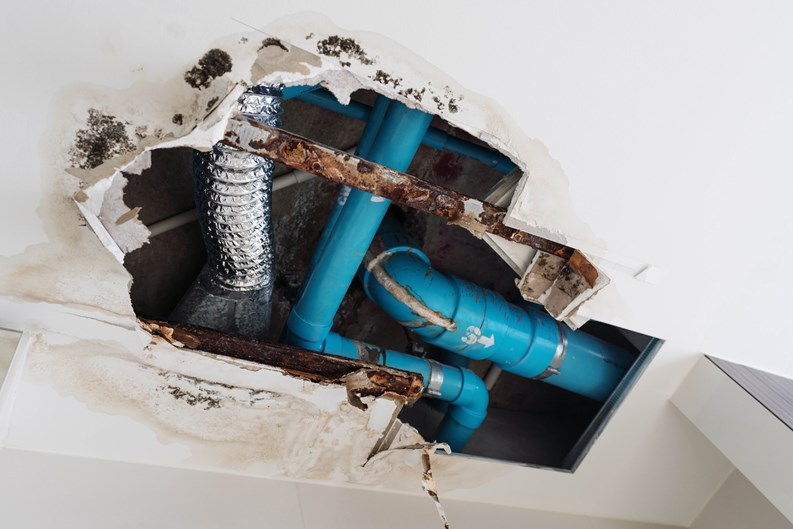
Warning Signs and Prevention: Flood Restoration in Viera After Plumbing Leaks
Plumbing leaks in Viera rarely start as dramatic pipe bursts. Most begin quietly — a slow drip behind a wall, a supply line crack under a sink, a washing machine hose failure in the garage. By the time water shows up on the floor, it’s usually been traveling for a while.
In Brevard County, especially in communities like Viera, Rockledge, Melbourne, and Palm Bay, plumbing-related flooding is one of the most common reasons homeowners need restoration work. And because Florida humidity slows natural drying, even a “small” leak can turn into a structural moisture problem quickly.
Let’s walk through the real warning signs, what flood restoration involves after a plumbing leak, and how to prevent it from happening again.
Why Plumbing Leaks Cause Bigger Problems in Florida
Water damage in dry climates behaves differently. In Viera, once materials get wet, they stay wet longer.
Here’s why:
- High humidity slows evaporation
- AC systems create condensation cycles
- Slab foundations trap moisture at the base of walls
- Closed homes don’t ventilate naturally
- Warm temperatures accelerate microbial growth
That means a leak under a kitchen sink on Monday can turn into swollen cabinets and wall damage by the weekend.
Common Plumbing Leaks That Lead to Flood Restoration
In Viera and surrounding areas like Merritt Island and Satellite Beach, these are the most common plumbing-related flood sources:
1. Supply Line Failures
Small braided lines under sinks or behind toilets rupture or loosen.
2. Water Heater Leaks
Garages often house water heaters. A slow tank leak can soak drywall and framing before it’s noticed.
3. Washing Machine Hose Failures
Laundry rooms are high-risk zones. Hoses split, connections loosen, and water spreads quickly.
4. Refrigerator Ice Maker Lines
Tiny leaks behind the fridge can damage kitchen flooring and cabinetry.
5. Slab Leaks
More complex, but common in Florida homes. Water seeps up through flooring with no obvious pipe visible.
Early Warning Signs Homeowners Should Never Ignore
Most plumbing-related flood jobs give warning signals before major damage occurs.
Watch for:
- Warped or soft flooring
- Bubbling or peeling paint
- Swollen baseboards
- Musty odor in one room
- Higher-than-normal water bills
- AC running more frequently due to humidity increase
- Cabinet bottoms sagging or discoloring
If a room feels humid but the thermostat is normal, moisture may be trapped in the structure.
Hidden Areas Where Water Travels
One of the biggest misconceptions is that water stays where you see it. It doesn’t.
After plumbing leaks, water commonly spreads:
- Behind drywall cavities
- Under vinyl plank and laminate flooring
- Into carpet padding
- Along slab edges
- Into adjoining rooms through wall framing
- Into air return pathways
In Viera homes with open floor plans, water can move surprisingly far before surfacing.
Step-by-Step Flood Restoration After a Plumbing Leak
Proper flood restoration isn’t just drying the surface and repainting. It follows a structured process.
Step 1: Stop the Leak
The plumbing issue must be repaired first. Without that, restoration is temporary.
Step 2: Moisture Detection and Mapping
Moisture meters and thermal imaging are used to locate wet materials beyond what’s visible.
Step 3: Containment (If Needed)
If areas are significantly saturated, containment prevents contamination from spreading during drying or removal.
Step 4: Water Extraction
Standing water is removed using professional extraction equipment.
Step 5: Removal of Unsalvageable Materials
Common removals include:
- Wet drywall sections
- Baseboards
- Saturated insulation
- Carpet padding
- Swollen cabinet bases
Selective removal prevents long-term structural damage.
Step 6: Structural Drying
Commercial-grade dehumidifiers and air movers are placed strategically to reduce moisture inside materials, not just the air.
Step 7: Monitoring and Verification
Moisture readings are taken daily to confirm drying progress.
Step 8: Cleaning and Odor Control
Affected surfaces are cleaned once dry to eliminate residual contamination.
Step 9: Repairs and Reconstruction
Drywall, trim, flooring, and paint are restored only after moisture levels return to safe standards.
Skipping steps often leads to recurring odor and secondary mold growth.
When Mold Becomes a Concern
In Florida, mold can begin developing within 24–48 hours under the right conditions. If a plumbing leak went unnoticed for days, mold inspection may be appropriate.
Typical risk areas include:
- Behind cabinets
- Inside wall cavities
- Around HVAC returns
- Inside closet corners
Palm Bay Mold Removal frequently handles these situations across Viera, Titusville, Cocoa Beach, and Melbourne — especially when leaks were slow and hidden.
The Role of HVAC Systems After Plumbing Flooding
HVAC systems can unintentionally spread moisture.
If the AC runs during a leak:
- Damp air circulates through ductwork
- Return chases can pull moisture from wall cavities
- Condensation increases
Sometimes duct inspection or cleaning is recommended if musty odors persist after drying.
Prevention Strategies for Viera Homeowners
Plumbing leaks can’t always be predicted, but risk can be reduced.
Practical Prevention Tips:
- Replace washing machine hoses every 3–5 years
- Inspect supply lines under sinks annually
- Install water leak detection alarms in high-risk areas
- Check water heater connections regularly
- Monitor water bills for unexplained increases
- Seal slab-edge flooring transitions properly
- Keep humidity below 55% indoors
Routine home maintenance goes a long way in preventing expensive restoration.
Why Local Experience Matters in Flood Restoration
Viera homes are typically newer construction compared to some older Melbourne or Titusville neighborhoods. That changes how water behaves inside the structure.
Newer homes often have:
- Tighter building envelopes
- Engineered flooring systems
- Centralized HVAC return pathways
- Garage-installed air handlers
These design elements affect how water spreads and how drying must be approached.
Flood restoration in Brevard County isn’t generic. Coastal humidity, slab foundations, and HVAC design all influence the outcome.
Palm Bay Mold Removal works throughout Viera and surrounding communities, approaching plumbing-related flooding with moisture control first and restoration second.
A Calm Next Step
If you suspect a plumbing leak caused flooding in your Viera home, the most important action is verifying what’s actually wet. Surface dryness doesn’t guarantee structural dryness.
Moisture detection provides clarity. From there, you can decide whether targeted drying is enough or if selective removal is necessary.
Flood restoration after plumbing leaks doesn’t need to be overwhelming. With the right process, it’s manageable, predictable, and fixable — especially when caught early.