
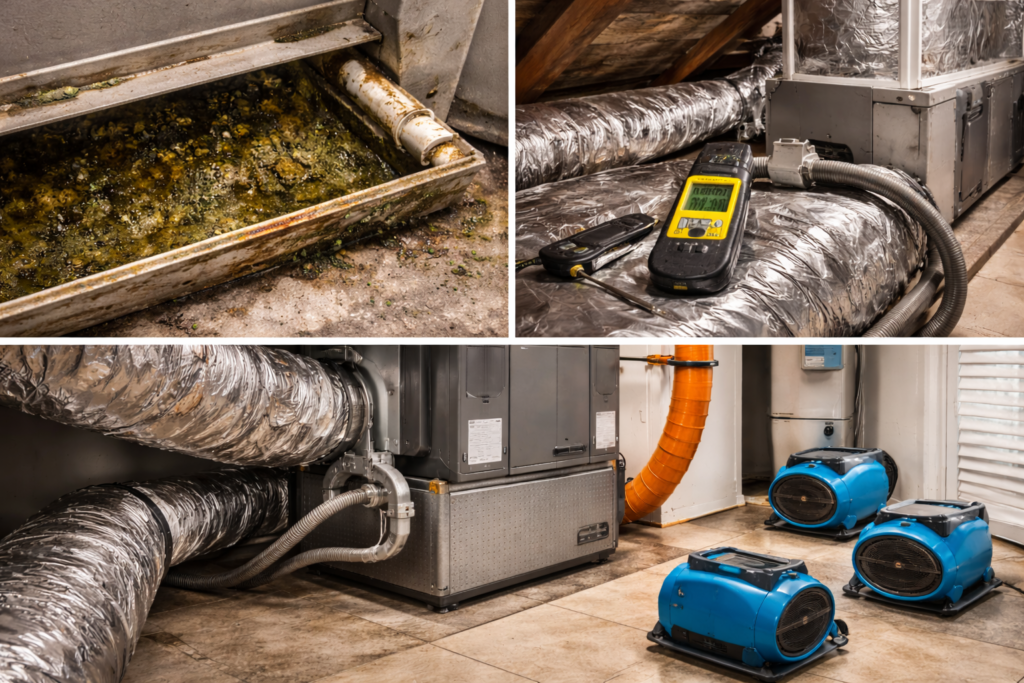
Step‑by‑Step Process Explained: Mold Testing in Palm Bay from AC Condensation
In Palm Bay, Florida, high humidity and heavy rains create ideal conditions for mold growth, especially in homes with air conditioning systems. AC units, while essential for comfort, can become hidden sources of moisture, leading to mold accumulation in ducts, drip pans, and insulation. Mold from AC condensation is not always immediately visible, yet it can affect indoor air quality, damage property, and trigger allergic reactions in residents. Homeowners and property managers in Palm Bay, Merritt Island, Viera, Cocoa Beach, Melbourne, Rockledge, Satellite Beach, Titusville, and surrounding Brevard County communities need to understand the step‑by‑step process of professional mold testing, its importance, and how early detection can prevent extensive damage.
Understanding Mold Growth From AC Condensation
Air conditioning systems remove moisture from indoor air, which collects in condensation pans and drains. In Florida’s humid climate, these systems can become hotspots for mold growth when:
- Drainage lines are clogged or improperly installed
- Condensation pans retain stagnant water
- Ducts develop leaks, creating moisture pockets
- AC units are not regularly maintained
The combination of damp surfaces, limited airflow, and organic debris creates an environment where mold can thrive. In older homes, insulation around ducts and air handler units can further exacerbate the problem.
Why Mold Testing Is Critical
Mold testing provides several key benefits for Palm Bay homeowners:
- Accurate identification – Detects hidden mold types, including toxic strains like Stachybotrys (black mold).
- Assessment of contamination – Determines the extent of growth in AC units, ducts, and surrounding areas.
- Guidance for remediation – Identifies which materials need cleaning or replacement.
- Insurance documentation – Supports claims for damage caused by moisture or mold growth.
Relying solely on visual inspection is often insufficient, as mold may develop in hidden areas such as behind duct insulation or within the air handler.
Step 1: Initial Assessment
The first step in professional mold testing begins with a comprehensive visual inspection:
- Examine AC units, drip pans, and ducts for signs of moisture accumulation or mold growth.
- Check surrounding areas, including walls, ceilings, and floors, for water stains or discoloration.
- Evaluate indoor humidity levels using a hygrometer.
This initial assessment identifies areas at highest risk and guides further testing.
Step 2: Moisture Detection
Moisture detection is critical because mold growth is directly linked to damp conditions. Professionals use:
- Moisture meters – Measure water content in walls, flooring, and insulation.
- Infrared cameras – Detect hidden moisture behind walls or ceilings.
- Hygrometers – Monitor indoor relative humidity to ensure it is below levels conducive to mold growth (typically under 60%).
Detecting moisture early allows remediation before mold becomes widespread, reducing structural damage and potential health risks.
Step 3: Sampling for Mold
After identifying moisture-prone areas, experts collect samples to determine mold presence and type. Common sampling methods include:
- Air sampling – Measures mold spores circulating in the indoor air.
- Surface sampling – Swabs or tape lifts from AC units, ducts, and damp surfaces.
- Bulk sampling – Pieces of affected material, such as insulation or duct lining, for lab analysis.
Samples are sent to certified laboratories to identify species, concentration levels, and potential toxicity.
Step 4: Laboratory Analysis
Lab testing provides:
- Identification of mold species, including common indoor molds like Cladosporium, Penicillium, Aspergillus, and Stachybotrys.
- Quantification of spore counts to assess severity.
- Recommendations for remediation based on species and contamination levels.
This scientific analysis ensures remediation efforts target the actual problem and not just visible mold.
Step 5: Reporting and Recommendations
Following testing, professionals provide a detailed report:
- Summary of inspection and moisture readings
- Laboratory results and mold species identified
- Areas affected, including ducts, insulation, and AC units
- Recommended remediation steps, including cleaning, replacement, or disinfection
- Preventative guidance to avoid recurrence
For homeowners in Palm Bay, this report is a roadmap to safe and effective mold management.
Step 6: Remediation (Optional but Recommended)
Once testing is complete, remediation addresses identified mold:
- Cleaning – HEPA vacuuming, scrubbing with antimicrobial solutions, and wiping surfaces.
- Material removal – Damaged insulation, duct lining, or drywall may be removed if saturated.
- Drying and dehumidification – Ensures all affected areas are dry to prevent recurrence.
- HVAC cleaning – AC units, condensate pans, and ductwork are professionally cleaned to remove spores.
Professional remediation ensures thorough removal, prevents cross-contamination, and restores indoor air quality.
Step 7: Preventative Measures
After mold testing and remediation, preventative strategies are critical for Palm Bay homeowners:
- Regular AC maintenance – Clean drip pans, unclog lines, and inspect for leaks.
- Humidity control – Use dehumidifiers or monitor indoor relative humidity.
- Duct inspections – Check ductwork periodically for moisture or leaks.
- Prompt water damage response – Address leaks, condensation, or flooding immediately.
- Professional inspections – Schedule routine mold testing in high-risk areas, especially after storms or heavy rains.
Preventative care minimizes future mold problems, protects property value, and ensures a safe living environment.
Local Considerations in Palm Bay
Palm Bay’s climate and construction styles influence mold risk:
- High humidity and heat – Promote condensation inside AC systems and ductwork.
- Storm and hurricane season – Sudden rain and flooding increase moisture exposure.
- Older construction – Older ducting, insulation, or AC units may be more prone to water retention.
Local professionals bring knowledge of typical AC designs, materials, and storm-related vulnerabilities to tailor inspections and remediation plans effectively.
Why Local Expertise Matters
Choosing a Palm Bay-based mold inspection company ensures:
- Knowledge of common moisture and mold sources specific to Florida homes
- Experience with AC-related mold issues in residential and rental properties
- Familiarity with local storm patterns, humidity, and construction styles
- Efficient and precise testing to minimize damage and disruption
Palm Bay Mold Removal applies this local expertise to every inspection, helping homeowners detect and address mold early.