
Rockledge AC Mold Cleaning After Flooding: A Local Homeowner Guide
Flooding in Rockledge homes can happen suddenly — a stalled summer thunderstorm, a roof leak during hurricane season, or a plumbing failure while you’re away. Most homeowners focus first on flooring, drywall, and visible water damage. But one of the most overlooked areas after flooding is the air conditioning system.
In Florida’s humid climate, AC systems work almost year-round. After a flood, elevated humidity and trapped moisture can create the perfect environment for mold to develop inside air handlers, ductwork, and surrounding insulation. Even if water never directly touches your HVAC unit, high moisture levels alone can trigger condensation-related growth.
This guide explains how AC mold develops after flooding in Rockledge homes, how professional cleaning works, and how to prevent the issue from returning.
Why Flooding Creates AC Mold Risks in Rockledge
Rockledge sits in Brevard County, where humidity levels remain high for much of the year. After a flood event, indoor humidity often spikes above normal levels — especially if power outages prevent AC systems from running.
Flooding affects AC systems in several ways:
Moisture enters wall cavities and ceiling spaces
Attic humidity rises significantly
Condensate drain lines clog with debris
Air handlers retain moisture in drain pans
Duct insulation absorbs humidity
Even without direct submersion, HVAC systems can become moisture-saturated simply from prolonged damp conditions.
Homes in nearby Viera and Merritt Island experience similar humidity pressure, but Rockledge’s mix of older and newer construction styles creates different airflow patterns that influence moisture retention.
Early Warning Signs of AC Mold After Flooding
AC-related mold often develops quietly.
Homeowners should monitor for:
Musty odor when the AC starts
Persistent damp smell in certain rooms
Dark rings around ceiling vents
Uneven airflow
Indoor humidity staying above 60 percent
Visible condensation near air registers
If the odor is strongest when the system cycles on, contamination inside ducts or the air handler may be present.
These signs may not appear immediately. They can develop days or even weeks after flooding.
Step 1: Confirm the Flood Source Has Been Fully Resolved
Before AC mold cleaning begins, all active water sources must be corrected.
This includes:
Repairing roof leaks
Fixing plumbing failures
Clearing clogged drains
Ensuring proper exterior drainage
If structural moisture remains active, mold will continue to develop.
Professional moisture detection verifies that drywall, subfloors, and insulation are fully dry before HVAC cleaning proceeds.
Palm Bay Mold Removal often begins Rockledge flood recovery projects with comprehensive moisture mapping to ensure stabilization.
Step 2: Inspect the Air Handler
The air handler is one of the most common locations for post-flood mold growth.
Inspection includes examining:
Evaporator coils
Condensate drain pan
Drain line connections
Blower compartment
Surrounding framing
Standing water in the drain pan or blocked condensate lines can quickly lead to contamination.
Clearing and flushing the drain system is essential.
In some cases, drain pans may require replacement if corrosion is present.
Step 3: Evaluate Ductwork and Insulation
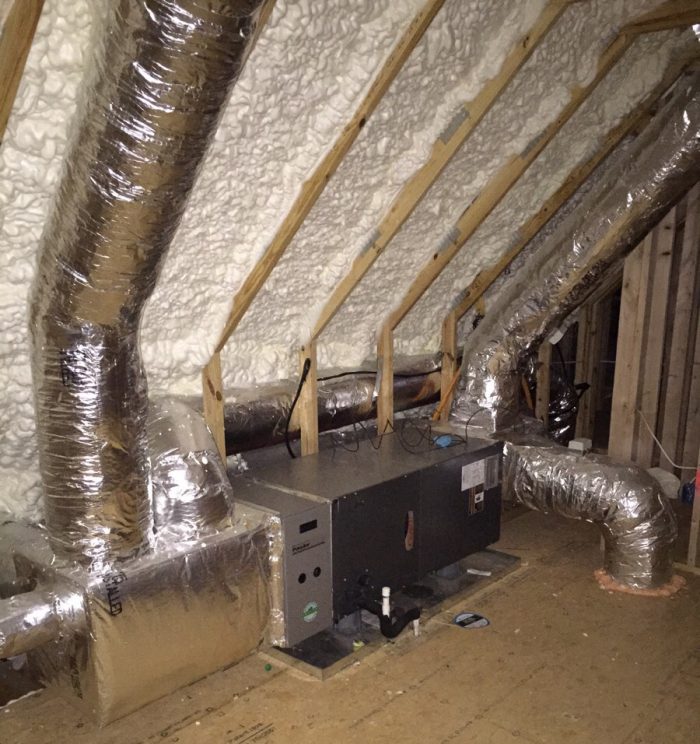
Most Rockledge homes have ductwork running through attics.
After flooding, attic humidity may remain elevated — especially if roof damage occurred.
Flexible duct insulation can absorb moisture even if no direct water contact occurred.
Signs of duct-related moisture include:
Sagging flexible ducts
Damp insulation
Reduced airflow
Staining around supply vents
Moisture meters help determine whether insulation is salvageable.
If insulation remains saturated, replacement may be necessary to prevent recurring problems.
Step 4: Containment During Cleaning
When mold is confirmed inside HVAC components, containment helps prevent spread during cleaning.
Plastic barriers may isolate the work zone. Negative air machines create controlled airflow.
HEPA filtration equipment operates during the cleaning process to maintain indoor air stability.
Containment is especially important in open-layout homes common in Rockledge subdivisions.
Step 5: Professional AC Mold Cleaning Process
Proper cleaning involves more than wiping visible surfaces.
The process typically includes:
Cleaning evaporator coils
Disinfecting drain pans
Flushing condensate lines
Cleaning accessible duct sections
Removing contaminated insulation when necessary
Replacing air filters
The objective is restoring proper drainage, airflow, and internal cleanliness.
Surface treatment alone does not eliminate embedded contamination.
Step 6: Structural Drying and Humidity Control
After cleaning, humidity control is critical.
Commercial dehumidifiers and air movers may be used to stabilize indoor moisture levels.
Indoor humidity should remain below 60 percent to prevent regrowth.
HVAC systems must operate efficiently to maintain balance.
Moisture readings confirm when the environment is stable.
In Florida’s climate, drying often requires more time than homeowners expect.
Attic Ventilation and Post-Flood Recovery
Attic ventilation plays a major role in preventing AC mold after flooding.
If hot, humid air becomes trapped in the attic, condensation forms more easily on cool duct surfaces.
Improving soffit and ridge ventilation reduces moisture stress.
After major storms, attic inspection should be part of routine recovery.
Proper airflow reduces recurrence risk.
Preventing Future AC Mold Problems
Long-term prevention requires proactive maintenance.
Flush condensate drain lines periodically.
Replace HVAC filters every 1–3 months.
Schedule annual AC inspections.
Monitor indoor humidity with a hygrometer.
Inspect attic duct insulation after storms.
Address minor musty odors promptly.
Installing a float switch in the drain pan can provide early warning of overflow.
Routine HVAC servicing reduces the likelihood of drainage blockages.
When Replacement May Be Necessary
In severe flood events, cleaning may not be enough.
Replacement may be required if:
Electrical components were submerged
Drain pans are cracked or corroded
Duct insulation is permanently saturated
Blower motors show water damage
Professional evaluation determines whether repair or replacement is more cost-effective.
Attempting to salvage heavily damaged components often leads to repeated problems.
Why Local Experience Matters
Rockledge homes vary widely in design. Some have garage-mounted air handlers, while others have attic-installed systems. Construction age also affects duct layout and insulation type.
Florida’s coastal humidity creates moisture patterns different from inland regions.
Professionals familiar with Brevard County housing styles understand how flooding impacts HVAC systems in this environment.
Palm Bay Mold Removal has worked extensively throughout Rockledge and surrounding communities, addressing AC mold concerns tied directly to Florida’s humid conditions.
Protecting Your Home After Flooding
AC mold cleaning after flooding in Rockledge is not just about eliminating odor. It is about ensuring your HVAC system is dry, balanced, and safe to operate.
Ignoring early signs such as musty airflow or damp insulation can lead to larger remediation projects.
By combining moisture detection, targeted cleaning, structural drying, and preventative maintenance, homeowners can restore stability and protect long-term system performance.
In Florida’s humid climate, proactive HVAC inspection after flooding is one of the most effective ways to prevent recurring mold issues.