
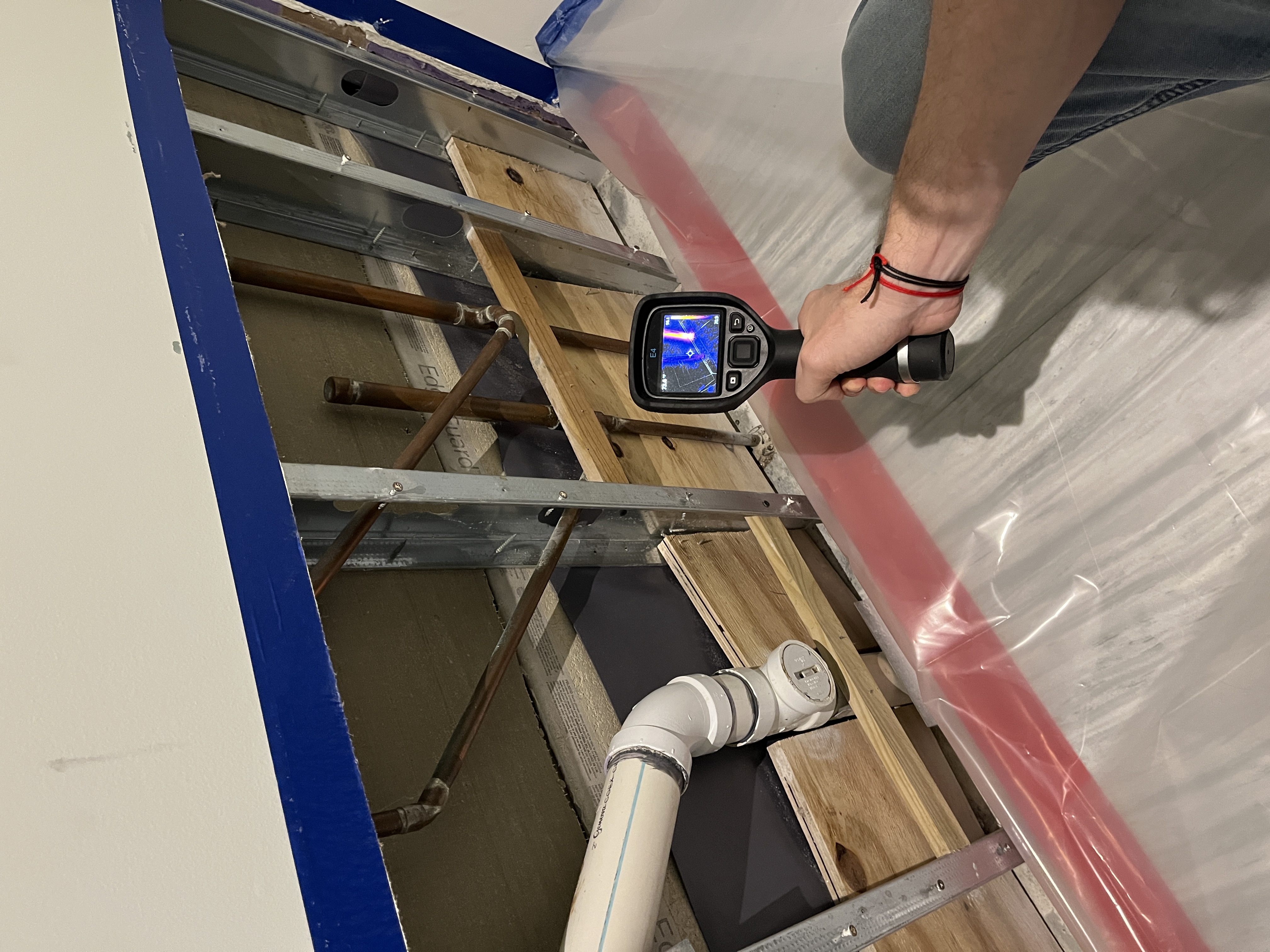
Professional Tips for Property Owners: Moisture Detection in Melbourne from AC Condensation
In Melbourne, air conditioning systems run most of the year. During long, humid summers, your AC is constantly pulling moisture out of the air. That’s normal.
What’s not normal is when that moisture doesn’t drain properly.
AC condensation problems are one of the most common hidden moisture sources in Melbourne homes and rental properties. The leak is often slow, quiet, and unnoticed — until drywall softens, baseboards swell, or a musty odor develops.
For property owners, early moisture detection is the difference between minor maintenance and full mold remediation.
Here’s what you need to know.
Why AC Condensation Is a Common Problem in Melbourne
Melbourne’s climate creates ideal conditions for condensation issues:
- High outdoor humidity
- Frequent afternoon storms
- Long cooling seasons
- Attic ductwork exposed to extreme heat
- Garage-installed air handlers
- Slab foundations that allow moisture migration
Every AC system produces condensate. If the system is working properly, that water drains away safely.
If something fails — even slightly — moisture can accumulate quickly.
How AC Condensation Turns into a Moisture Problem
Here’s how it usually happens:
- Condensate drain line clogs.
- Drain pan fills or overflows.
- Water pools around the air handler platform.
- Moisture seeps into drywall or flooring.
- Humidity remains elevated.
- Mold begins forming in dark cavities.
Because the leak is slow, homeowners may not notice until secondary damage appears.
Early Warning Signs Property Owners Should Watch
In Melbourne properties, condensation-related moisture often shows up as:
- Musty smell when AC starts
- Soft drywall near the air handler
- Bubbling paint along lower walls
- Swollen baseboards near garage units
- Water staining below attic air handlers
- Increased indoor humidity despite AC running
- AC shutting off unexpectedly (safety switch activation)
In rental properties, tenants often report “smell” or “humidity” before visible damage appears.
Professional Moisture Detection: What It Involves
Moisture detection from AC condensation requires more than looking for puddles.
Step 1: Air Handler Inspection
Technicians check:
- Condensate drain line flow
- Drain pan condition
- Unit leveling
- Float switch function
- Coil condition
- Return plenum sealing
Even a slight tilt in the air handler can cause uneven draining.
Step 2: Moisture Mapping Around the Unit
Moisture meters are used to check:
- Lower drywall sections
- Baseboards
- Adjacent rooms
- Garage platforms
- Closet walls behind the air handler
Water often spreads beyond the visible area.
Mapping prevents missed damage.
Step 3: Attic Duct and Platform Evaluation
In attic-installed systems, inspectors look for:
- Duct insulation dampness
- Platform staining
- Sheathing discoloration
- Condensation around boots and connections
Attic humidity can worsen condensation issues.
Step 4: Indoor Humidity Testing
Indoor humidity above 55–60% increases condensation formation.
Humidity readings help determine whether the issue is mechanical, environmental, or both.
Why Early Detection Saves Property Owners Money
Catching condensation leaks early can mean:
- Clearing a drain line
- Replacing a drain pan
- Drying a small drywall section
Waiting can lead to:
- Mold remediation
- Drywall removal
- Flooring damage
- HVAC duct contamination
- Tenant relocation in rental units
Slow leaks become expensive problems.
Cost Factors in AC Condensation Moisture Detection
Costs depend on:
- Size of affected area
- Accessibility (garage vs. attic)
- Extent of drywall involvement
- HVAC system complexity
- Moisture spread
Routine inspection is far less expensive than structural repair.
Prevention Tips for Melbourne Property Owners
Schedule Annual HVAC Maintenance
Drain line cleaning and pan inspection should be routine in Florida.
Install Overflow Safety Switches
Float switches shut off the system before water spreads.
Monitor Indoor Humidity
Keep humidity below 55%.
High humidity increases condensation load.
Inspect Garage and Attic Units Periodically
Look for:
- Rust staining
- Damp platforms
- Soft drywall
- Musty odor
Early visual checks prevent major repairs.
Respond Immediately to Small Signs
A faint smell or small paint bubble is often the first indicator of moisture.
Ignoring it rarely makes it disappear.
Why Local Experience Matters
AC condensation behaves differently in Melbourne because of:
- High baseline humidity
- Salt air corrosion
- Slab foundation moisture movement
- Long cooling seasons
- Frequent storm cycles
Homes in Melbourne, West Melbourne, Palm Bay, Viera, Merritt Island, and Satellite Beach share similar environmental pressures.
Palm Bay Mold Removal regularly performs moisture detection and post-condensation inspections across Brevard County, focusing on correcting mechanical causes before recommending remediation.
Because in Florida, controlling moisture is the foundation of preventing mold.
A Practical Next Step
If you notice musty odor near your air handler, soft drywall, or unexplained humidity increases, schedule a structured moisture evaluation.
AC condensation leaks rarely start big.
But in Melbourne’s humid climate, small mechanical failures can lead to larger structural repairs if left unchecked.
Detect the moisture early. Correct the source. Stabilize the structure.
That’s how property owners protect their investment long term.