
Mold Remediation Services in Titusville from AC Condensation: Complete Guide for Homeowners
In Titusville, air conditioning systems run almost nonstop for much of the year. Between high humidity, warm temperatures, and long summers, your AC isn’t just cooling your home — it’s constantly pulling moisture from the air. When everything works properly, that moisture drains safely away. When it doesn’t, condensation can quietly create the perfect conditions for mold.
Unlike storm flooding or burst pipes, AC condensation problems often develop slowly. There’s no dramatic event. Instead, moisture builds up behind walls, inside ductwork, or around the air handler. By the time a musty odor appears or staining becomes visible, mold may already be growing.
This guide explains how mold remediation services in Titusville address AC condensation issues, how to recognize early warning signs, and what homeowners can do to prevent recurrence.
Why AC Condensation Is a Common Mold Trigger in Titusville
Titusville sits near the Indian River Lagoon, and the area experiences consistently high humidity. AC systems remove large amounts of moisture from indoor air daily.
Common condensation-related causes include:
Clogged condensate drain lines
Cracked or rusted drain pans
Restricted airflow from dirty filters
Oversized AC units that short-cycle
Poor attic ventilation
Sweating ductwork in hot attic spaces
When drainage fails or airflow is restricted, condensation can overflow or collect in areas not designed to handle water.
Homes in nearby Mims and Port St. John face similar humidity levels, but Titusville’s mix of older homes and newer builds creates different ventilation and duct configurations that influence condensation patterns.
Early Warning Signs of Mold from AC Condensation
Mold caused by condensation rarely appears suddenly in large visible patches. Instead, homeowners may notice:
Musty odor when the AC turns on
Dark rings around ceiling vents
Bubbling paint near HVAC closets
Water pooling near the air handler
Persistent indoor humidity above 60 percent
Uneven cooling between rooms
If the smell becomes stronger during AC cycles, moisture inside ducts or near the evaporator coil may be involved.
These early signs should prompt professional inspection.
Step-by-Step Mold Remediation Process
Step 1: Identify and Correct the Moisture Source
Before remediation begins, the condensation issue must be fixed.
This may include:
Flushing and clearing drain lines
Replacing damaged drain pans
Installing float switches
Improving system slope
Sealing duct leaks
Adjusting airflow balance
Removing mold without correcting the drainage problem will not solve the issue long term.
Palm Bay Mold Removal often begins Titusville condensation cases with full moisture detection and HVAC evaluation before remediation starts.
Step 2: Professional Mold Inspection
Inspection determines how far contamination has spread.
This includes:
Visual assessment
Moisture meter readings
Thermal imaging
Attic inspection
Duct system evaluation
Surface staining rarely shows the full extent of moisture.
Condensation can travel along framing or insulation before becoming visible.
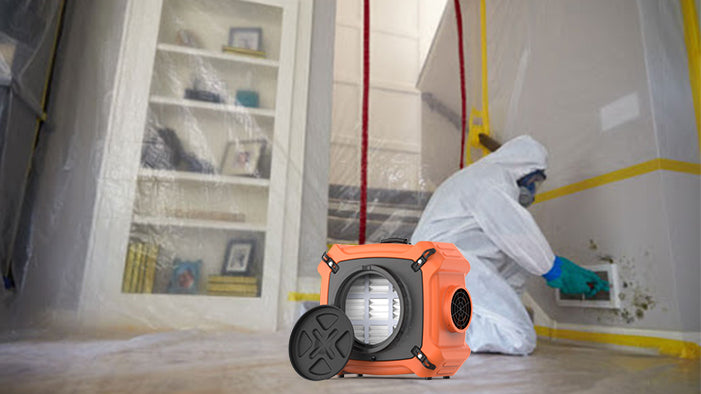
Step 3: Containment of Affected Areas
Containment prevents mold spores from spreading during removal.
Plastic barriers isolate impacted spaces.
Negative air machines create controlled airflow.
HEPA filtration units operate throughout remediation.
Containment is especially important in homes with open floor plans.
Step 4: Removal of Contaminated Materials
Heavily affected porous materials may need removal.
These may include:
Drywall sections
Insulation
Carpet padding
Ceiling panels
Duct insulation
Structural framing can often be cleaned if contamination is limited to surface growth.
Leaving damp materials in place increases recurrence risk.
Step 5: Cleaning and Surface Treatment
After removal, structural components are thoroughly cleaned.
HEPA vacuuming removes residual particles.
Targeted cleaning methods are applied to framing and surfaces.
Odors typically improve significantly once contaminated materials are eliminated.
Step 6: Structural Drying and Humidity Stabilization
Drying is critical in Florida’s humid climate.
Professional drying involves:
Commercial dehumidifiers
Air movers
Humidity monitoring
Airflow balancing
Indoor humidity should remain below 60 percent.
Moisture readings confirm materials are stable before reconstruction.
Rebuilding too soon can trap residual dampness.
Attic and Duct Considerations
Many Titusville homes have ductwork running through attic spaces.
Hot attic air combined with cold duct surfaces increases condensation risk.
Inspection may reveal:
Damp flexible duct insulation
Sweating metal ducts
Poor attic ventilation
Improperly sealed joints
If insulation is saturated, replacement may be necessary.
Correcting attic airflow reduces future condensation buildup.
Mold Remediation Costs: What Influences Them
Costs vary depending on:
Size of affected area
Accessibility of HVAC system
Extent of drywall or insulation removal
Severity of contamination
Length of time moisture was present
Early detection significantly reduces overall remediation expenses.
Ignoring condensation leaks allows moisture to spread into larger sections of the home.
Preventing Future AC Condensation Mold
Homeowners can reduce risk by:
Flushing condensate drain lines regularly
Replacing HVAC filters every 1–3 months
Inspecting drain pans annually
Monitoring indoor humidity levels
Ensuring attic ventilation is adequate
Scheduling routine HVAC maintenance
Installing a float switch in the drain pan can shut off the system if water backs up.
Preventative maintenance is far less costly than remediation.
Why Local Experience Matters
Titusville homes vary in construction age and HVAC placement. Some have garage-mounted air handlers, while others rely on attic installations with long duct runs.
Florida’s humidity creates condensation behavior different from drier climates.
Professionals familiar with Brevard County housing styles understand common drainage failures and duct insulation issues in Titusville neighborhoods.
Palm Bay Mold Removal has worked throughout Titusville and surrounding communities, addressing mold remediation challenges specific to Florida’s humid environment.
Protecting Your Home from Condensation-Related Mold
Mold remediation services in Titusville from AC condensation require more than cleaning visible spots. They demand moisture source correction, containment, structural drying, and long-term humidity management.
Ignoring early signs such as musty odors or ceiling staining increases repair costs over time.
By combining accurate inspection, targeted remediation, airflow improvements, and preventative maintenance, homeowners can maintain stable indoor conditions year-round.
In Florida’s climate, early detection and proper moisture control remain the most effective ways to prevent condensation-related mold damage.