
Mold Remediation in Rockledge from Poor Ventilation: Warning Signs and Prevention
In Rockledge, mold problems don’t always come from storms or plumbing leaks.
Sometimes they come from something much quieter — poor ventilation.
When airflow inside a home is restricted and humidity builds up, moisture lingers on surfaces longer than it should. In Florida’s climate, that’s all mold needs to begin growing.
Ventilation-related mold often develops slowly. There’s no dramatic water event. No flooded floor. Just steady humidity trapped inside walls, attics, and duct systems.
If you own a home in Rockledge, understanding the warning signs and prevention strategies can help you avoid costly mold remediation.
Why Poor Ventilation Causes Mold in Rockledge Homes
Rockledge sits near the Indian River Lagoon, and that proximity keeps humidity levels high year-round.
When ventilation systems are underperforming, indoor humidity rises even higher.
Common ventilation-related causes include:
- Inadequate attic airflow
- Blocked soffit vents
- Faulty bathroom exhaust fans
- AC systems that short cycle
- Duct leaks in hot attics
- Closed interior spaces with little airflow
Even if your home never experiences flooding, persistent humidity can create mold conditions.
When moisture levels remain elevated for extended periods, drywall, wood framing, and insulation begin absorbing it.
Early Warning Signs You Should Not Ignore
Ventilation-related mold often provides subtle clues before it spreads.
Homeowners in Rockledge frequently notice:
- Musty odor that doesn’t go away
- Dark staining in ceiling corners
- Mold around air vents
- Peeling or bubbling paint
- Condensation on windows
- Warped baseboards
- Humidity levels above 60% indoors
Because there is no obvious leak, these signs are often overlooked.
By the time visible mold appears, growth may already exist inside wall cavities or attic spaces.
Palm Bay Mold Removal often finds hidden mold in Rockledge homes where homeowners initially believed the issue was minor humidity.
Where Mold Develops When Ventilation Fails
Poor ventilation affects several key areas.
Attics
Warm air rises and condenses on roof decking. Without proper ventilation, mold spreads across rafters and insulation.
Wall Cavities
Humidity trapped inside drywall cavities creates ideal conditions for hidden growth.
HVAC Systems
Ducts located in hot attic spaces accumulate condensation.
Air duct cleaning may be necessary if mold spreads through ventilation lines.
Closets and Storage Areas
Limited airflow allows moisture to remain trapped.
Moisture detection tools often reveal elevated readings in these areas even when surfaces look dry.
The Mold Remediation Process Explained
When mold from poor ventilation is confirmed, remediation follows a structured approach.
Step 1: Mold Inspection and Moisture Detection
Inspection identifies:
- Extent of contamination
- Humidity levels
- Ventilation weaknesses
- Hidden damp materials
Infrared tools and moisture meters help map affected areas.
Step 2: Containment
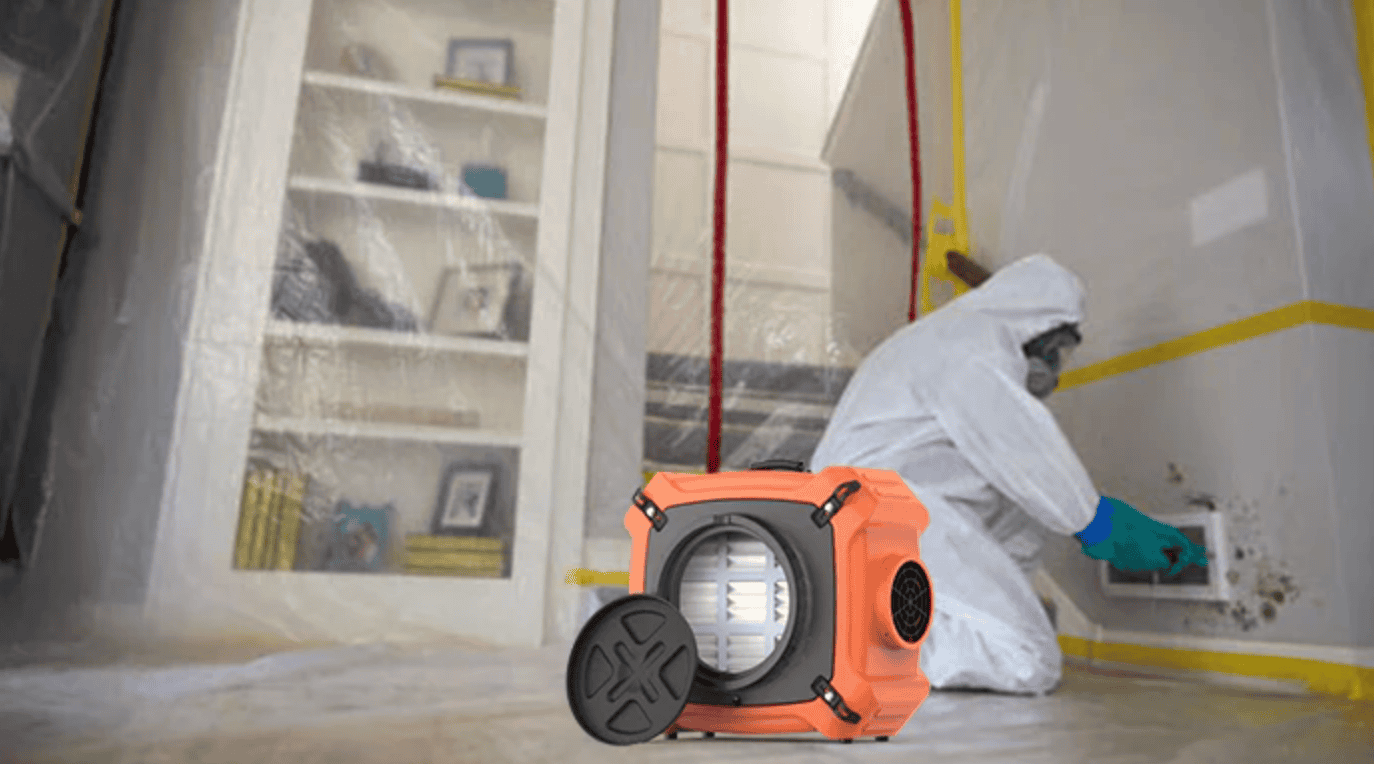
Plastic barriers isolate contaminated spaces.
HEPA air scrubbers run continuously to filter airborne spores.
Containment protects unaffected rooms.
Step 3: Removal of Contaminated Materials
If drywall or insulation is heavily affected, removal may be necessary.
Targeted removal ensures structural framing can dry completely.
Step 4: Structural Cleaning and Drying
Exposed framing is cleaned.
Commercial dehumidifiers and air movers reduce humidity levels.
Moisture readings confirm that drying is complete.
Step 5: Ventilation Correction
This step prevents recurrence.
Solutions may include:
- Improving attic airflow
- Installing additional vents
- Sealing duct leaks
- Servicing AC systems
- Clearing drain lines
- Installing supplemental dehumidification
Without correcting airflow problems, mold will likely return.
Costs of Mold Remediation from Poor Ventilation
Costs vary based on:
- Size of affected area
- Location (attic, walls, HVAC)
- Duration of growth
- Materials requiring removal
- Ventilation upgrades needed
General Cost Ranges
- Small isolated area: lower range
- Attic or multi-room involvement: moderate range
- Extensive structural damage: higher range
The longer mold grows unnoticed, the more invasive remediation becomes.
Early inspection reduces overall expense.
Why DIY Mold Cleanup Rarely Solves the Problem
Homeowners often try:
- Spraying bleach
- Scrubbing visible spots
- Painting over stains
- Using household dehumidifiers
Surface cleaning does not remove mold embedded in porous materials.
More importantly, it does not address ventilation issues.
Without correcting airflow and humidity, mold simply reappears.
Professional remediation focuses on both removal and moisture correction.
Preventing Mold from Poor Ventilation
Prevention in Rockledge requires active humidity management.
Homeowners should:
- Maintain indoor humidity below 55%
- Service AC systems annually
- Clear condensate drain lines
- Inspect attic ventilation
- Run bathroom exhaust fans during showers
- Leave interior doors open periodically for airflow
- Schedule periodic moisture detection
Homes in nearby Viera, Merritt Island, and Palm Bay face similar humidity conditions and benefit from consistent ventilation maintenance.
The Role of HVAC Systems
AC systems are central to moisture control in Florida homes.
If systems:
- Are oversized
- Short cycle frequently
- Have clogged drains
- Have dirty coils
- Leak conditioned air
… humidity levels increase.
Air conditioning repair and air duct cleaning may be necessary to restore proper airflow.
Maintaining HVAC efficiency significantly reduces mold risk.
Why Local Experience Matters
Rockledge homes experience:
- Lagoon-influenced humidity
- Long cooling seasons
- Frequent summer storms
- Slab-on-grade construction
Understanding how moisture behaves in Brevard County improves remediation accuracy.
Palm Bay Mold Removal has handled ventilation-related mold remediation across Rockledge, Titusville, Satellite Beach, Merritt Island, and Melbourne.
Local knowledge ensures realistic moisture sources are addressed.
Practical Steps for Homeowners
If you suspect mold from poor ventilation:
- Monitor indoor humidity regularly.
- Check attic ventilation and soffit vents.
- Inspect AC drain lines.
- Avoid disturbing visible mold.
- Schedule professional inspection early.
Humidity problems rarely correct themselves.
A Calm Next Step
Mold remediation in Rockledge from poor ventilation isn’t about reacting to visible stains. It’s about correcting airflow and protecting your home from long-term moisture damage.
A professional inspection can determine:
- Where mold is present
- What ventilation improvements are needed
- Whether remediation is necessary
- How to prevent recurrence
Florida humidity is constant. With proper ventilation and moisture control, mold does not have to be.