
Moisture Detection Services in Older Homes (Merritt Island, FL)
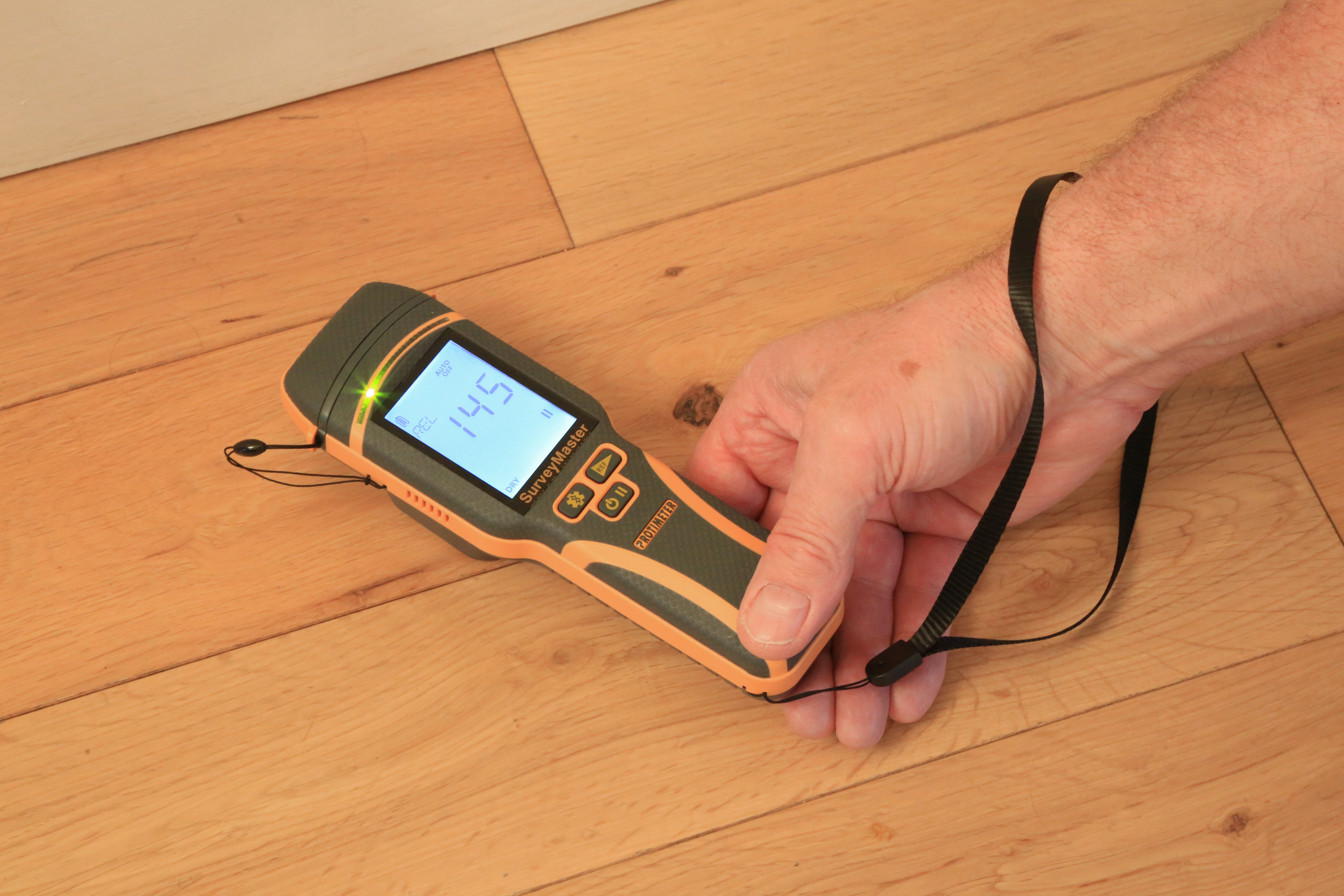
Dealing with moisture problems in older homes—especially in humid coastal regions like Merritt Island, Florida—requires more than looking at stains or mold spots. Hidden water intrusion can quietly damage structure, insulation, electrical systems, and foster microbial growth like mold long before you see it. Professionals use a combination of systematic inspection methods and advanced tools to detect moisture issues early and accurately. (RestoreEase)
Below is a detailed, step‑by‑step explanation of how moisture detection services are performed, why each stage matters, what tools are used, and how findings lead to effective repairs and prevention.
1. Initial Contact & Pre‑Inspection Preparation
The first stage is planning and understanding your home’s history and moisture concerns.
🧠 Why This Matters
Older homes often have unique issues—settled foundations, aging plumbing, outdated waterproofing, and humidity challenges due to Florida’s climate. A thorough pre‑inspection helps technicians focus on the most likely problem areas. (Affordable Water & Mold Removal)
📝 What Happens
- You discuss with the inspector your concerns (visible stains, musty smells, known leaks, HVAC issues).
- The inspector gathers information about the house’s age, roof condition, plumbing history, past water events (storms, floods), and any prior repairs.
- It’s scheduled at a convenient time so the inspector can allocate appropriate tools and personnel.
📌 Tip: Many inspection companies recommend you turn off HVAC systems or heating to avoid misleading thermal imaging readings.
2. Visual Inspection & Preliminary Walk‑Through
This is the first physical assessment inside and outside the home.
🔍 What Inspectors Look For
- Water stains on walls and ceilings
- Warped wood, peeling paint or wallpaper
- Efflorescence (white mineral deposits on masonry)
- Rotting wood or insect damage
- Musty or damp odors
- Visible mold growth
These give the first clues to where moisture issues may be hiding. (RestoreEase)
🧰 Tools Used
- Flashlights and probing tools
- Measuring tape for documenting areas
- Basic cameras for initial record‑keeping
📌 Important for Older Homes: Aging materials can show false positives (e.g., humidity readings from plaster walls), so visual context is critical before using advanced tools. (Reddit)
3. Thermal Imaging (Infrared Scanning)
This is one of the most valuable tools in modern moisture detection.
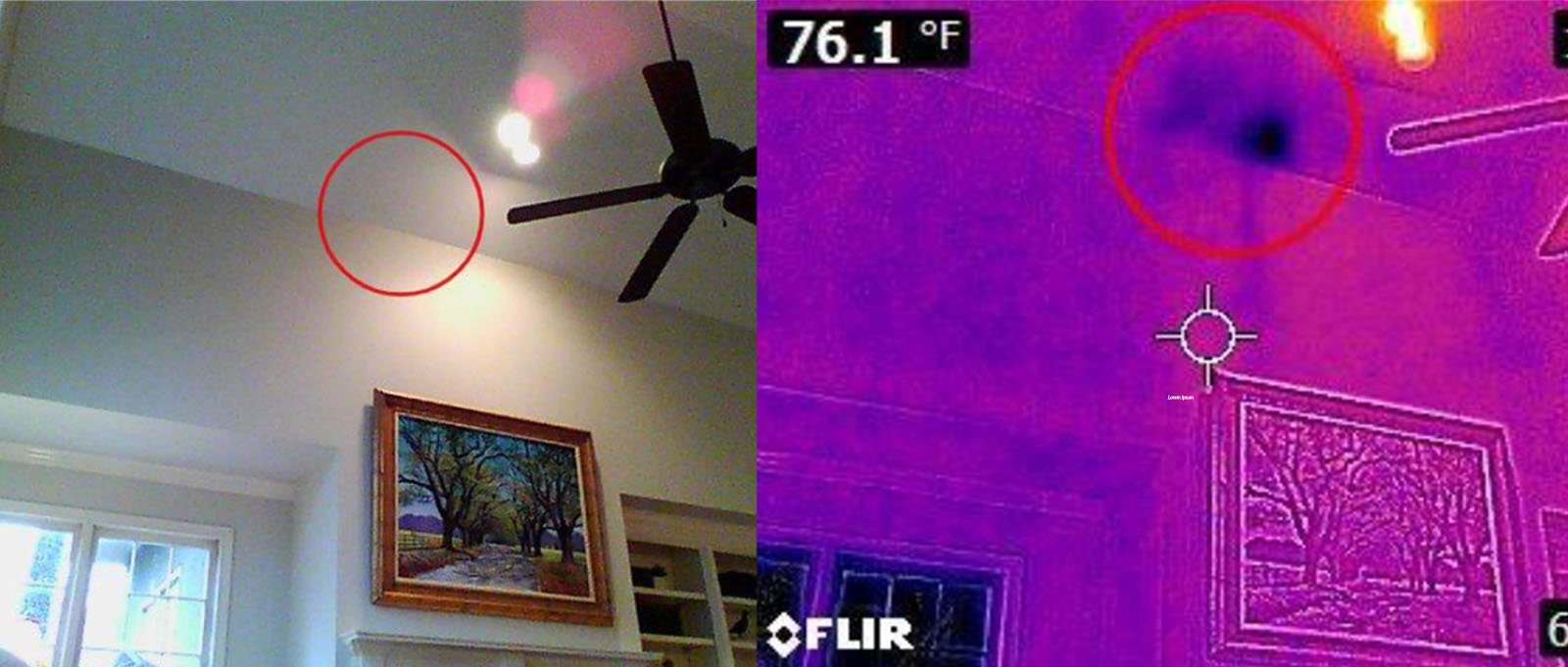
🔥 How Infrared Works
Infrared (thermal) cameras detect temperature differences in surfaces. Moisture cools materials differently than dry areas, so temperature anomalies often point to hidden water intrusion or insulation gaps. (Ultrices Lekdetectie)
This process is non‑invasive—no drilling or removing drywall.
🗂 What Inspectors Do
- Scan walls, ceilings, floors, and rooflines systematically
- Identify cooler (potentially wet) zones
- Use patterns in imagery to prioritize areas for deeper testing
📌 The inspector must interpret images correctly—temperature variations can also reflect airflow, insulation issues, or HVAC leaks.
4. Moisture Meter & Hygrometer Testing
Once suspicious areas are identified, precise instruments confirm moisture presence.
📊 Tool Types
- Moisture Meters
- Pin‑type: probes penetrate material for direct moisture content measurement
- Pinless: uses electromagnetic signals without damage to surfaces (Wikipedia)
- Hygrometers: measure relative humidity and temperature to assess condensation risk and indoor moisture behavior. (holisticenvironmental.com)
📏 What This Stage Involves
- Direct moisture readings of drywall, wood, concrete, and floors
- Mapping moisture severity from dry to saturated
- Recording exact values to compare with normative thresholds
📌 Why This Is Important:
Thermal imaging shows where there’s likely a problem; moisture meters confirm how wet the material is and whether it poses structural or mold risks.
5. Detailed Moisture Mapping & Documentation
After identifying wet zones, inspectors compile comprehensive data.
📌 What’s Included
- A moisture “map” showing affected areas
- Photographic records with notes and moisture readings
- Humidity plots and infrared snapshots
- A written report with findings and recommendations
This documentation makes it easier to plan remediation and supports insurance claims or contractor quotes. (www.pnwrestorationservices.com)
6. Source Tracing: Where Is the Moisture Coming From?
Identifying source makes remediation effective.
🕵️ Common Sources in Older Homes
- Leaky or aging roof systems
- Faulty plumbing or drip lines
- Condensation from HVAC systems
- Cracks or poor foundation drainage
- Exterior envelope failures (windows, flashing, siding)
🔁 What Inspectors Do
- Trace moisture back from affected areas
- Use tools to isolate whether moisture is from plumbing, roof, or humidity
- Check roof edges, attic insulation, crawl spaces, and plumbing junctions
📌 Proper source tracing prevents “fixing the symptom” without addressing the cause.
7. Interpretation, Reporting & Repair Recommendations
Once all tests are complete, the inspector prepares a comprehensive report.
🧾 Typical Report Contents
- Summary of all inspections and findings
- Categorized moisture levels (safe, elevated, problematic)
- Hypothesized causes (e.g., roof leak, condensation)
- Suggested next steps (repair, remediation, further testing)
🛠️ Practical Use
- Share with plumbers, roofers, mold remediation teams
- Use for insurance claims
- Prioritize repairs based on severity
A clear diagnosis helps avoid unnecessary repairs and directs effort where it’s most effective.
8. Post‑Remediation / Verification (Optional But Recommended)
Once repairs or moisture control measures are implemented, many professionals offer follow‑up verification.
🔄 Why It Matters
Even after drying, residual moisture or hidden moisture pockets can remain. Verification ensures that interventions worked and that mold risks are minimized.
In some local services, this is called clearance testing (especially after mold work). It ensures normal moisture and air quality levels post‑repair. (Maus Law Firm)
Local Service Providers in Merritt Island
Here are some companies that either inspect moisture directly or perform related inspection services in the Merritt Island, FL area:
Inspection & Reporting
- Green Leaf Home Inspections Inc – Full home inspection services including moisture detection and general home condition assessment.
Restoration & Moisture‑Related Specialists
- Mold Removal Merritt Island – Water damage restoration and moisture mitigation, including detection and repair services.
📌 Note: Many mold inspection and testing services (often overlapping with moisture detection) operate locally as well, such as independent mold testing companies. These organizations use infrared and moisture meters to locate moisture sources and provide detailed reports. (Bio Pro: Mold & Air Quality Testing)
Recap: What Makes a Good Moisture Detection Service?
A professional moisture detection service focuses on accuracy, documentation, and source identification, not just visual checks. The key stages are:
- Preparation & Consultation
- Visual Walk‑Through
- Advanced Thermal Imaging
- Precise Moisture Metering
- Moisture Mapping & Analysis
- Source Tracing
- Reporting & Recommendations
- Post‑Remediation Verification
This layered approach ensures that hidden moisture sources—especially common in older homes—don’t get overlooked and that the resulting report supports confident decisions about remediation and repair.
Why Timely Moisture Detection Matters
- Protects Structural Integrity: Moisture weakens framing, floors, and finishes.
- Prevents Mold: Many molds grow within 24‑48 hours of moisture exposure. (Mold Trust)
- Improves Indoor Air Quality: Reducing humidity indoors reduces health risk and energy costs.
- Supports Insurance Claims: Detailed documentation helps substantiate damage claims.