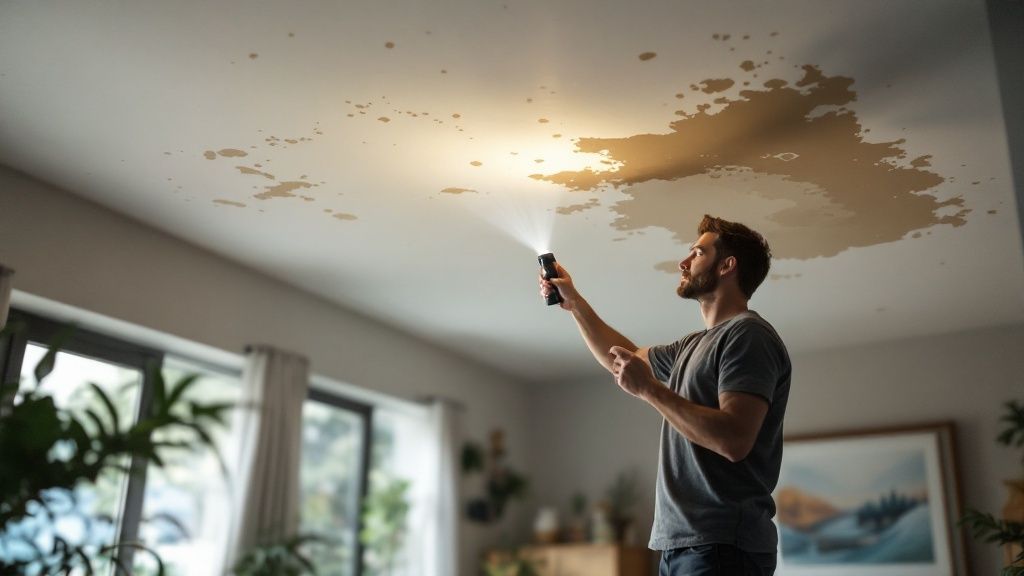
Moisture Detection in Satellite Beach After Roof Leaks: Inspection and Repair Guide
Roof leaks have a way of starting quietly. A small crack in flashing, a lifted shingle after a storm, or worn sealant around a vent may not seem serious at first. But in Satellite Beach, where rainstorms and humidity are common, even minor roof leaks can lead to hidden moisture problems inside ceilings, walls, and insulation.
Moisture detection is one of the most important steps after any roof leak. It helps identify where water has traveled, how much damage may exist, and what repairs are needed to prevent mold and structural issues down the road.
What Moisture Detection Means After a Roof Leak
When water enters through a roof, it rarely stays in one place. It can spread along rafters, soak insulation, drip into wall cavities, and settle into ceilings or subfloors.
Moisture detection is the process of identifying:
- Hidden damp areas
- Saturated insulation or drywall
- Elevated humidity levels
- Moisture trapped in structural materials
This inspection is important because areas that look dry on the surface may still contain moisture internally.
Why Roof Leak Moisture Problems Are Common in Satellite Beach
Satellite Beach homes face conditions that make roof leaks and moisture intrusion more likely:
- Strong coastal storms and heavy rain
- Wind-driven rain entering small openings
- High humidity slowing drying
- Salt air accelerating roof wear
- Older roofing materials in some residential areas
Nearby communities like Cocoa Beach, Merritt Island, and Titusville experience similar conditions. Homes near the coast often require more frequent roof inspections because weather exposure is higher than inland areas.
Even newer homes are not immune. Flashing failures, clogged gutters, or storm damage can allow water to enter and remain hidden for weeks.
Common Warning Signs Homeowners Notice
After a roof leak, the first signs of moisture damage are often subtle.
Homeowners frequently notice:
- Water stains on ceilings
- Peeling or bubbling paint
- Musty odors in certain rooms
- Warped drywall or ceiling texture
- Increased indoor humidity
- Darkened or sagging ceiling areas
These warning signs should be taken seriously, even if the leak appears to have stopped. Moisture can remain trapped long after visible dripping ends.
Hidden or Overlooked Moisture Areas
Water from roof leaks often travels far from the entry point. Some of the most commonly affected hidden areas include:
- Attic insulation and roof decking
- Wall cavities below the leak
- HVAC ducts in attic spaces
- Ceiling joists and framing
- Electrical openings and recessed lighting areas
Attics in Satellite Beach homes are particularly vulnerable. Warm, humid air combined with roof leaks can keep insulation damp for long periods, creating ideal conditions for mold growth.
Why DIY Inspection Often Misses the Real Problem
It’s natural to look for stains or visible damage, but moisture problems often extend beyond what the eye can see.
DIY inspection limitations include:
- Inability to measure internal moisture levels
- Missing hidden damp insulation
- Difficulty identifying the full path of water
- Lack of humidity monitoring
Many homeowners repair the visible ceiling damage without addressing moisture trapped above it. This can lead to recurring problems months later.
Professional Moisture Inspection and Testing Explained
A professional moisture inspection after a roof leak follows a structured approach.
Technicians typically:
- Inspect the attic and roof decking
- Use moisture meters on ceilings and walls
- Scan areas with infrared cameras
- Measure humidity levels throughout the home
- Check ductwork and ventilation systems
These steps help determine the full extent of moisture intrusion and guide proper repairs.
In Satellite Beach and nearby Palm Bay and Rockledge, companies such as Palm Bay Mold Removal often perform these inspections as part of a broader evaluation to prevent mold development and ensure complete drying.
Proper Mold Removal and Remediation if Moisture Is Found
If moisture has been present for some time, mold growth may already be developing.
A proper remediation process usually includes:
- Correcting the roof leak or moisture source
- Removing wet or damaged materials if necessary
- Cleaning and treating affected surfaces
- Drying the structure thoroughly
- Confirming moisture levels are safe
Addressing both moisture and mold together is essential to prevent recurrence.
Repairing Damage After Roof Leaks
Water damage repair varies depending on how long moisture was present and what materials were affected.
Common repairs may include:
- Replacing damaged drywall or insulation
- Sealing and repairing roof components
- Drying and treating framing
- Cleaning and restoring affected areas
Prompt repairs reduce the risk of structural weakening or further moisture spread.
Air Ducts, AC Systems, and Moisture After Roof Leaks
HVAC systems are often overlooked after roof leaks, especially when ductwork runs through attic spaces.
Possible issues include:
- Condensation forming on ducts
- Moisture entering vents
- Mold growth inside air handlers
- Reduced air quality from damp components
Inspecting these systems is an important part of complete restoration, particularly in Florida’s humid environment.
How to Prevent Future Moisture Problems
Preventing roof-related moisture damage involves routine maintenance and early detection.
Helpful steps include:
- Inspecting the roof annually
- Checking flashing around vents and chimneys
- Cleaning gutters regularly
- Monitoring attic humidity
- Repairing minor leaks immediately
- Scheduling periodic moisture inspections
Early action is one of the most effective ways to avoid costly repairs.
Why Local Experience Matters
Moisture detection and repair in coastal Florida require knowledge of local weather patterns, building materials, and humidity behavior.
Homes in Satellite Beach, Melbourne, and Viera often experience:
- Slower drying times due to humidity
- Salt-related roof deterioration
- Attic moisture buildup
- Ventilation challenges
Professionals who regularly work in Brevard County understand these conditions and how to address them effectively.
A Practical Next Step for Homeowners
Roof leaks don’t always cause immediate, dramatic damage—but hidden moisture can quietly create bigger problems if it isn’t addressed. Moisture detection after a leak helps confirm that the structure is fully dry and safe.
Taking action early protects ceilings, insulation, indoor air quality, and the long-term condition of the home. With proper inspection and repair, homes in Satellite Beach can recover quickly and remain protected from future moisture issues.