
Indoor Air Quality Improvement Services in Titusville in Coastal Homes: Early Signs You Should Not Ignore
Living in Titusville offers incredible advantages — proximity to the water, beautiful coastal views, and warm Florida weather nearly year-round. But coastal living also brings a unique challenge many homeowners underestimate: indoor air quality problems caused by constant humidity, moisture intrusion, and hidden mold growth.
Unlike sudden storm damage, indoor air quality issues usually build slowly. Many homeowners become accustomed to minor odors or humidity discomfort, not realizing their home environment may be unhealthy or damaging the structure itself. Understanding early warning signs can help you take action before problems become expensive or disruptive.
Here’s a practical, homeowner-focused explanation of how indoor air quality issues develop in Titusville’s coastal homes and what to watch for.
What Indoor Air Quality Problems Really Mean
Indoor air quality issues often stem from excess moisture combined with poor ventilation. In Titusville’s coastal climate, outdoor air carries heavy humidity, and homes rely heavily on air conditioning to stay comfortable. When moisture enters the home faster than it can be removed, conditions become ideal for mold growth, dust mite populations, and microbial buildup inside ducts and walls.
Poor air quality is not always obvious. It may begin as minor discomfort but can eventually impact building materials, HVAC efficiency, and long-term maintenance costs.
Indoor air quality improvement services typically address:
- Hidden moisture sources
- Mold growth inside walls or ceilings
- Contaminated air ducts
- Poor HVAC airflow or filtration
- High indoor humidity levels
- Water damage not fully dried after leaks or flooding
Addressing the root cause is critical; simply masking odors or cleaning visible surfaces rarely solves the problem.
Why Coastal Homes in Titusville Face These Issues So Often
Homes in Titusville and nearby coastal communities face several environmental challenges:
- High year-round humidity
- Heavy rainstorms and hurricane-season moisture
- Salt air exposure accelerating material wear
- AC systems running almost constantly
- Condensation forming inside ducts and walls
- Older homes with ventilation limitations
- Crawl spaces or attics that trap moisture
Even newer homes can struggle if ventilation or moisture management isn’t designed properly. Tight, energy-efficient homes can sometimes trap humidity indoors, making air quality worse if moisture control is not balanced.
Early Warning Signs Homeowners Often Notice
Indoor air quality problems rarely start dramatically. Instead, homeowners notice subtle changes over time, including:
- Persistent musty smells, especially in closed rooms
- Rooms feeling humid even when AC is running
- Condensation on windows or glass doors
- Allergy-like irritation indoors but not outside
- Headaches or sinus discomfort at home
- AC system running longer than normal
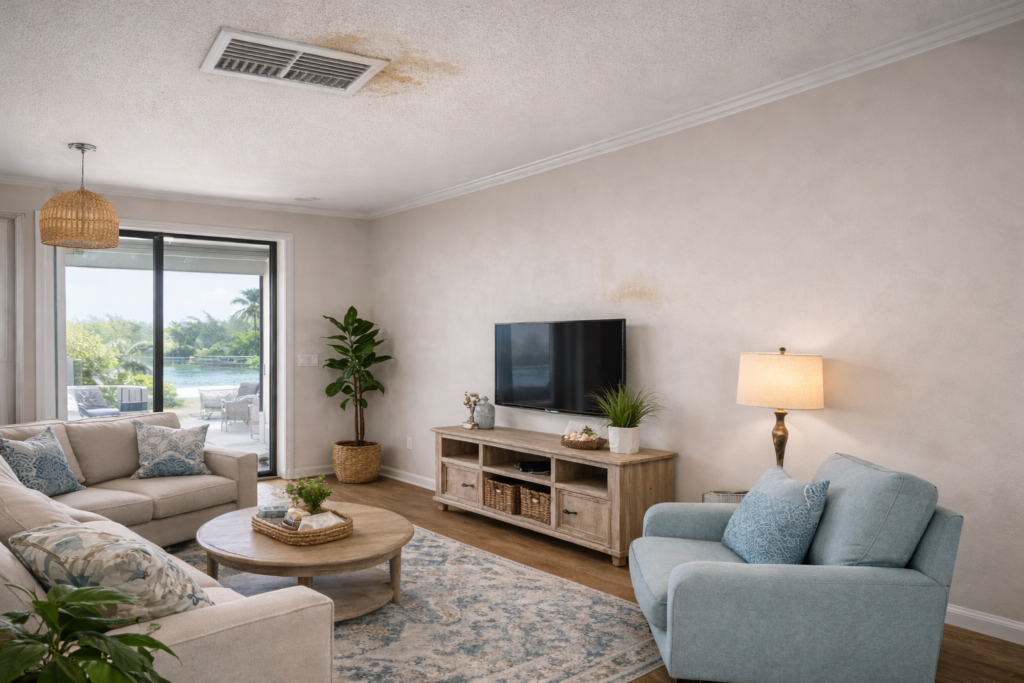
- Slight discoloration around vents or ceilings
- Damp or stale smells inside closets or storage rooms
- Furniture or fabrics smelling musty
Many families assume these are normal Florida living conditions, but these symptoms often signal excess indoor moisture or microbial growth.
Hidden or Overlooked Sources of Poor Air Quality
In coastal Titusville homes, we often find moisture problems in areas homeowners never suspect:
- AC condensate drain lines backing up
- Poor attic ventilation trapping humid air
- Crawl spaces accumulating moisture
- Roof leaks entering walls unnoticed
- Ductwork sweating in hot attic spaces
- Bathroom exhaust fans venting into attics instead of outside
- Small plumbing leaks inside walls
- Water intrusion around windows and doors
- Previous water damage not fully dried
Moisture doesn’t always show up where it starts. Water may travel through framing or insulation before becoming visible.
Why DIY Air Quality Fixes Usually Fall Short
Many homeowners attempt quick fixes when they notice odors or humidity issues:
- Using air fresheners or scented cleaners
- Buying portable dehumidifiers
- Cleaning vents or replacing filters
- Painting over stained areas
While these steps may temporarily reduce symptoms, they rarely address hidden moisture or mold sources. Without professional moisture detection and inspection, the real cause remains active behind walls or in duct systems.
DIY approaches often delay proper solutions, allowing problems to worsen.
How Professional Indoor Air Quality Inspection Works
A professional indoor air quality improvement service follows a structured approach rather than guesswork.
Step 1: Moisture Investigation
Technicians check walls, ceilings, and flooring using moisture meters to identify hidden damp areas. Moisture mapping helps determine how far water has traveled.
Step 2: HVAC and Duct Evaluation
Air handlers, ducts, and condensate lines are inspected to identify condensation problems, microbial growth, or airflow issues.
Step 3: Ventilation Review
Bathrooms, kitchens, attics, and crawl spaces are checked to ensure humid air is properly vented outside instead of trapped indoors.
Step 4: Mold Inspection and Testing
If suspicious areas are discovered, testing may confirm whether mold or microbial contamination is present.
Step 5: Humidity Assessment
Indoor humidity levels are measured to determine whether dehumidification or airflow adjustments are needed.
This process allows technicians to recommend targeted solutions rather than unnecessary work.
Mold Removal and Remediation When Needed
If inspections confirm mold growth, proper remediation becomes part of restoring healthy air quality. This may include:
- Removing contaminated drywall or insulation
- Cleaning affected surfaces
- Containing affected areas during removal
- Air filtration during cleanup
- Drying hidden moisture pockets
- Preventing future recurrence
In Titusville homes, mold problems often originate from long-term moisture exposure rather than sudden flooding, so identifying moisture sources is essential.
Water Damage and Flooding’s Role in Air Quality
Even minor water events can create long-term indoor air quality problems if materials were not fully dried. Coastal homes near Merritt Island, Cocoa Beach, and surrounding areas often experience:
- Storm-driven rain intrusion
- Minor flooding during heavy rainfall
- Roof leaks during hurricane season
- Plumbing leaks during vacation absences
If drywall, flooring, or insulation remained damp after repairs, microbial growth can slowly spread, affecting air quality months later.
Professional drying and water damage repair play a major role in maintaining healthy indoor environments.
Air Ducts and AC Systems: A Major Contributor
In Titusville homes, air conditioning systems run most of the year. Ductwork inside hot attics often produces condensation when cold air moves through poorly insulated ducts. This moisture allows mold to grow inside duct systems.
Common AC-related issues include:
- Dirty or clogged air handlers
- Condensate line backups
- Insufficient duct insulation
- Air leaks pulling humid attic air into ducts
- Poor airflow balance
Air duct cleaning and HVAC moisture corrections often dramatically improve indoor air quality.
Preventing Indoor Air Quality Problems in Coastal Homes
Homeowners can reduce risk with several preventive steps:
- Schedule regular HVAC maintenance
- Replace filters consistently
- Keep condensate drains clear
- Inspect roofs annually
- Seal windows and doors properly
- Maintain attic ventilation
- Monitor indoor humidity levels
- Act quickly after leaks or flooding
- Avoid ignoring musty smells
Early action saves money and prevents long-term damage.
Why Local Experience Matters
Homes across Brevard County share common moisture challenges, but each community — from Titusville to Viera, Rockledge, and Satellite Beach — presents slightly different construction styles and environmental exposures.
Local professionals understand how coastal air, storm patterns, and Florida construction methods affect homes. Companies like Palm Bay Mold Removal approach indoor air quality improvement with this regional understanding, helping homeowners resolve root problems instead of temporary symptoms.
A Calm Next Step for Concerned Homeowners
If your Titusville home has persistent odors, humidity discomfort, or recurring moisture issues, it’s worth having a professional inspection completed before the situation worsens. Early detection allows smaller corrections and prevents larger restoration projects later.
Improving indoor air quality isn’t about fear or urgency — it’s about creating a comfortable, healthy home environment and protecting your property investment over time.
Photorealistic image prompt 1: Interior coastal home living room in Titusville showing visible moisture staining near ceiling vent and subtle wall discoloration, natural daylight, clean residential environment, no people, no text, no logos, realistic textures.
Photorealistic image prompt 2: Residential attic with insulated ductwork showing condensation and minor moisture buildup on duct surfaces, natural lighting through attic vents, clean structure, no people, no text, no logos.
Photorealistic image prompt 3: HVAC air handler unit inside a coastal Florida home utility closet with visible condensate drain system and slight moisture around the drain pan area, clean professional setting, natural lighting, no people, no text, no logos.