
How to Prevent Future Damage: Water Damage Restoration in Merritt Island Rental Properties
Owning rental property in Merritt Island comes with its own set of responsibilities. Between coastal humidity, summer storms, and year-round AC use, moisture is a constant factor. And in rental homes, small water issues can turn into major restoration projects faster than many landlords expect.
We see it every rainy season across Merritt Island, Cocoa Beach, Rockledge, and Palm Bay. A slow leak goes unnoticed between tenants. An AC drain line clogs. A storm pushes rain under a door threshold. By the time the damage is visible, drywall, flooring, and even framing may already be affected.
Preventing future water damage in rental properties isn’t complicated — but it does require understanding how Florida homes behave under pressure.
Understanding Water Damage in Rental Properties
Water damage restoration isn’t just about drying a wet floor. It involves identifying the source, removing moisture from structural materials, preventing mold growth, and restoring the property safely.
In Merritt Island rentals, the most common causes include:
- Roof leaks during heavy storms
- AC condensation overflow
- Plumbing failures between tenants
- Slab foundation moisture intrusion
- Flooding from tropical systems
- Appliance hose failures
Rental homes experience more wear and tear. Tenants may not recognize early warning signs. And small maintenance delays can compound quickly in Florida’s humid environment.
Why This Happens So Often in Merritt Island
Merritt Island sits between the Indian River Lagoon and the Atlantic Ocean. That coastal location means elevated humidity levels year-round.
Add summer storms and hurricane season, and moisture exposure increases dramatically.
In many Merritt Island neighborhoods, we commonly see:
- Wind-driven rain entering through older windows
- Flat or low-slope roofs collecting water
- Crawl spaces holding trapped humidity
- AC systems running nearly nonstop
Even newer homes in Viera and West Melbourne experience water intrusion issues when gutters clog or drainage isn’t properly directed away from the slab.
Florida doesn’t allow moisture to evaporate quickly. If it gets into building materials, it stays there.
Common Signs Tenants and Landlords Notice
Water damage in rental properties often presents subtly at first.
Landlords may hear reports of:
- Musty odors between tenants
- Soft or warped flooring
- Bubbling paint after storms
- Stained ceilings
- Persistent humidity indoors
- AC units struggling to cool
In Merritt Island rentals near Sykes Creek or South Tropical Trail, we often inspect properties where ceiling staining appears weeks after a heavy rain event.
Tenants may assume it’s cosmetic. It rarely is.
Hidden or Overlooked Sources in Rental Homes
In rental properties, hidden water sources are especially common because maintenance isn’t always routine.
We frequently find:
- Slow plumbing leaks under sinks
- Dishwasher supply line drips
- AC drain pan overflow
- Improperly sealed sliding glass doors
- Window flashing gaps
- Attic condensation due to poor ventilation
In Palm Bay and Rockledge rentals, slab homes often wick moisture upward after prolonged rain if exterior grading isn’t correct.
Without moisture detection equipment, these issues remain undetected until damage spreads.
Why DIY Water Damage Cleanup Usually Falls Short
Landlords sometimes attempt to handle small water issues themselves — especially between tenant turnovers.
The problem is that visible water is only part of the story.
Surface drying with fans does not remove moisture trapped inside:
- Drywall cavities
- Subflooring
- Baseboards
- Insulation
- Structural framing
If materials remain damp, mold growth can begin within 24–48 hours in Florida’s climate.
We regularly inspect Merritt Island rentals where minor cleanup was performed, but hidden moisture led to larger remediation projects weeks later.
Water damage restoration requires moisture measurement, not guesswork.
Professional Water Damage Inspection & Moisture Detection
The first step in preventing future damage is identifying all affected areas.
A professional inspection typically includes:
- Visual assessment of all impacted spaces
- Moisture meter readings on walls and flooring
- Thermal imaging to locate hidden water
- Attic and crawl space inspection
- AC system evaluation
In rental properties, it’s especially important to check adjoining rooms. Water travels further than most expect.
Mold inspection may also be recommended if the water issue was not addressed immediately.
The key is determining whether materials can be dried in place or require removal.
Proper Water Damage Restoration Process
A structured restoration process ensures long-term stability.
Step 1: Source Control
Before drying begins, the water source must be stopped — whether that’s a roof repair, plumbing fix, or AC drain correction.
Without fixing the source, drying is temporary.
Step 2: Water Extraction
Standing water is removed using professional extraction equipment.
This prevents further saturation of flooring and subfloor materials.
Step 3: Targeted Structural Drying
Commercial dehumidifiers and air movers are positioned strategically to dry:
- Wall cavities
- Subfloors
- Framing
- Carpet padding
Moisture readings are monitored daily until materials reach safe levels.
Step 4: Controlled Material Removal (If Necessary)
If drywall, insulation, or flooring cannot be dried safely, affected sections are removed in a controlled manner.
Only damaged areas are addressed — not entire rooms unnecessarily.
Step 5: Cleaning and Treatment
Surfaces are cleaned and treated to prevent microbial growth.
This is especially important in rental properties where turnover timing is tight.
Step 6: Repair and Restoration
After drying is complete, repairs begin — replacing drywall, baseboards, or flooring as needed.
Proper drying reduces the risk of future mold growth significantly.
Flood Restoration in Merritt Island Rentals
During hurricane season or major storm events, Merritt Island rentals near water are at increased flood risk.
Flood restoration differs from minor leak restoration.
It includes:
- Full water extraction
- Removal of contaminated materials
- Deep structural drying
- Sanitization
- Subfloor and framing inspection
In Cocoa Beach and Satellite Beach properties, storm surge can saturate insulation and framing quickly.
Rapid response is critical in these cases to prevent long-term structural damage.
Air Ducts, AC Systems & Moisture in Rentals
Florida rental homes rely heavily on air conditioning.
But when AC systems aren’t maintained, they become moisture contributors.
Common issues include:
- Clogged condensate drain lines
- Dirty evaporator coils
- Wet duct insulation
- Air handler pan overflow
In Merritt Island and Palm Bay rentals, we often discover mold growth inside air handlers after extended humidity exposure.
Air duct cleaning and AC system inspections should be part of regular rental property maintenance.
Addressing HVAC moisture protects both the property and indoor air quality.
How to Prevent Future Water Damage in Rental Properties
Prevention is far less expensive than restoration.
For landlords in Merritt Island and surrounding Brevard County communities, the following steps make a measurable difference:
- Schedule seasonal roof inspections
- Clean and inspect gutters quarterly
- Flush AC drain lines twice per year
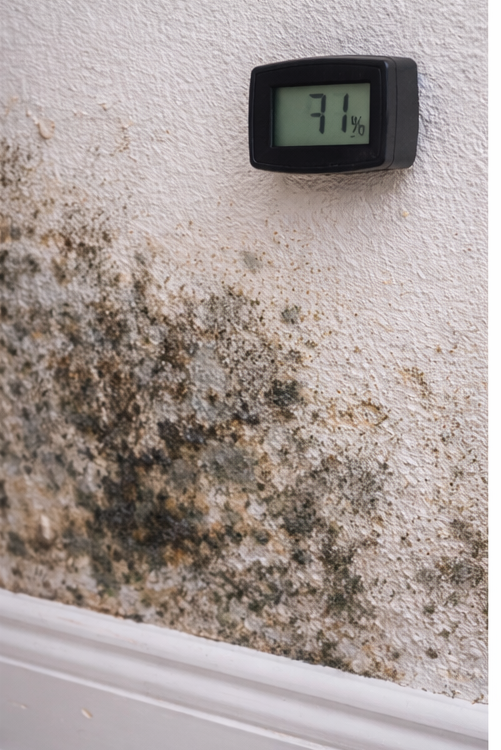
- Maintain indoor humidity below 55%
- Ensure exterior grading directs water away from foundation
- Install leak detection sensors under sinks and appliances
- Inspect attic ventilation annually
- Perform moisture checks between tenants
Routine inspections between leases are especially important. Even a vacant property can develop water intrusion during heavy storms.
Many property owners in Merritt Island, Viera, and Rockledge now schedule annual moisture inspections as preventative maintenance.
That proactive approach dramatically reduces major restoration events.
Why Local Experience Matters in Merritt Island
Water damage in Merritt Island behaves differently than in drier climates.
Coastal humidity, storm frequency, and Florida construction methods all influence how moisture spreads and lingers.
A local restoration specialist understands:
- Slab-on-grade moisture behavior
- Coastal wind-driven rain patterns
- AC-heavy home environments
- Seasonal flooding risks
Palm Bay Mold Removal has worked across Merritt Island, Palm Bay, Melbourne, Cocoa Beach, Titusville, and Rockledge long enough to recognize these patterns early.
Local experience allows faster diagnosis and more accurate prevention strategies.
A Calm, Practical Next Step
If you own rental property in Merritt Island and have experienced water damage — or simply want to prevent future issues — the most important action is a thorough moisture assessment.
Water damage restoration is most effective when handled early, before materials degrade or mold develops.
Routine inspection, timely repairs, and professional drying when needed protect both your investment and your tenants.
In Florida’s climate, moisture isn’t a matter of if — it’s a matter of when. Staying ahead of it keeps small issues small.