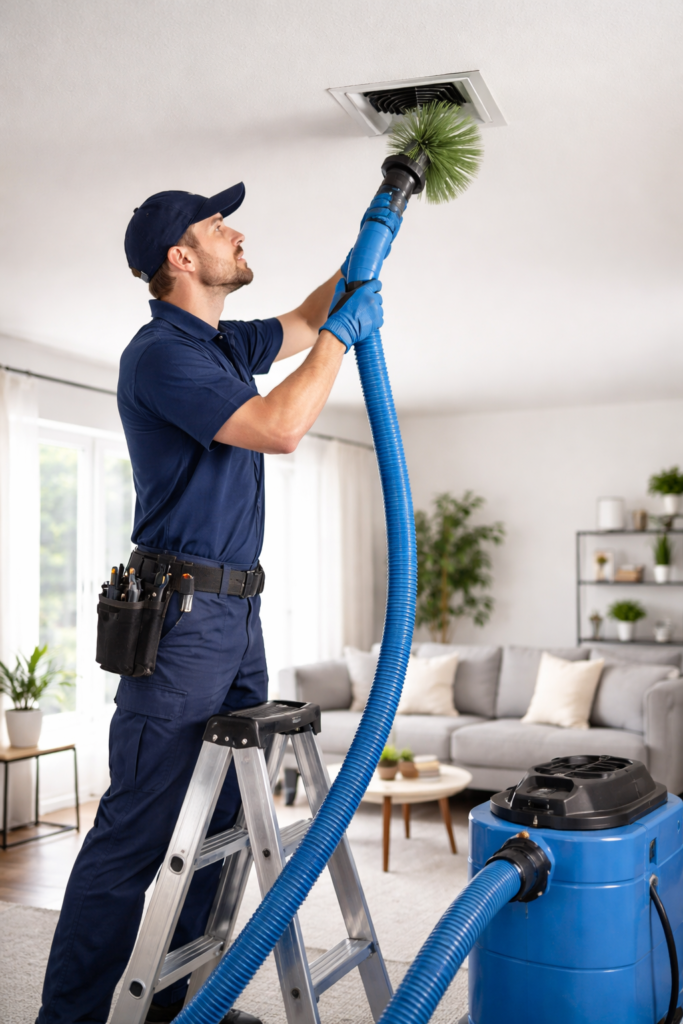
How to Prevent Future Damage: Duct Cleaning in Melbourne in Residential Homes
Maintaining clean air ducts in residential homes in Melbourne is essential for health, comfort, and property preservation. Over time, dust, allergens, mold, and debris accumulate in HVAC systems, reducing airflow, efficiency, and indoor air quality. Without proper care, these issues can lead to structural damage, increased utility bills, and health concerns.
Regular duct cleaning and preventive strategies help homeowners avoid long-term damage. This guide explains why duct cleaning is critical, signs of a problem, step-by-step cleaning, and strategies to prevent future duct-related issues in residential homes.
Why Duct Cleaning Matters in Residential Homes
- Improves Indoor Air Quality
- Removes allergens, dust, and mold spores that circulate in the home.
- Prevents Mold and Moisture Damage
- Damp ducts can foster mold growth, which can spread to walls, ceilings, and furniture.
- Enhances HVAC Efficiency
- Clean ducts improve airflow, reducing strain on the system and lowering energy costs.
- Protects Health
- Minimizes exposure to allergens and respiratory irritants.
- Preserves Property Value
- Regular maintenance prevents long-term damage to HVAC systems and interior surfaces.
Early Signs You May Need Duct Cleaning
- Visible Dust or Mold inside vents.
- Musty Odors from HVAC vents or ductwork.
- Reduced Airflow or uneven heating/cooling.
- Increased Allergy or Respiratory Symptoms among residents.
- Accumulated Debris in vents, grilles, or returns.
Step-by-Step Duct Cleaning Process
Step 1: Inspection
- Technicians evaluate ductwork, vents, filters, and HVAC components.
- Identify moisture-prone areas, dust buildup, and potential mold growth.
Step 2: Safety Precautions
- Wear protective gear and seal off work areas to prevent dust and spores from spreading.
Step 3: Containment
- Close vents and doors in contaminated zones.
- Use HEPA filters or negative air machines to isolate particles.
Step 4: Cleaning Ductwork
- Remove dust, debris, and microbial growth using brushes, vacuums, and compressed air.
Step 5: Coil and Drip Pan Cleaning
- Thoroughly clean AC coils and condensate pans to remove moisture and mold sources.
Step 6: Disinfection
- Apply EPA-approved antimicrobial solutions to eliminate remaining bacteria and spores.
Step 7: Drying
- Ensure ducts, coils, and surrounding areas are completely dry before resuming HVAC operation.
Step 8: Filter Replacement
- Replace old filters with high-quality HEPA or high-MERV filters.
- This improves air quality and prevents future dust accumulation.
Step 9: System Testing
- Check airflow, temperature distribution, and odor control.
- Confirm cleaning was effective and ducts are functioning efficiently.
Preventive Tips to Avoid Future Damage
- Schedule Regular Duct Cleaning
- Every 3–5 years, or sooner if signs of mold, dust, or reduced airflow appear.
- Maintain HVAC Systems
- Clean coils, drip pans, and condensate lines annually.
- Regular maintenance prevents moisture buildup in ducts.
- Monitor Humidity
- Keep indoor humidity between 40–60% to reduce mold risk.
- Use dehumidifiers in humid or poorly ventilated areas.
- Upgrade Air Filters
- Use HEPA or high-MERV filters and replace them every 1–3 months.
- Seal and Insulate Ducts
- Proper sealing prevents dust infiltration and condensation.
- Insulate ducts in attics or crawlspaces to prevent moisture buildup.
- Improve Ventilation
- Use exhaust fans in bathrooms, kitchens, and laundry rooms.
- Open windows when weather allows for air circulation.
- Promptly Address Leaks
- Repair plumbing, roof, or AC leaks immediately to prevent water from entering ducts.
Benefits of Preventive Duct Maintenance
- Healthier Indoor Air
- Reduces allergens, dust, and microbial growth.
- Longer HVAC Lifespan
- Cleaner ducts reduce wear and tear on the system.
- Lower Energy Bills
- Improved airflow decreases energy consumption.
- Structural Protection
- Prevents moisture-related damage to ceilings, walls, and insulation.
- Peace of Mind
- Homeowners can enjoy a comfortable, safe living environment year-round.
Conclusion
Duct cleaning in residential Melbourne homes is more than just a maintenance task—it is a preventive measure that protects both property and health. By recognizing early warning signs, hiring professional services, and implementing preventive strategies, homeowners can ensure clean, efficient, and safe HVAC systems.
Regular duct cleaning combined with humidity control, ventilation improvements, and filter maintenance prevents mold growth, structural damage, and air quality issues. Ultimately, proactive duct care safeguards the home, enhances comfort, and reduces long-term repair costs for Melbourne residents.