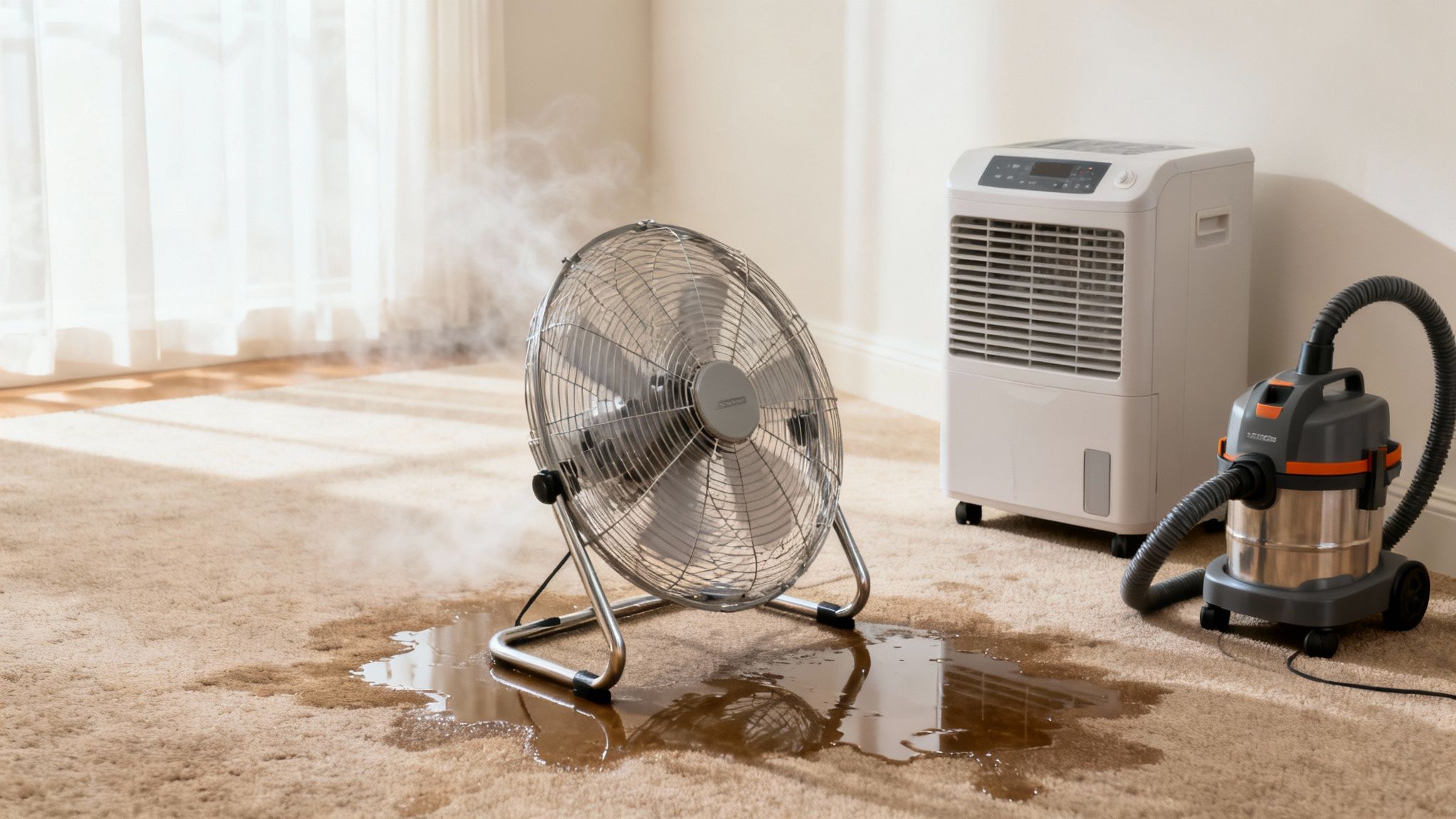
How Carpet Cleaning After Flooding Helps Homes in Satellite Beach in Residential Homes
Flooding and water intrusion are realities many homeowners in Satellite Beach eventually face. Whether it’s heavy rain, storm surge, plumbing leaks, or AC condensation, water has a way of finding carpets first. And once carpet and padding absorb water, the clock starts ticking.
Proper carpet cleaning after flooding isn’t just about appearance. It plays a major role in preventing mold, protecting indoor air quality, and preserving the structure beneath the flooring. Understanding how the process works helps homeowners respond quickly and avoid long-term damage.
What Happens to Carpet After Flooding
Carpet acts like a sponge. Within minutes of exposure to water, fibers and padding begin absorbing moisture. In Florida’s humid climate, this trapped moisture dries slowly, especially in coastal homes where humidity levels remain high.
Floodwater can also carry:
- Dirt and debris
- Organic material
- Bacteria and contaminants
- Salt residue in coastal areas
Even clean-looking water can create conditions where mold begins forming in as little as 24–48 hours if drying and cleaning aren’t handled correctly.
Why This Happens So Often in Satellite Beach
Satellite Beach homes face unique environmental challenges that increase the risk of wet carpets and flooring:
- Sudden coastal storms and heavy rainfall
- Wind-driven rain entering through doors or windows
- High groundwater levels
- AC condensation and humidity buildup
- Older homes with limited moisture barriers
Homes in nearby Cocoa Beach, Merritt Island, and Titusville experience similar conditions. Many residential properties in these areas were built before modern moisture-control methods became common, which makes flooring more vulnerable after water exposure.
Humidity also plays a role. Even after visible water is removed, moisture in the air slows drying and allows damp carpet padding to remain wet longer than expected.
Common Warning Signs Homeowners Notice
After flooding or water intrusion, some warning signs appear quickly, while others develop gradually.
Homeowners often notice:
- Damp or musty odors
- Carpet feeling cool or clammy
- Discoloration or staining
- Wrinkling or loosening of carpet
- Increased indoor humidity
- Allergy-like irritation or stale indoor air
These signs often indicate moisture trapped beneath the carpet, not just on the surface.
Hidden or Overlooked Sources of Moisture
One of the biggest problems with flooded carpets is moisture that remains out of sight.
Water frequently settles in:
- Carpet padding
- Subflooring
- Baseboards and wall edges
- Under furniture areas
- Adjacent drywall
In some cases, water migrates beyond the original wet area, spreading beneath flooring into nearby rooms. Without proper moisture detection, these areas may remain damp long after the surface appears dry.
Attics, crawl spaces, and HVAC systems can also contribute to humidity that slows drying inside the home.
Why DIY Carpet Cleaning Usually Falls Short
Many homeowners try to dry carpets using fans or household carpet cleaners. While this can help with minor spills, flooding is different.
Common limitations of DIY cleanup include:
- Inability to remove moisture from padding
- Insufficient drying airflow
- Lack of humidity control
- Missing hidden moisture in subfloors
Household equipment simply doesn’t generate enough airflow or dehumidification to dry structural materials thoroughly in Florida’s climate.
Incomplete drying is one of the leading causes of mold growth beneath carpets.
Professional Moisture Inspection and Testing Explained
Professional restoration begins with inspection and moisture detection.
Technicians typically:
- Measure moisture levels in carpet and padding
- Inspect subfloors for saturation
- Use infrared cameras to locate hidden moisture
- Monitor humidity levels during drying
This approach helps determine whether carpets can be restored or if sections of padding need replacement.
In Satellite Beach and surrounding areas like Palm Bay and Rockledge, companies such as Palm Bay Mold Removal often combine moisture detection with cleaning and drying to ensure flooring is safe and mold-free before restoration is considered complete.
Proper Carpet Cleaning and Restoration Process
Carpet cleaning after flooding is a structured process designed to restore flooring safely.
Typical steps include:
Water Extraction
High-powered extraction equipment removes as much water as possible from carpet and padding.
Padding Assessment
If padding is heavily saturated, it may need replacement, since padding retains moisture longer than carpet fibers.
Cleaning and Sanitizing
Professional cleaning removes contaminants, odors, and residues left by floodwater.
Drying and Dehumidification
Industrial air movers and dehumidifiers accelerate drying of carpet, padding, and subflooring.
Moisture Verification
Technicians confirm moisture levels have returned to safe ranges before reinstalling or finishing restoration.
This process prevents lingering moisture that could lead to mold or structural damage.
Flood Restoration and Water Damage Repair
Carpet cleaning is often just one part of a larger flood restoration process.
Other restoration steps may include:
- Drying walls and baseboards
- Inspecting insulation
- Checking structural framing
- Cleaning affected surfaces
- Repairing damaged materials
In many residential homes, flooring is the first visible sign of water damage, but underlying structural components may also need attention.
Proper restoration ensures the home is fully dry—not just visually clean.
Air Ducts, AC Systems, and Moisture
HVAC systems play an important role in drying and moisture control.
After flooding, technicians often inspect:
- Air handlers for condensation buildup
- Duct systems for moisture accumulation
- Drain lines for clogs
- Airflow efficiency
If ducts contain moisture, humidity can continue circulating through the home, slowing drying and increasing mold risk.
Regular HVAC maintenance helps reduce these problems, especially in humid coastal environments.
How to Prevent Carpet Damage After Flooding
While flooding can’t always be avoided, homeowners can reduce damage and recovery time by taking preventive steps:
- Address leaks immediately
- Use dehumidifiers during humid weather
- Maintain gutters and drainage systems
- Schedule regular AC servicing
- Inspect roofs and flashing annually
- Arrange periodic moisture inspections
Quick action after water exposure is one of the most effective ways to protect flooring and indoor air quality.
Why Local Experience Matters
Flood restoration and carpet cleaning in coastal Florida require specific knowledge of humidity, building materials, and drying conditions.
Professionals working regularly in Satellite Beach, Melbourne, Viera, and Merritt Island understand:
- How coastal humidity affects drying times
- Common moisture pathways in Florida homes
- Typical carpet and subfloor materials used locally
- Mold risks associated with delayed drying
This local understanding helps ensure restoration is thorough and lasting.
A Practical Next Step for Homeowners
Flooded carpets may not always look severely damaged at first, but hidden moisture can create problems if it isn’t addressed quickly. Professional carpet cleaning and drying help prevent mold, protect structural materials, and restore a healthier indoor environment.
Taking action early—especially in coastal areas like Satellite Beach—can prevent small water incidents from turning into costly repairs. With proper drying, cleaning, and moisture control, residential homes can recover quickly and remain comfortable and safe.