How Carpet Cleaning After Flooding Helps Homes in Satellite Beach After Roof Leaks
Flooding caused by roof leaks is a common problem for homes in Satellite Beach. Heavy rains, storm surges, and aging roofing can allow water to penetrate attics and ceilings, eventually seeping down to carpets and flooring. Left untreated, waterlogged carpets can harbor mold, bacteria, and debris, reducing indoor air quality and potentially damaging subflooring.
Building on insights from Satellite Beach AC condensation water damage restoration, this guide details how professional carpet cleaning after roof leaks protects both health and property, including causes, early warning signs, cleaning techniques, preventive strategies, and cost considerations.
Understanding Roof Leak Flooding and Carpet Damage
Water from roof leaks can impact carpets in several ways:
- Moisture absorption: Carpets and padding absorb water, creating damp environments conducive to mold growth.
- Contaminant infiltration: Roof leaks may carry debris, dust, and organic material into carpets.
- Structural risk: Extended moisture exposure can damage subflooring and flooring adhesives.
- Indoor air quality impact: Mold and bacterial spores released from wet carpets reduce air quality.
Even a small roof leak can result in long-term carpet and structural problems if not addressed promptly.
Common Causes of Carpet Flooding from Roof Leaks
Several factors contribute to water-damaged carpets after roof leaks in Satellite Beach homes:
- Aging roofs: Shingles, flashing, and membranes degrade over time, allowing water penetration.
- Heavy storms: Sudden downpours or hurricanes can overwhelm roofing and drainage systems.
- Clogged gutters and downspouts: Water may pool on roofs and leak into the home.
- Improper installation: Poorly installed flashing, seals, or skylights increase water entry points.
- Neglected maintenance: Lack of roof inspections accelerates the risk of leaks.
Understanding these causes helps homeowners prevent further damage and respond quickly.
Early Warning Signs of Carpet Damage
Homeowners should watch for these indicators after a roof leak:
- Damp or wet carpet areas, often near walls or low points
- Musty or moldy odors
- Stains or discoloration on carpet fibers
- Buckling or warping of flooring
- Mold growth on baseboards, under carpet, or near walls
- Complaints from residents about air quality or odors
Early detection allows for faster intervention, reducing long-term damage.
Step 1: Professional Carpet Inspection
Before cleaning, a professional inspection determines the extent of water damage:
Visual Assessment
Technicians examine carpets, padding, and subflooring for water penetration, staining, and structural issues.
Moisture Detection
- Moisture meters measure water content in carpet fibers and subflooring.
- Thermal imaging cameras detect hidden wet areas under flooring or behind walls.
Air Quality Testing
Air samples help detect mold spores and other contaminants introduced by roof leaks.
Documentation
Inspection reports guide cleaning and drying procedures and provide insurance documentation.
Step 2: Water Extraction
Prompt water removal prevents mold growth and structural damage:
- Extraction equipment: Industrial wet/dry vacuums or pumps remove standing water.
- Padding removal: Saturated carpet padding is often discarded to prevent hidden moisture retention.
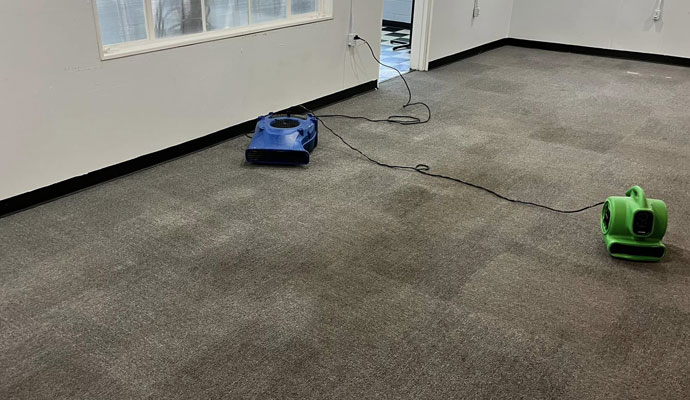
- Subfloor drying: Air movers and dehumidifiers dry subflooring and carpet backing completely.
Quick water extraction minimizes health risks and restores safe, usable space.
Step 3: Carpet Cleaning and Sanitization
Professional cleaning restores carpets while eliminating contaminants:
Hot Water Extraction
High-pressure heated water combined with cleaning solutions removes dirt, debris, and contaminants.
Antimicrobial Treatment
EPA-approved solutions kill mold, bacteria, and other microorganisms on carpets and padding.
Drying and Monitoring
Industrial air movers and dehumidifiers ensure complete drying, preventing residual dampness and mold growth.
Odor Control
Specialized deodorizing solutions remove musty odors associated with water damage.
Hidden Areas Often Overlooked
Roof leaks may cause water damage in areas not immediately visible:
- Under furniture and cabinets
- Beneath carpet seams or folds
- Subflooring beneath carpet
- Attics and walls connected to leak points
Professional inspection ensures these hidden areas are addressed during restoration.
Health Implications
Neglected water-damaged carpets can affect indoor air quality and health:
- Exposure to mold spores can trigger allergies or respiratory issues
- Musty odors reduce comfort and livability
- Prolonged dampness promotes bacteria growth
Professional cleaning safeguards residents’ health and home safety.
Costs of Carpet Cleaning After Roof Leak Flooding
Costs depend on home size, carpet type, and severity of water damage:
- Basic water extraction and cleaning: $200–$500
- Moderate damage with padding removal and antimicrobial treatment: $500–$1,200
- Severe flooding with subfloor repair and extensive cleaning: $1,500+
Early intervention reduces costs and prevents long-term structural issues.
Preventive Measures for Homeowners
To minimize carpet damage from roof leaks:
- Conduct regular roof inspections and maintenance
- Keep gutters and downspouts clear to prevent water pooling
- Address leaks promptly before they reach interior spaces
- Use water-resistant flooring or elevate carpeting in vulnerable areas
- Install dehumidifiers in high-humidity zones
- Schedule routine carpet cleaning and inspections, especially after storms
Proactive measures help maintain indoor air quality, protect flooring, and prevent repeated damage.
Why Local Expertise Matters
Satellite Beach homes are exposed to heavy rainfall, storms, and high humidity:
- Local technicians understand common leak points and flood-prone areas in Florida homes
- Professionals can detect hidden moisture and mold efficiently
- Preventive strategies are tailored to local climate and building construction
- Timely intervention restores safe, healthy, and structurally sound homes
Companies like Palm Bay Mold Removal have the experience and equipment to handle post-flood carpet cleaning effectively.
Practical Steps for Homeowners
- Inspect carpets, subflooring, and adjacent walls after roof leaks.
- Schedule professional inspection and water extraction promptly.
- Remove or replace saturated padding.
- Clean carpets with hot water extraction and antimicrobial treatments.
- Dry carpets, padding, and subflooring completely with air movers and dehumidifiers.
- Repair structural damage and address roof issues to prevent future leaks.
- Implement preventive measures: roof maintenance, gutter cleaning, elevated or water-resistant flooring, and routine inspections.
- Monitor indoor air quality and moisture levels to avoid recurrence.
Following these steps ensures homes remain safe, healthy, and structurally sound after roof-leak-induced flooding.
Final Thoughts
Carpet cleaning after roof leak flooding is essential for Satellite Beach homeowners to maintain indoor air quality, prevent mold growth, and protect flooring and subflooring. Professional inspection, water extraction, cleaning, and preventive measures address both visible and hidden damage effectively.
Building on lessons from AC condensation water damage restoration in Satellite Beach, property owners can see the value of early intervention, local expertise, and proactive maintenance. Investing in professional carpet cleaning ensures homes remain safe, comfortable, and resilient against future flooding.