
Cocoa Beach Moisture Detection From Poor Ventilation: Warning Signs and Prevention
In Cocoa Beach, humidity is constant. Even on clear days, the air carries moisture in from the Atlantic. When that moisture gets trapped inside a home due to poor ventilation, problems develop quietly.
Poor ventilation doesn’t always cause immediate damage. It slowly increases indoor humidity, traps warm air in attic spaces, and allows condensation to form where it shouldn’t.
Over time, that trapped moisture leads to mold growth, wood deterioration, and indoor air concerns.
Understanding early warning signs — and detecting moisture before visible damage appears — protects coastal homes long-term.
Why Poor Ventilation Is a Bigger Issue in Cocoa Beach
Coastal homes in Cocoa Beach deal with:
- High year-round humidity
- Salt air exposure
- Frequent AC use
- Tight modern construction
- Attic heat buildup
When ventilation is insufficient, humid air becomes trapped in:
- Attic spaces
- Bathroom ceilings
- Laundry rooms
- Closets
- Wall cavities
In homes near A1A and the Banana River, attic ventilation problems are especially common due to prolonged heat and moisture cycles.
Poor airflow allows condensation to settle and remain.
What Poor Ventilation Actually Does
Without proper air exchange:
- Indoor humidity rises
- Warm air stagnates
- Moisture condenses on cooler surfaces
- Drying time slows dramatically
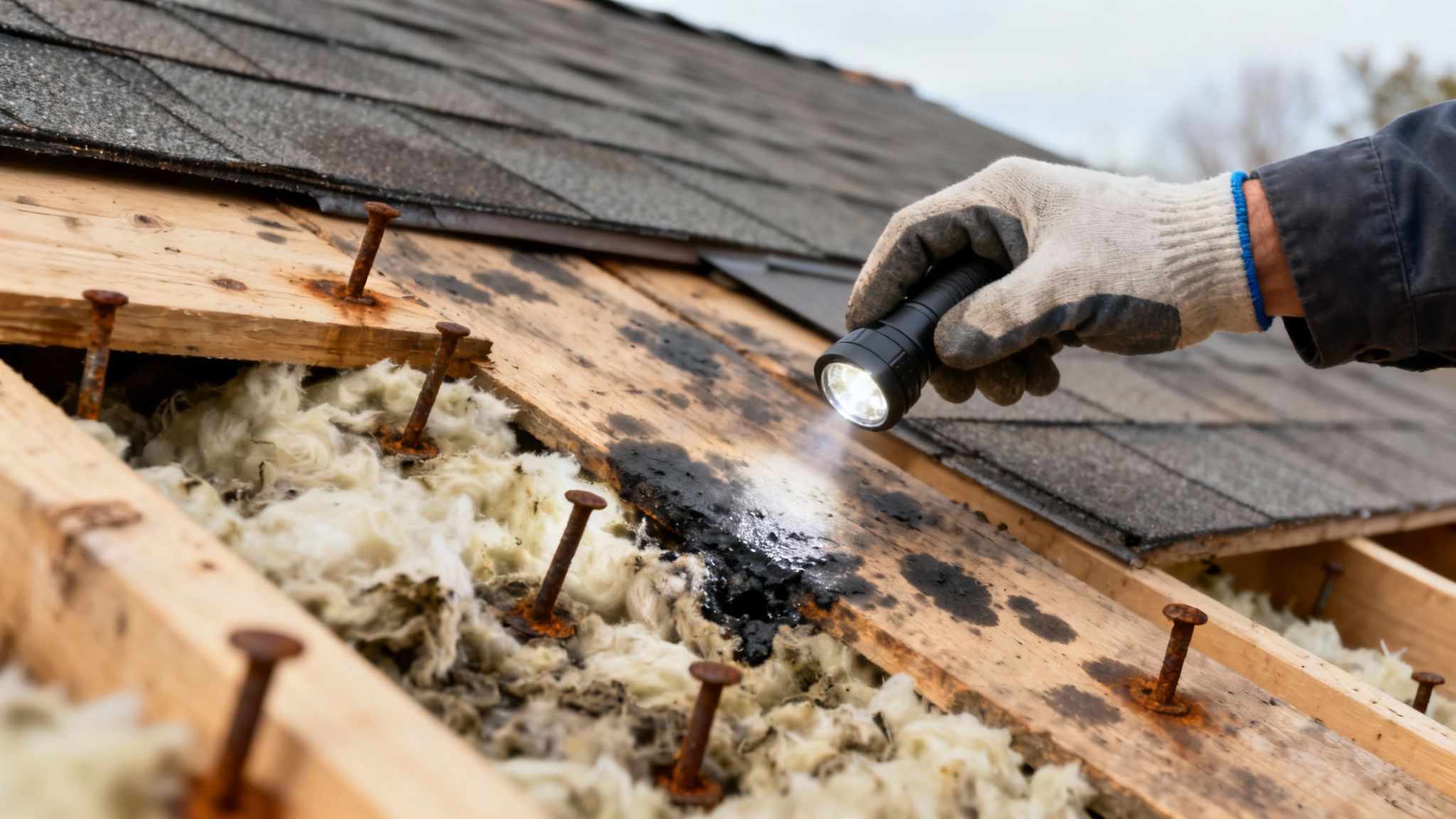
In attic spaces, this often results in:
- Damp insulation
- Stained roof decking
- Musty odors
- Elevated moisture readings
Over time, repeated condensation creates ideal conditions for mold development.
Early Warning Signs You Should Not Ignore
Ventilation-related moisture often shows subtle symptoms first.
Watch for:
- Persistent musty odor
- Condensation on windows
- Peeling or bubbling ceiling paint
- Damp attic insulation
- Rusted attic fasteners
- Mold spotting near vents
- Excess humidity even with AC running
If humidity remains high indoors despite normal AC operation, ventilation imbalance may be the cause.
In nearby Satellite Beach and Merritt Island, we frequently detect attic moisture long before visible mold forms.
Common Areas Affected by Poor Ventilation
Moisture from poor airflow often develops in:
- Attic roof decking
- Bathroom ceilings
- Laundry areas
- Air handler closets
- Return air cavities
In Cocoa Beach homes, attic ductwork can also sweat if ventilation and insulation are compromised.
Hidden moisture tends to accumulate above ceilings where homeowners rarely inspect.
How Professional Moisture Detection Works
Moisture detection in Cocoa Beach homes typically includes:
Visual Inspection
Checking attic ventilation systems, soffit vents, ridge vents, and exhaust fans.
Moisture Meter Testing
Measuring moisture levels in drywall, framing, and insulation.
Thermal Imaging
Identifying temperature differences that may indicate trapped moisture.
Humidity Monitoring
Evaluating indoor humidity levels compared to outdoor conditions.
Detection focuses on identifying elevated moisture before structural damage progresses.
The Role of Attic Ventilation
Attics are a major factor in Cocoa Beach homes.
Proper attic ventilation:
- Allows warm air to escape
- Reduces condensation
- Protects insulation
- Stabilizes roof decking
When soffit vents are blocked or ridge vents are insufficient, humid air becomes trapped.
After heavy storms or prolonged humid periods, attic inspections are especially important.
Bathroom and Laundry Ventilation
Bathrooms and laundry rooms generate high moisture levels.
Without proper exhaust:
- Steam accumulates
- Ceiling drywall absorbs moisture
- Mold risk increases
Ensuring exhaust fans vent outdoors — not into attic space — is critical.
In coastal climates, small ventilation flaws create long-term issues.
Prevention Strategies for Cocoa Beach Homeowners
Preventing moisture from poor ventilation involves consistent maintenance:
- Inspect attic ventilation annually
- Ensure soffit vents remain clear
- Use bathroom exhaust fans during and after showers
- Vent laundry areas properly
- Monitor indoor humidity (keep below 55%)
- Inspect attic insulation after storm season
Adding supplemental dehumidification can help stabilize indoor conditions during peak humidity months.
Proactive airflow management reduces mold risk significantly.
Why Local Experience Matters
Moisture detection in Cocoa Beach requires understanding:
- Coastal humidity cycles
- Salt air impact on materials
- Attic heat buildup patterns
- Slab-on-grade construction
Homes near the ocean behave differently than properties inland in Palm Bay or Viera.
Palm Bay Mold Removal regularly assists homeowners across Cocoa Beach, Satellite Beach, Melbourne, Merritt Island, Rockledge, and Palm Bay with moisture detection and ventilation-related concerns.
Local familiarity allows accurate identification of coastal-specific moisture patterns.
A Practical Next Step
If your Cocoa Beach home feels persistently humid, smells musty, or shows subtle ceiling or attic staining, professional moisture detection can identify problems early.
Poor ventilation rarely corrects itself.
Early detection, ventilation improvements, and humidity control protect your home’s structure and indoor environment in Florida’s coastal climate.