
Melbourne Carpet Cleaning After Flooding from Plumbing Leaks: A Local Homeowner Guide
In Melbourne, plumbing leaks have a way of turning into carpet problems fast.
A broken supply line under the sink. A washing machine hose failure. A water heater leaking overnight in the garage. By the time you notice, water has already traveled under walls and across flooring — and your carpet has absorbed more than you think.
In Florida’s humid climate, wet carpet doesn’t just dry on its own. It traps moisture underneath, inside padding, and along baseboards. That’s why proper carpet cleaning after flooding isn’t cosmetic — it’s structural protection.
If you’re dealing with wet carpet after a plumbing leak in Melbourne, here’s what you should know.
Why Wet Carpet Is a Bigger Issue in Melbourne
Melbourne’s environment adds complexity to water damage:
- High humidity year-round
- Warm temperatures that accelerate bacterial growth
- Slab foundations that allow water to spread outward
- AC systems that may circulate damp air
- Salt exposure that affects building materials
Even clean water from a plumbing leak can create odor and microbial growth if not handled quickly.
Time matters — especially in Florida.
What Happens When Carpet Gets Wet
Carpet absorbs water quickly, but the real problem is underneath.
When a plumbing leak soaks carpet:
- Padding becomes saturated
- Subfloor absorbs moisture
- Baseboards wick water upward
- Adjacent rooms may be affected
- Humidity rises throughout the house
Padding often holds more water than the carpet fibers themselves.
If moisture remains trapped, mold can begin forming within 24–48 hours.
Early Signs Carpet Needs Professional Attention
Homeowners in Melbourne should watch for:
- Squishing sound when walking
- Musty odor
- Carpet pulling away from walls
- Wrinkling or rippling
- Baseboards swelling
- Increased indoor humidity
Even if the carpet surface feels slightly dry, the padding below may still be saturated.
Step-by-Step Carpet Cleaning After Plumbing Flooding
Proper restoration follows a structured process.
Step 1: Stop the Leak Immediately
Before addressing the carpet:
- Shut off the water supply
- Repair the plumbing issue
- Prevent additional moisture intrusion
Without stopping the source, cleaning efforts won’t last.
Step 2: Water Extraction
Commercial extraction equipment removes water from:
- Carpet fibers
- Padding
- Subfloor surfaces
Household wet vacs are rarely strong enough to remove deep moisture.
Fast extraction increases the chance of saving the carpet.
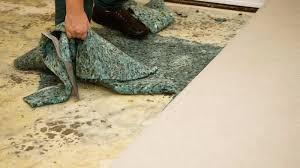
Step 3: Assess the Padding
Padding is often the deciding factor.
If the padding is:
- Fully saturated
- Contaminated
- Holding odor
It usually needs removal and replacement.
Keeping wet padding traps moisture against the slab.
Step 4: Moisture Detection and Mapping
Technicians check:
- Adjacent rooms
- Baseboard edges
- Subfloor moisture levels
- Closet interiors
- Wall cavities
Water often spreads farther than expected.
Mapping ensures no hidden damp areas remain.
Step 5: Structural Drying
Commercial-grade:
- Dehumidifiers
- High-velocity air movers
are placed strategically to dry the carpet (if salvageable), subfloor, and surrounding materials.
Drying continues until moisture readings confirm safe levels.
Florida humidity requires controlled drying — not open windows.
Step 6: Cleaning and Sanitizing
After drying:
- Carpet fibers are professionally cleaned
- Surfaces are sanitized
- Odor treatment may be applied if necessary
If water was clean (Category 1), carpet may be salvageable.
If water was contaminated, removal may be recommended.
Step 7: Reinstallation or Replacement
If padding was removed:
- New padding is installed
- Carpet is re-stretched
- Edges are secured
If carpet cannot be saved, replacement is discussed.
How HVAC Systems Can Be Affected
When carpet becomes saturated:
- Indoor humidity rises
- AC systems work harder
- Moisture may circulate through ductwork
If the AC ran during the leak, duct inspection may be appropriate.
Humidity control protects the entire home.
When Carpet Cannot Be Saved
In some situations, removal is necessary:
- Long exposure time
- Contaminated water (gray or storm water)
- Strong persistent odor
- Mold development
- Delamination of backing
Early action improves salvage chances.
Waiting decreases them.
Cost Factors for Carpet Cleaning After Flooding
Costs depend on:
- Size of affected area
- Duration before response
- Amount of padding replacement
- Subfloor involvement
- Drying time
- Reconstruction needs
Small, quickly addressed leaks are far more manageable than overnight flooding.
Rapid response reduces total restoration cost.
How to Prevent Future Carpet Damage
Melbourne homeowners can reduce risk by:
- Replacing aging washing machine hoses
- Inspecting water heater connections
- Clearing AC drain lines regularly
- Monitoring for small plumbing drips
- Acting immediately when water is discovered
Humidity makes minor leaks worse quickly.
Why Local Experience Matters
Carpet drying in Melbourne differs from drier climates because of:
- High ambient humidity
- Slab foundation moisture migration
- Frequent storm cycles
- Constant AC operation
Homes in Melbourne, West Melbourne, Palm Bay, Merritt Island, and Satellite Beach share similar environmental pressures.
Palm Bay Mold Removal regularly handles carpet drying and water damage restoration throughout Brevard County, focusing on moisture detection first and cosmetic cleaning second.
Because in Florida, drying properly is more important than cleaning quickly.
A Practical Next Step
If your Melbourne home has wet carpet after a plumbing leak, don’t rely on surface drying.
Professional extraction and moisture detection protect your subfloor, walls, and indoor air quality.
Handled quickly, carpet flooding can be stabilized and restored.
In Florida’s humidity, the sooner drying begins, the better the outcome.