
What Homeowners Should Know: Water Damage Restoration in Merritt Island After Roof Leaks
In Merritt Island, roof leaks rarely stay small for long.
A loose flashing, a worn vent boot, or wind-driven rain during a summer storm can allow water into your attic. From there, it spreads quietly — soaking insulation, dampening framing, and slowly working its way into ceilings and walls.
Because Merritt Island sits between the Indian River Lagoon and the Atlantic, humidity levels stay high year-round. That means when roof leaks occur, moisture doesn’t dry quickly on its own.
If your home has experienced a roof leak, understanding how water damage restoration works can prevent long-term structural problems and mold growth.
Why Roof Leaks Are a Bigger Issue in Merritt Island
Coastal exposure changes how roof leaks behave.
Homes in Merritt Island face:
- Heavy seasonal rain
- Tropical systems and hurricanes
- Wind-driven rain intrusion
- Salt air that accelerates flashing corrosion
- High ambient humidity
Even after a storm passes, moisture can remain trapped in insulation and drywall for days.
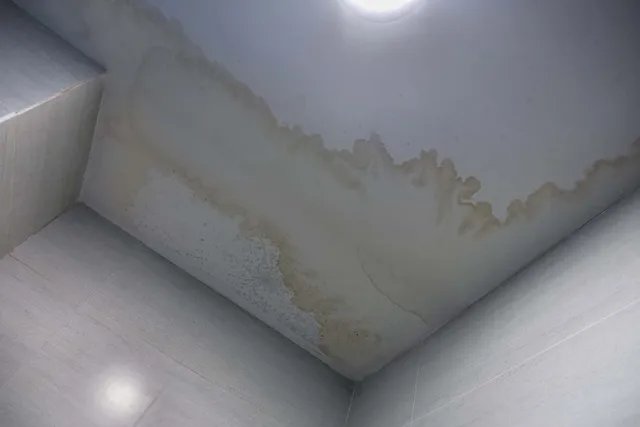
The visible ceiling stain is often just the surface symptom.
Early Signs of Roof Leak Water Damage
Homeowners often notice:
- Brown or yellow ceiling stains
- Peeling or bubbling paint
- Soft drywall near upper walls
- Musty odor after rain
- AC odor when the system starts
- Warped baseboards if water migrates downward
If insulation above the ceiling remains damp, mold growth can begin within 24–48 hours in Florida’s climate.
What Happens If Restoration Is Delayed
Waiting too long can lead to:
- Mold growth in attic insulation
- Structural wood deterioration
- Ceiling collapse
- HVAC contamination
- Spread of moisture into adjacent rooms
Roof leak damage rarely fixes itself.
Humidity slows natural drying and accelerates deterioration.
Step-by-Step Water Damage Restoration After Roof Leaks
Professional restoration follows a structured approach.
Step 1: Stop the Source
Before drying begins, the roof issue must be addressed:
- Temporary tarping
- Flashing repair
- Vent boot replacement
- Sealing exterior penetrations
Drying without correcting the leak guarantees recurrence.
Step 2: Moisture Detection and Mapping
Moisture meters and thermal imaging help identify:
- Wet insulation
- Damp drywall
- Framing moisture
- Subtle migration into nearby walls
Water often travels along framing before becoming visible.
Mapping ensures no hidden moisture is missed.
Step 3: Removal of Saturated Materials
Depending on severity, restoration may require removal of:
- Wet attic insulation
- Damaged ceiling drywall
- Swollen trim
- Compromised baseboards
Selective removal prevents trapped moisture from causing future issues.
Step 4: Structural Drying
Commercial-grade equipment is used to stabilize moisture levels:
- Dehumidifiers
- High-velocity air movers
- Moisture monitoring devices
In Merritt Island’s humid environment, drying may take longer than homeowners expect.
Moisture readings confirm when materials are properly dried.
Step 5: Cleaning and Odor Control
After drying, surfaces are cleaned to reduce contamination and musty odor.
If moisture was present for several days, further inspection for mold may be appropriate.
Step 6: Repairs and Restoration
Once dryness is verified:
- Drywall is replaced
- Insulation is reinstalled
- Trim and paint are restored
- Ceiling finishes are repaired
Rebuilding too early traps moisture behind surfaces.
How Roof Leaks Impact HVAC Systems
Many Merritt Island homes have HVAC ductwork in the attic.
When roof leaks occur:
- Duct insulation may become damp
- Return air pathways can draw humid air
- AC systems may circulate moisture
If the system ran during active leaking, inspection is important to prevent lingering odor and humidity imbalance.
Cost Factors in Roof Leak Water Damage Restoration
Costs vary based on:
- Size of affected area
- Duration of moisture exposure
- Amount of insulation saturation
- Ceiling and drywall involvement
- HVAC contamination
- Reconstruction needs
Small, quickly addressed leaks are far less expensive than prolonged hidden moisture.
Early response reduces total repair costs.
How to Prevent Roof Leak Damage in Merritt Island
Prevention requires regular inspection.
Inspect Roof Annually
Especially before hurricane season.
Check:
- Flashing
- Vent boots
- Shingle condition
- Roof penetrations
Monitor Attic After Major Storms
Look for:
- Damp insulation
- Darkened sheathing
- Musty odor
- Wet framing
Maintain Indoor Humidity
Keep humidity below 55% to reduce moisture retention.
Use:
- Consistent AC operation
- Supplemental dehumidification if necessary
Act Quickly at First Signs
Ceiling stains should be investigated immediately.
Small repairs prevent larger restoration projects.
Why Local Experience Matters
Roof leaks in Merritt Island behave differently because of:
- High groundwater
- Coastal humidity
- Salt exposure
- Frequent storms
- Slab foundation moisture migration
Homes in Merritt Island, Cocoa Beach, Satellite Beach, Melbourne, and Palm Bay share similar environmental pressures.
Palm Bay Mold Removal regularly performs moisture detection and water damage restoration throughout Brevard County, focusing on correcting moisture sources before reconstruction begins.
Because in Florida, controlling humidity is as important as fixing the roof.
A Practical Next Step
If you notice ceiling staining, musty odors, or attic dampness after a storm, don’t assume it will dry on its own.
Water damage restoration stabilizes the structure, removes trapped moisture, and prevents mold growth before it becomes a larger issue.
In Merritt Island’s humid climate, early action protects both your home and your long-term repair costs.