
Early Signs You Should Not Ignore: Indoor Air Quality Improvement in Titusville from AC Condensation
In Titusville, air conditioning systems run most of the year. Between long summers, coastal humidity, and mild winters, HVAC systems rarely get a break. While they keep homes cool and comfortable, they also generate one unavoidable byproduct: condensation.
When AC condensation is not draining or ventilating properly, it becomes a hidden moisture source. Over time, that moisture affects indoor air quality, encourages mold growth, and leads to structural damage. The early warning signs are often subtle, which is why many homeowners overlook them until the problem becomes larger.
Understanding those signs — and acting early — can protect both your air quality and your home.
Why AC Condensation Is a Common Issue in Titusville
Titusville’s location near the Indian River Lagoon means humidity stays elevated throughout much of the year. When warm, humid air passes over cold evaporator coils inside your AC system, moisture condenses into water droplets.
Under normal conditions, this water flows into a drain pan and exits through a condensate line.
Problems begin when:
- Drain lines clog with algae buildup
- Drain pans crack or overflow
- Ductwork lacks proper insulation
- Air filters restrict airflow
- Systems are oversized and short-cycle
Instead of draining safely, moisture accumulates inside air handlers, ducts, walls, or ceilings.
Florida’s warm environment allows mold to begin developing quickly when dampness lingers.
Early Signs You Should Not Ignore
AC-related indoor air quality issues rarely begin with visible mold. Instead, homeowners notice smaller changes.
1. Persistent Musty Odor
If a musty smell appears when the AC turns on, moisture may be present inside the air handler or ductwork.
2. Increased Indoor Humidity
If your home feels damp even while the AC runs continuously, condensation may not be draining properly.
3. Moisture Around Vents
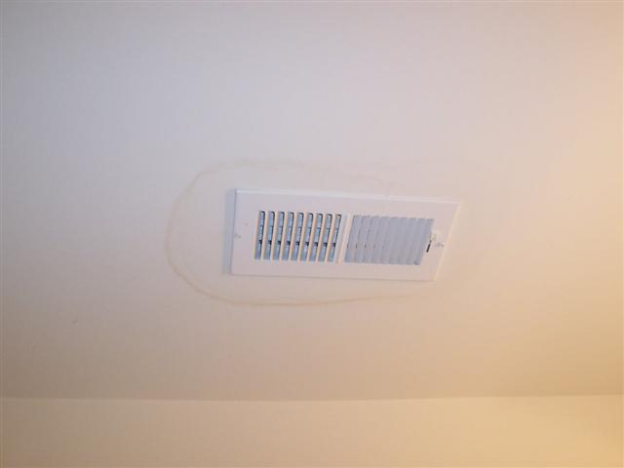
Visible condensation or staining around ceiling vents can indicate duct sweating or airflow imbalance.
4. Water Stains Near Air Handler Closets
Minor drain line leaks can slowly saturate surrounding drywall.
5. Allergy-Like Irritation Indoors
Poor indoor air quality caused by airborne spores or microbial particles may trigger irritation that improves when leaving the home.
These signs often appear gradually. Ignoring them allows moisture to remain and mold to grow.
How AC Condensation Impacts Indoor Air Quality
When moisture accumulates inside HVAC components, it creates an environment where mold and bacteria can grow.
Every time the system cycles, spores and particles may circulate through the home.
This can lead to:
- Reduced air freshness
- Increased dust accumulation
- Uneven humidity levels
- Persistent odors
Indoor air quality declines slowly, making it difficult to pinpoint the source without inspection.
Homes in nearby Merritt Island, Cocoa, and Port St. John experience similar humidity-driven issues.
Hidden Areas Where Moisture Develops
AC condensation problems often develop in concealed spaces.
Inside the Air Handler
Clogged drain lines cause standing water in drain pans.
In Attic Ductwork
Metal ducts in hot attics frequently sweat when insulation is insufficient.
Around Ceiling Registers
Improperly sealed vent boots allow cool air leakage, creating condensation at drywall openings.
Behind Walls
Slow drain line leaks may soak interior framing.
Moisture detection tools help identify these hidden areas before visible damage occurs.
How Indoor Air Quality Improvement Helps
Improving indoor air quality starts with controlling moisture.
Proper Drain Line Maintenance
Flushing condensate lines reduces algae buildup and prevents overflow.
Coil Cleaning
Clean evaporator coils operate efficiently and reduce excess condensation.
Duct Inspection and Cleaning
Removing debris and microbial growth improves airflow and reduces airborne contaminants.
Humidity Control
Maintaining indoor humidity between 45 and 55 percent limits mold growth potential.
Air Filtration Upgrades
Appropriately sized filters capture airborne particles without restricting airflow.
Palm Bay Mold Removal frequently identifies AC-related moisture during indoor air quality inspections in Titusville, especially during peak summer humidity.
Why Cleaning Alone Is Not Enough
Simply cleaning visible mold without correcting moisture issues leads to recurrence.
If humidity remains high or drain lines continue clogging, mold can return quickly.
Long-term solutions focus on:
- Ensuring proper system sizing
- Improving attic ventilation
- Sealing duct leaks
- Monitoring humidity levels
- Scheduling regular HVAC maintenance
Moisture control must accompany cleaning.
The Role of Attics in Condensation Problems
Many Titusville homes have ductwork installed in attic spaces.
During summer months, attic temperatures rise significantly. When cool air flows through ducts surrounded by hot, humid air, condensation forms on duct surfaces.
Damaged insulation worsens sweating, leading to moisture dripping onto ceiling drywall.
Inspecting attic insulation and sealing gaps reduces risk.
When Professional Inspection Is Necessary
If musty odors persist or moisture staining spreads, professional evaluation may be needed.
Inspection typically includes:
- Moisture meter readings
- Thermal imaging
- Air sampling if mold is suspected
- Humidity measurement
- Drain pan and line inspection
Testing determines whether airborne mold levels are elevated and whether remediation is necessary.
Preventative Steps for Titusville Homeowners
Indoor air quality improvement is ongoing in Florida’s climate.
Homeowners can reduce condensation risk by:
- Replacing filters regularly
- Flushing drain lines seasonally
- Scheduling annual HVAC service
- Monitoring indoor humidity
- Running exhaust fans in bathrooms and kitchens
- Sealing attic air leaks
Proactive maintenance prevents small condensation issues from becoming larger air quality problems.
Why Local Experience Matters
Titusville’s humidity, coastal proximity, and long cooling seasons create specific challenges for HVAC systems.
Local professionals understand:
- Seasonal humidity fluctuations
- Common attic ventilation patterns
- Typical AC installation setups
- Drain line clogging trends in Brevard County
Palm Bay Mold Removal serves Titusville and surrounding communities with indoor air quality assessments tailored to Florida’s environment.
Understanding local conditions leads to more accurate diagnosis and effective solutions.
A Practical Approach You Should Not Delay
AC condensation is normal. Indoor mold growth is not.
If your Titusville home shows early warning signs — musty odors, vent condensation, rising humidity — do not ignore them. Small moisture problems are easier and less expensive to correct than widespread mold contamination.
By addressing condensation early, improving humidity control, and maintaining your HVAC system properly, you protect your indoor air quality and preserve your home’s structural integrity.
In Florida’s climate, moisture management is not seasonal. It is continuous. Early attention makes all the difference.