
How Indoor Air Quality Improvement Helps Homes in Melbourne after Water Damage
Water damage is one of the most disruptive problems homeowners face in Melbourne and throughout Brevard County. Whether caused by heavy rains, plumbing leaks, storm intrusion, or AC system failures, water entering a home often leaves behind hidden moisture even after visible cleanup is completed.
Many homeowners focus on repairing floors, walls, and belongings after water damage. However, one critical issue often remains unnoticed — indoor air quality. When moisture lingers in building materials, mold spores, bacteria, and airborne particles can circulate throughout the home, affecting comfort and long-term property conditions.
Understanding how indoor air quality improvement works after water damage helps homeowners restore safe living environments and prevent recurring problems.
What Happens to Indoor Air After Water Damage
When water enters a home, moisture spreads into drywall, insulation, flooring, and structural materials. Even after surfaces appear dry, hidden dampness may remain trapped inside walls and ceilings.
As materials stay wet, mold spores already present in indoor air begin growing. These spores then become airborne and spread through:
• HVAC systems
• Air ducts and vents
• Open living spaces
• Closets and storage areas
In addition to mold, water damage can also introduce bacteria and unpleasant odors into the indoor environment. Running air conditioning systems after water intrusion often spreads these contaminants throughout the home.
Improving indoor air quality after water damage involves removing both moisture and airborne pollutants.
Why Water Damage Causes Ongoing Air Quality Problems in Melbourne
Melbourne homes face particular challenges after water damage due to Florida’s humid climate. High outdoor humidity makes it harder for structures to dry completely, allowing damp materials to remain wet longer.
Several regional factors contribute to air quality issues:
• High humidity slows drying
• Frequent storms cause repeated moisture intrusion
• AC systems run constantly, spreading airborne particles
• Homes remain closed tightly to preserve cooling
• Attic and crawl space ventilation may be limited
Homes near Palm Bay, Satellite Beach, and Cocoa Beach experience similar conditions, where moisture often lingers after storms or leaks.
Without proper air quality improvements, indoor environments may remain damp long after repairs appear complete.
Signs Indoor Air Quality Has Been Affected
Many homeowners assume once repairs are complete, their home is fully restored. However, lingering air quality problems often reveal themselves through everyday symptoms.
Common warning signs include:
• Persistent musty or damp odors
• Allergy symptoms worsening indoors
• Irritated eyes or respiratory discomfort
• Visible mold near vents or baseboards
• High indoor humidity levels
• Rooms feeling damp or stuffy
Because contaminants circulate through the air, symptoms often appear throughout the home rather than in one isolated location.
Hidden Sources of Poor Air Quality After Water Damage
Indoor air quality problems often originate from areas homeowners cannot easily see.
Common hidden sources include:
• Damp drywall behind walls
• Wet insulation in ceilings or attics
• Mold inside air ducts
• Moisture under flooring materials
• Water-damaged crawl spaces
• AC air handlers contaminated by moisture
Even minor leaks or flooding events can leave these hidden areas damp long after cleanup ends.
Why DIY Cleanup Rarely Restores Air Quality
Homeowners sometimes attempt to improve air quality by cleaning surfaces or using air fresheners after water damage. While these methods may temporarily mask odors, they rarely solve the underlying problem.
DIY approaches usually fail because:
• Moisture sources remain untreated
• Mold growth continues in hidden areas
• Air circulation spreads contaminants
• Household equipment cannot remove airborne spores effectively
Without professional intervention, air quality issues often return.
How Professional Indoor Air Quality Improvement Works
Professional restoration teams use specialized methods to restore indoor air quality after water damage.
The process often includes:
• Air sampling to evaluate airborne contaminants
• Moisture detection inside structural materials
• Air filtration equipment removing airborne spores
• Structural drying using industrial dehumidifiers
• Cleaning contaminated surfaces
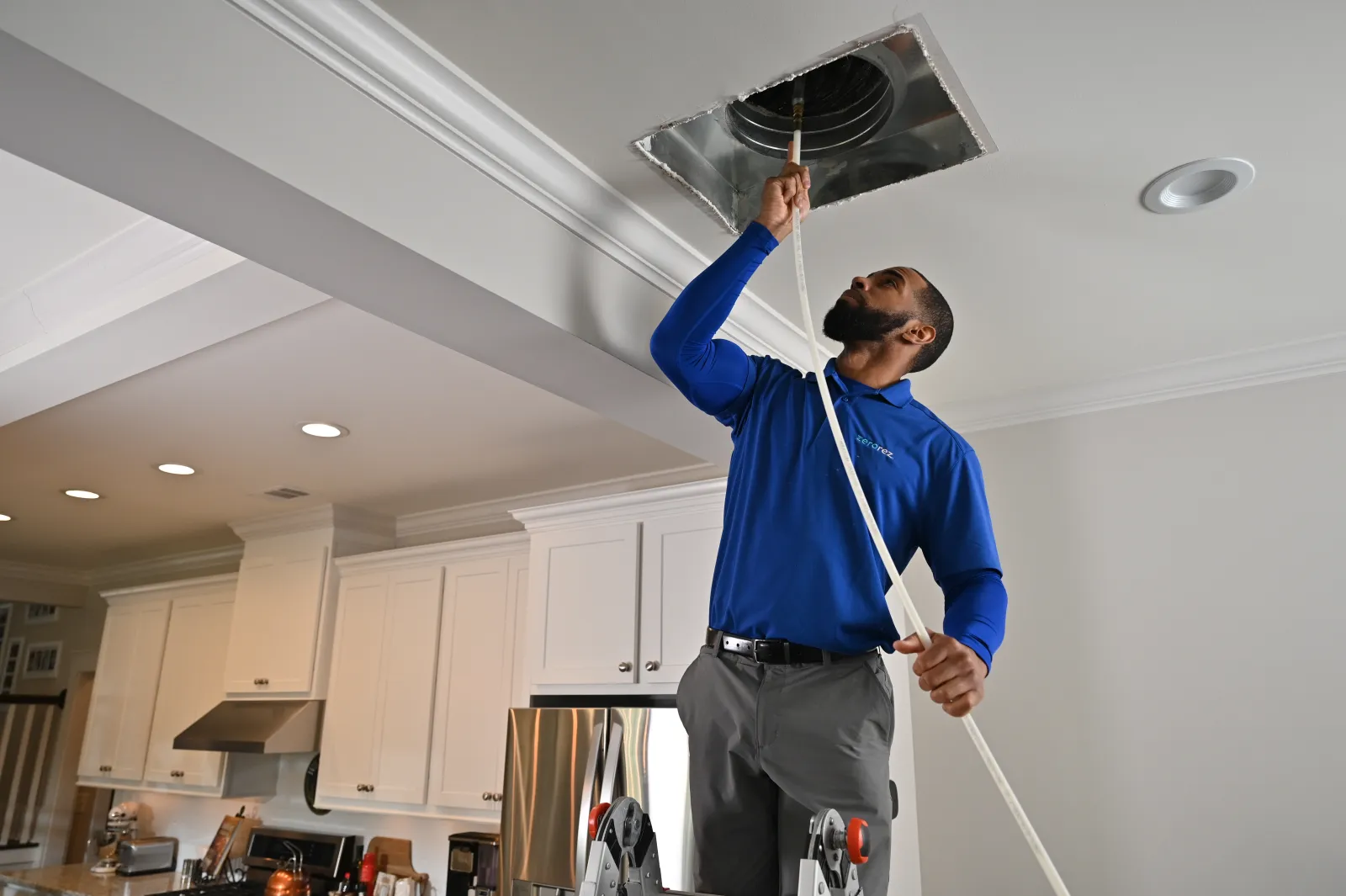
• HVAC system inspection and cleaning
These steps help remove contaminants while addressing moisture sources that allow problems to persist.
Step-by-Step Process After Water Damage
Once professionals evaluate the home, restoration follows a structured process.
Step 1: Moisture Source Correction
Leaks, flooding, or condensation problems must be corrected to prevent continued moisture buildup.
Step 2: Containment of Affected Areas
Contaminated areas may be isolated to prevent spores from spreading during cleanup.
Step 3: Structural Drying
Air movers and dehumidifiers remove moisture trapped inside walls and flooring.
Step 4: Air Filtration and Cleaning
High-efficiency filtration systems remove airborne particles while surfaces are cleaned.
Step 5: HVAC and Duct Inspection
Air handlers and duct systems are cleaned if contamination spread through airflow.
Step 6: Final Air Quality Verification
Follow-up testing confirms improvements before repairs conclude.
Connection Between Mold Growth and Air Quality
Mold growth is one of the biggest contributors to poor indoor air quality after water damage. Mold releases microscopic spores into the air, which then circulate throughout the home.
Conditions that allow mold growth include:
• Persistent moisture
• Warm indoor temperatures
• Organic building materials
• Poor airflow
Once mold spreads, professional remediation becomes necessary to prevent ongoing contamination.
HVAC Systems and Indoor Air Quality
HVAC systems play a major role in air quality after water damage. Moisture entering ductwork or air handlers can allow mold to grow inside these systems.
Signs HVAC systems may be affected include:
• Musty smells when AC runs
• Dust buildup around vents
• Increased allergy irritation indoors
• Rooms cooling unevenly
Cleaning and drying HVAC systems prevents contaminants from spreading throughout the home.
Preventing Future Indoor Air Quality Problems
Homeowners in Melbourne can reduce future air quality risks with preventive maintenance.
Helpful steps include:
• Scheduling regular HVAC maintenance
• Using dehumidifiers during humid periods
• Repairing leaks immediately
• Inspecting homes after storms
• Maintaining attic and crawl space ventilation
• Cleaning AC drain lines regularly
• Monitoring indoor humidity levels
Early action prevents moisture problems from developing into major air quality concerns.
Why Local Experience Matters
Homes across Melbourne and surrounding communities experience moisture differently depending on construction style and location. Professionals familiar with Brevard County homes understand how humidity and storms affect indoor environments.
Homeowners often rely on experienced providers like Palm Bay Mold Removal because familiarity with local climate conditions allows accurate inspections and effective long-term solutions.
Local experience helps ensure moisture and air quality problems are corrected properly the first time.
Restoring Comfort After Water Damage
Water damage recovery involves more than repairing visible surfaces. Hidden moisture and airborne contaminants can continue affecting homes long after repairs are finished.
Improving indoor air quality after water damage helps restore comfort, protect structural materials, and prevent mold from spreading. Scheduling professional inspection and cleanup ensures hidden contamination is removed before larger problems develop.
Taking early action keeps Melbourne homes safe, comfortable, and healthy long after water damage recovery is complete.