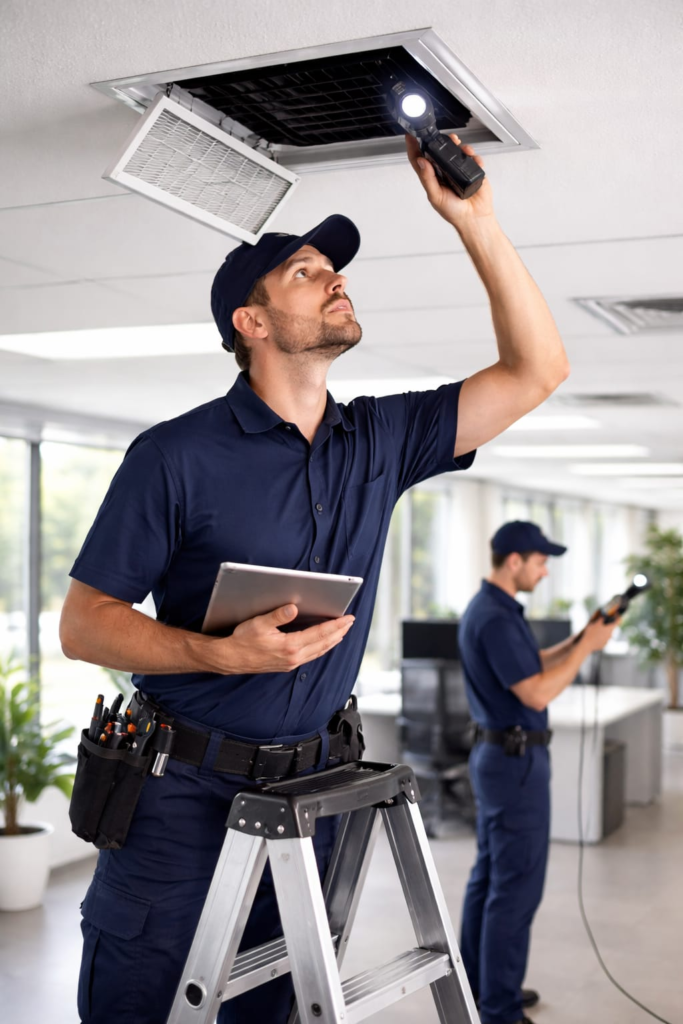
West Melbourne Indoor Air Quality Improvement in Commercial Buildings: Inspection and Repair Guide
Maintaining good indoor air quality (IAQ) in commercial buildings in West Melbourne is essential for the health, productivity, and comfort of employees and tenants. Poor IAQ can result from dust accumulation, mold growth, HVAC inefficiencies, chemical pollutants, and post-storm water damage. For building owners and property managers, a systematic inspection and repair approach is critical to address these issues proactively.
This guide provides a step-by-step overview of IAQ assessment, early warning signs, inspection methods, repair processes, and preventive strategies for commercial properties in West Melbourne.
Why Indoor Air Quality Matters in Commercial Buildings
- Health and Safety
- Poor IAQ can trigger respiratory problems, allergies, headaches, and long-term illnesses among occupants.
- Regulatory Compliance
- Commercial properties must meet local building codes and occupational safety standards regarding ventilation and air quality.
- Employee Productivity
- Clean, well-ventilated spaces improve concentration, reduce absenteeism, and increase overall workplace efficiency.
- Equipment Longevity
- Proper IAQ management prevents damage to HVAC systems, filters, and ductwork.
- Property Value
- High IAQ standards enhance tenant satisfaction and maintain property appeal.
Common IAQ Problems in West Melbourne Commercial Buildings
- Mold and Mildew
- Often caused by humidity, water intrusion, or post-storm damage.
- Dust and Particulates
- Settled dust in ductwork and on surfaces can circulate throughout the building.
- Chemical Pollutants
- VOCs from cleaning agents, paint, or office equipment.
- Poor Ventilation
- Inefficient HVAC systems or blocked vents reduce airflow.
- Water Damage
- Flooding or leaks lead to excess moisture and microbial growth.
- Odors
- Stagnant air or microbial contamination can produce unpleasant smells.
Early Signs of Indoor Air Quality Problems
- Musty or Unpleasant Odors
- A primary indicator of mold or moisture issues.
- Visible Mold or Stains
- Patches on walls, ceilings, or around HVAC vents.
- Excessive Dust Accumulation
- Dust buildup in vents or on horizontal surfaces.
- Allergy or Respiratory Complaints
- Coughing, sneezing, watery eyes, or headaches reported by occupants.
- Uneven Airflow
- Some areas may feel stuffy while others are overly cold or hot.
- Condensation
- Water pooling around HVAC units or windows indicates humidity issues.
Step‑by‑Step IAQ Inspection and Assessment
Step 1: Visual Inspection
- Examine ductwork, air vents, ceilings, and flooring for visible moisture, mold, or debris.
Step 2: Air Sampling
- Collect air samples to detect particulate matter, mold spores, and airborne pollutants.
Step 3: Surface Sampling
- Swab HVAC components, walls, or flooring to identify microbial contamination.
Step 4: HVAC Evaluation
- Inspect filters, coils, drip pans, and ducts for cleanliness and functionality.
- Check airflow and ventilation efficiency.
Step 5: Moisture Assessment
- Use moisture meters and thermal imaging to detect hidden damp areas.
Step 6: Data Analysis and Reporting
- Compile findings into a comprehensive report detailing problem areas, potential health risks, and recommended remediation actions.
Repair and Remediation Strategies
- HVAC System Cleaning
- Remove dust, mold, and debris from ducts, coils, and drip pans.
- Filter Replacement
- Upgrade to HEPA or high-MERV filters to reduce airborne contaminants.
- Mold Remediation
- Treat affected areas with antimicrobial solutions and remove contaminated materials if necessary.
- Moisture Control
- Repair leaks, improve drainage, and install dehumidifiers in humid areas.
- Ventilation Improvements
- Optimize airflow by cleaning vents, balancing HVAC systems, and ensuring proper exhaust.
- Chemical and Odor Management
- Use low-VOC cleaning products and air purifiers to minimize pollutants.
Preventive Measures for Commercial Property Owners
- Regular IAQ Inspections
- Conduct quarterly or semi-annual assessments to catch problems early.
- Routine HVAC Maintenance
- Clean coils, replace filters, and inspect ducts regularly.
- Monitor Indoor Humidity
- Maintain humidity levels between 40–60% to prevent mold growth.
- Prompt Water Damage Response
- Address leaks, flooding, and condensation immediately.
- Educate Occupants
- Encourage staff to report unusual odors, water stains, or ventilation issues.
Benefits of IAQ Improvement in Commercial Buildings
- Healthier Environment
- Reduces allergens, mold, and airborne pathogens.
- Enhanced Comfort
- Balanced temperature and airflow improve occupant satisfaction.
- Energy Efficiency
- Clean HVAC systems operate more efficiently, reducing utility costs.
- Regulatory Compliance
- Maintains adherence to occupational safety and building codes.
- Long-Term Cost Savings
- Prevents costly repairs and improves building longevity.
Conclusion
Maintaining indoor air quality in West Melbourne commercial buildings is crucial for the health, comfort, and productivity of occupants. Water damage, mold, dust, and ventilation issues can compromise IAQ if not addressed promptly.
Professional inspection and repair services provide a systematic approach to identifying issues, cleaning and remediating contaminated systems, and implementing preventive measures. By following a structured IAQ management plan—including routine inspections, HVAC maintenance, moisture control, and ventilation optimization—property owners can ensure a safe, efficient, and comfortable environment for all building occupants.