Melbourne Water Leak Detection in Rental Properties: How to Prevent Future Damage
Water leaks are one of the most common and costly problems in residential rental properties in Melbourne. In rental units, unnoticed leaks can lead to structural damage, mold growth, increased utility bills, and disputes between landlords and tenants. Effective water leak detection is essential for property owners and managers to protect both their investment and the health and comfort of tenants.
This guide explores common causes of leaks, signs to watch for, the detection process, and strategies to prevent future damage in Melbourne rental properties.
Why Water Leak Detection Matters in Rental Properties
- Protects Property Value
- Undetected leaks can weaken foundations, warp floors, and damage walls, reducing property value over time.
- Prevents Mold and Mildew
- Moist environments from leaks are ideal for mold growth, which can lead to costly remediation and health concerns.
- Reduces Utility Costs
- Leaks waste water and increase utility bills, affecting both landlords and tenants.
- Improves Tenant Satisfaction
- Prompt detection and repair of leaks prevent damage to personal belongings and maintain a comfortable living environment.
- Avoids Legal Issues
- Property owners are often legally responsible for maintaining safe and habitable rental units. Undetected leaks can lead to liability claims.
Common Causes of Water Leaks in Rental Properties
- Aging Plumbing
- Old pipes, fittings, and fixtures are prone to corrosion and failure.
- Faulty Appliances
- Dishwashers, washing machines, and water heaters can leak if connections or seals degrade.
- Roof and Gutter Issues
- Leaks from roofs or clogged gutters can allow water to infiltrate ceilings and walls.
- HVAC and AC Systems
- Condensation lines or poorly maintained systems can drip and cause hidden water damage.
- Tenant Negligence
- Improper use of plumbing fixtures, failure to report leaks, or blockages in drains can contribute to water damage.
Early Signs of Water Leaks to Watch For
- Unexplained High Water Bills
- A sudden spike in water usage can indicate hidden leaks.
- Visible Water Damage
- Stains, discoloration, or warping on ceilings, walls, or floors.
- Musty Odors
- Damp smells often indicate hidden leaks and potential mold growth.
- Dripping or Pooling Water
- Puddles or damp spots near appliances, sinks, toilets, or HVAC units.
- Low Water Pressure
- A drop in water pressure can indicate leaks within pipes.
- Mold or Mildew Growth
- Small patches of mold or mildew in hidden areas often signal water intrusion.
Step-by-Step Water Leak Detection Process
Step 1: Visual Inspection
- Examine plumbing fixtures, appliances, ceilings, walls, and floors for visible signs of leaks.
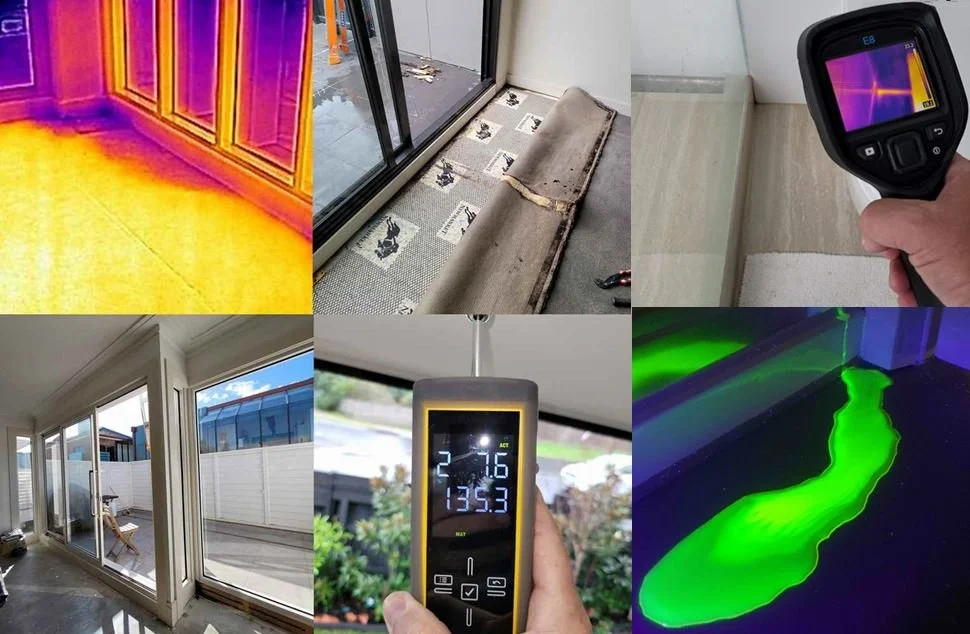
Step 2: Moisture Detection
- Use moisture meters to detect elevated moisture in walls, floors, and ceilings.
Step 3: Thermal Imaging
- Infrared cameras can identify hidden leaks by detecting temperature differences caused by water presence.
Step 4: Pressure Testing
- Check water pressure in pipes to identify drops caused by leaks.
Step 5: Specialized Leak Detection Tools
- Acoustic sensors and ultrasonic devices detect leaks inside walls, under floors, or in slab foundations.
Step 6: Professional Assessment
- Certified leak detection specialists provide accurate identification, pinpointing the exact location of leaks for targeted repair.
Preventing Future Water Damage in Rental Properties
- Routine Inspections
- Conduct regular checks of plumbing systems, appliances, and roofs to detect leaks early.
- Install Water Detection Devices
- Smart leak detectors can alert landlords and tenants to water presence before serious damage occurs.
- Maintain HVAC and AC Systems
- Clean condensate lines and inspect drip pans to prevent leaks.
- Replace Aging Plumbing
- Upgrade old pipes, fittings, and fixtures to reduce the risk of leaks.
- Tenant Education
- Provide instructions on proper appliance use and encourage prompt reporting of leaks or water issues.
- Gutter and Roof Maintenance
- Keep gutters clear of debris and inspect roofing for damage or leaks, especially after storms.
- Seal Vulnerable Areas
- Use caulk or weatherstripping around windows, doors, and penetrations to prevent water infiltration.
Benefits of Proactive Water Leak Detection
- Cost Savings
- Early detection prevents expensive repairs and mold remediation.
- Preserved Property Value
- Maintains structural integrity and appearance of rental units.
- Tenant Retention
- Ensures a safe and comfortable living environment, improving tenant satisfaction.
- Legal Protection
- Demonstrates responsible property management, reducing liability risk.
- Peace of Mind
- Owners can monitor and manage water risks efficiently, especially during rainy seasons.
Conclusion
Water leaks in rental properties in Melbourne are a hidden but serious threat to homes and tenant safety. Proactive water leak detection helps property owners identify early signs of damage, address leaks before they worsen, and prevent costly repairs or mold growth.
By combining routine inspections, technology, tenant education, and professional detection services, landlords can safeguard their investment, maintain safe and habitable living spaces, and avoid future water-related issues. Preventing damage before it occurs is the most effective strategy for managing rental properties in Melbourne’s rainy and humid climate.