
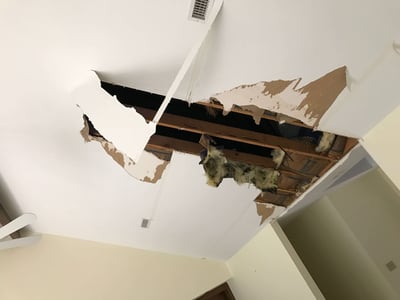
What Homeowners Should Know: Water Damage Restoration in Merritt Island After Storm Damage
Storms in Merritt Island are rarely light.
Between tropical systems, summer downpours, and hurricane activity, homes here take on serious moisture fast. Wind-driven rain pushes into roof seams. Sliding glass doors leak under pressure. Yard drainage gets overwhelmed. Within hours, water can move from exterior surfaces into ceilings, walls, and flooring.
What many homeowners don’t realize is this: storm damage doesn’t stop when the rain stops.
Water damage restoration in Merritt Island is about more than drying what you can see. It’s about identifying hidden moisture, preventing mold growth, and protecting the long-term structural stability of your home in a coastal climate.
If your property has experienced storm damage, here’s what you should know.
Why Storm Damage Is More Complicated in Merritt Island
Merritt Island is surrounded by water — the Indian River Lagoon and the Banana River. That geography creates:
- Elevated humidity year-round
- High water tables
- Strong wind exposure
- Saturated soil after storms
Even minor roof or siding vulnerabilities allow water to enter under pressure.
And because outdoor humidity remains high after storms, natural drying is slow.
Homes here often require professional water damage restoration to ensure moisture doesn’t linger inside structural materials.
Common Storm-Related Water Damage Scenarios
In Merritt Island homes, restoration calls often result from:
- Roof leaks after high winds
- Ceiling water intrusion from lifted shingles
- Window frame leaks
- Sliding glass door threshold flooding
- Garage door seepage
- AC system drain backups during power outages
Sometimes water spreads across tile floors. Other times, it quietly saturates insulation and drywall above ceilings.
The visible damage is often only part of the problem.
Palm Bay Mold Removal frequently responds to storm-related water damage in Merritt Island and surrounding communities like Cocoa Beach, Rockledge, and Satellite Beach, where hidden moisture remains after surface cleanup.
Why Immediate Water Removal Matters
Time is critical after storm damage.
Within 24–48 hours:
- Drywall weakens
- Wood framing absorbs moisture
- Insulation becomes saturated
- Mold risk increases
The sooner emergency water removal begins, the lower the chance of secondary damage.
Professional extraction prevents water from spreading into:
- Adjacent rooms
- Wall cavities
- Subfloors
- Cabinet bases
Delays increase both cost and complexity.
What Water Damage Restoration Actually Involves
Water damage restoration follows a structured process.
Step 1: Inspection and Moisture Detection
Restoration begins with identifying:
- Source of water intrusion
- Extent of affected areas
- Hidden damp materials
Moisture meters and infrared tools help locate water behind walls and above ceilings.
Storm water often travels farther than expected.
Step 2: Water Extraction
High-powered pumps and extraction equipment remove standing water from floors and carpets.
The goal is rapid removal to limit absorption into structural materials.
Step 3: Controlled Drying
Air movers and dehumidifiers are strategically placed.
Drying may continue for several days, with daily monitoring to ensure moisture levels return to safe readings.
In Merritt Island’s humid environment, controlled dehumidification is essential.
Opening windows typically increases indoor humidity rather than helping.
Step 4: Structural Assessment
Once drying is underway, professionals evaluate:
- Drywall integrity
- Insulation condition
- Subfloor moisture
- Cabinet bases
- HVAC system impact
Materials that cannot dry properly may require removal.
Targeted removal prevents mold development.
Step 5: Mold Prevention and Inspection
After storm damage, mold inspection is often recommended — especially if moisture exposure lasted more than two days.
Signs mold remediation may be needed include:
- Musty odor
- Dark staining
- Elevated indoor humidity
- Visible growth in attic or closets
Early detection reduces the need for extensive remediation later.
The Role of HVAC Systems After Storm Damage
Storm-related humidity affects HVAC systems.
Moisture may impact:
- Air handlers
- Drain pans
- Duct insulation
- Return air pathways
Air duct cleaning may be necessary if contamination spreads through ventilation systems.
Air conditioning repair may also be needed to restore proper humidity control.
Without correcting HVAC-related moisture issues, indoor humidity may remain elevated.
Costs of Water Damage Restoration in Merritt Island
Costs depend on:
- Size of affected area
- Type of storm damage
- Duration of water exposure
- Need for drywall or insulation removal
- Mold remediation involvement
General Cost Ranges
- Minor localized intrusion: lower range
- Multi-room drying and repair: moderate range
- Extensive structural involvement: higher range
The biggest cost factor is response time.
Immediate water removal often prevents reconstruction costs.
Why DIY Storm Cleanup Is Risky
Homeowners sometimes attempt:
- Towels and shop vacs
- Household fans
- Running AC at full capacity
- Painting over ceiling stains
These efforts may improve appearance temporarily but do not address hidden moisture.
Without moisture detection, damp insulation or framing remains wet.
Incomplete drying increases mold risk.
Professional equipment ensures thorough structural drying.
Preventing Future Storm-Related Water Damage
Merritt Island homeowners can reduce future risk by:
- Inspecting roofs annually
- Replacing aging shingles
- Sealing window frames
- Maintaining gutters
- Checking door thresholds
- Servicing AC systems
- Scheduling periodic moisture detection
Homes near waterfront areas may require additional protective measures.
Preventive maintenance reduces emergency restoration calls.
Why Local Experience Matters
Water damage in Merritt Island is influenced by:
- Lagoon humidity
- Coastal wind patterns
- Elevated groundwater
- Slab-on-grade construction
Understanding how moisture moves in Brevard County homes improves restoration accuracy.
Palm Bay Mold Removal has handled water damage restoration across Merritt Island, Palm Bay, Titusville, Rockledge, and Satellite Beach, focusing on storm-related moisture unique to coastal Florida.
Local knowledge ensures drying is complete — not rushed.
A Practical Next Step
If your Merritt Island home experienced storm damage:
- Stop the water source if possible.
- Avoid delaying professional inspection.
- Do not assume surfaces are dry just because water is gone.
- Schedule moisture detection promptly.
Water damage restoration is about protecting your home beyond the visible effects.
Storms may be unavoidable in coastal Florida. Long-term structural damage is not.
With proper water removal, controlled drying, and thorough inspection, your home can return to safe, stable conditions.