Palm Bay Mold Remediation After Roof Leaks: Inspection and Repair Guide
Roof leaks are one of the most common causes of mold problems in Palm Bay homes. Heavy rains, seasonal storms, and prolonged humidity can allow moisture to enter attic spaces, ceiling cavities, and wall structures. Even a small leak can lead to mold growth if the affected area remains damp for several days.
Mold remediation after a roof leak is not just about cleaning visible mold. It involves identifying the source of moisture, inspecting affected materials, drying the structure, and repairing damaged areas. Understanding how the inspection and repair process works helps homeowners protect their property and prevent mold from returning.
How Roof Leaks Lead to Mold Growth
When a roof leak occurs, water often travels farther than expected. Moisture may soak insulation, drip along framing, or spread across ceiling materials before becoming visible inside the home.
Once moisture enters building materials, mold can begin to develop when:
- Insulation remains damp
- Drywall absorbs moisture
- Wood framing stays wet
- Humidity remains elevated in attic spaces
In Florida’s warm climate, mold can begin forming in as little as 24 to 48 hours if moisture is not addressed.
Why Roof-Leak Mold Problems Are Common in Palm Bay
Palm Bay and nearby areas such as Melbourne, Satellite Beach, and Rockledge experience environmental conditions that increase the risk of mold after roof leaks.
Frequent storms and heavy rainfall
Seasonal storms often bring wind-driven rain that can enter through damaged roofing materials.
High humidity year-round
Moist air slows drying and allows damp materials to remain wet longer.
Warm temperatures
Heat accelerates mold growth once moisture is present.
Attic-installed HVAC systems
Many homes in Palm Bay have ductwork and air handlers in attics, which can be affected by roof leaks and humidity.
These factors make prompt inspection and remediation essential after any roof leak.
Early Warning Signs Homeowners Should Watch For
Mold related to roof leaks often develops gradually, and early signs may appear before large areas are affected.
Common warning signs include:
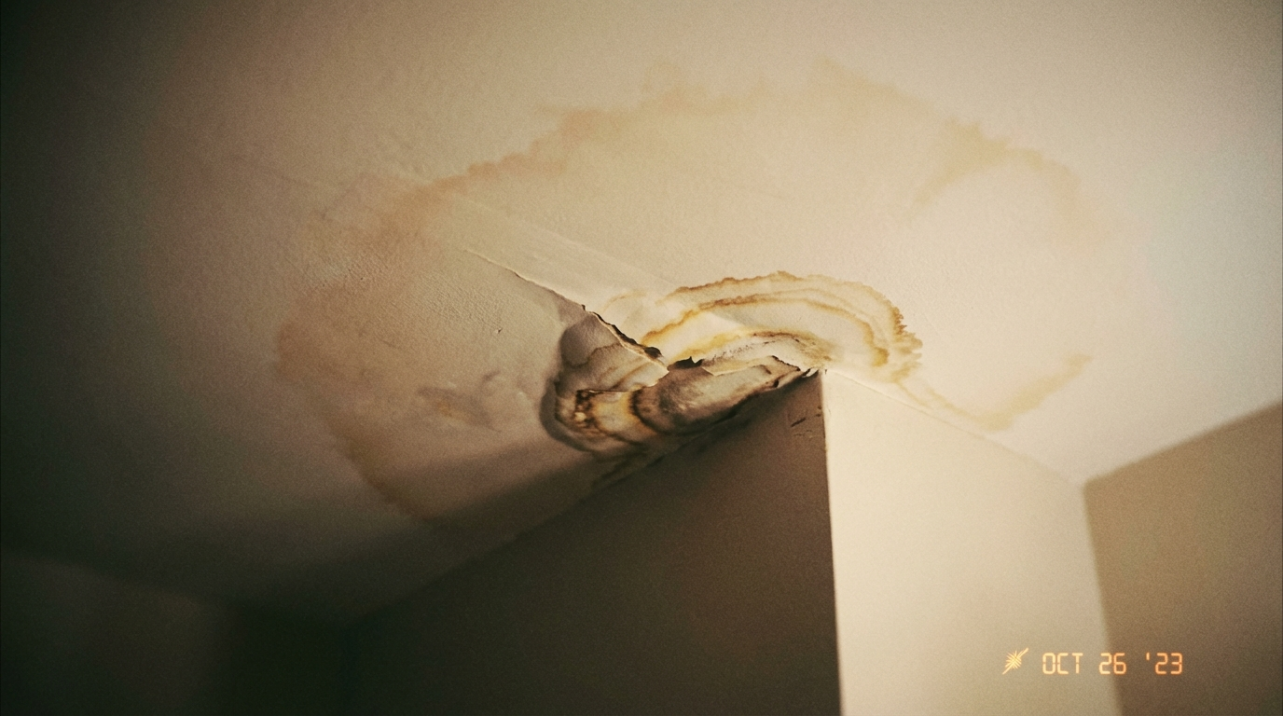
- Water stains on ceilings or walls
- Musty odors in upper rooms
- Peeling paint or bubbling drywall
- Dark spots near ceiling corners or vents
- Increased indoor humidity
These signs often indicate hidden moisture that should be investigated promptly.
Hidden Areas Where Mold Often Develops After Roof Leaks
Many mold problems occur in areas that are not immediately visible.
Attic insulation
Wet insulation may remain damp for long periods and support mold growth.
Ceiling cavities
Water may collect above ceilings and affect framing and drywall.
Air ducts and HVAC systems
Condensation and damp insulation around ducts can allow mold to develop.
Wall cavities near rooflines
Moisture may travel downward into walls before becoming visible.
Professional inspections often reveal moisture in these hidden areas even when ceilings appear dry.
Why DIY Mold Cleanup Often Fails
Some homeowners attempt to clean visible mold using household products. While this may remove surface staining, it rarely addresses the underlying moisture problem.
DIY cleanup often fails because:
- Moisture sources remain untreated
- Mold inside insulation or drywall is not removed
- Hidden mold continues to spread
- Improper cleaning can disperse spores
Professional remediation focuses on removing contamination and correcting moisture conditions to prevent recurrence.
Step-by-Step Mold Inspection Process
A thorough inspection is the first step in effective remediation.
Professionals typically:
- Inspect ceilings, walls, and attic spaces
- Check insulation and framing for moisture
- Measure humidity levels throughout the home
- Use moisture meters to locate hidden damp areas
- Inspect HVAC systems and ductwork near affected areas
In some cases, testing may be recommended to confirm contamination levels or document conditions.
Technicians familiar with Palm Bay homes understand common moisture patterns in coastal Florida buildings and can identify problems efficiently.
Mold Remediation and Repair Process
Once mold is confirmed, remediation follows a structured process designed to restore the home safely.
Containment of affected areas
Work areas may be isolated to prevent spores from spreading.
Removal of contaminated materials
Damaged drywall, insulation, or ceiling materials may need to be removed.
Cleaning and treatment of structural surfaces
Remaining materials are cleaned using professional methods designed to remove contamination safely.
Drying and dehumidification
Industrial drying equipment ensures moisture levels return to safe ranges.
Repairs and restoration
Ceilings, insulation, or roofing components are repaired or replaced as needed.
Palm Bay Mold Removal and other regional specialists often emphasize that repairing the roof and eliminating moisture sources is essential to prevent mold from returning.
Water Damage Restoration After Roof Leaks
Roof leaks often require additional restoration beyond mold remediation.
Water damage restoration may include:
- Moisture detection in structural materials
- Drying attic and ceiling areas
- Cleaning and sanitizing affected surfaces
- Replacing damaged insulation or drywall
These steps help prevent long-term structural damage and recurring mold problems.
HVAC Systems and Mold Risks
Air conditioning systems located in attics or ceiling spaces may be affected by roof leaks. Moisture around ducts or air handlers can allow mold to develop and spread through airflow.
Common HVAC-related contributors include:
- Condensation buildup
- Damp duct insulation
- Clogged condensate drain lines
- Poor airflow or ventilation
Inspecting HVAC systems after roof leaks helps maintain indoor air quality and system efficiency.
How to Prevent Mold After Roof Leaks
Homeowners in Palm Bay can reduce the risk of mold by taking preventive steps:
- Inspect roofs regularly, especially after storms
- Repair leaks promptly
- Replace wet insulation
- Improve attic ventilation
- Maintain HVAC systems and drain lines
- Monitor indoor humidity levels
Early action significantly reduces the likelihood of mold spreading.
Why Local Experience Matters
Mold remediation in coastal Florida requires an understanding of local weather patterns, building materials, and humidity cycles. Homes in Palm Bay, Merritt Island, Titusville, and Viera often face similar environmental challenges.
Professionals familiar with the region understand:
- How humidity affects drying times
- Where hidden moisture commonly accumulates
- Which remediation methods work best in Florida homes
Palm Bay Mold Removal and other experienced local providers often tailor inspections and remediation methods to these local conditions, helping homeowners achieve reliable and lasting results.
A Practical Next Step for Homeowners
If your home has experienced a roof leak and you notice stains, odors, or humidity issues, scheduling a professional inspection is a wise step. Early mold remediation and repairs help prevent structural damage, protect indoor air quality, and reduce long-term repair costs.
With proper inspections, timely roof repairs, and effective drying, homeowners in Palm Bay can keep their homes safe, dry, and mold-resistant—even during Florida’s rainy seasons.