
What Homeowners Should Know: Water Leak Detection in Palm Bay After Roof Leaks
In Palm Bay, roof leaks are a common issue — especially after heavy summer storms, tropical systems, or prolonged rainy periods. Sometimes the damage is obvious, like water dripping from a ceiling light fixture. Other times, the leak is subtle. A faint stain appears. The paint starts bubbling. There’s a slight musty smell in an upstairs hallway.
What many homeowners don’t realize is that by the time interior signs show up, water may have already traveled through insulation, framing, and wall cavities. In Florida’s humid climate, moisture doesn’t dry quickly. Without proper water leak detection, hidden dampness can remain long after the roof has been repaired.
Understanding how leak detection works — and why it matters — can help Palm Bay homeowners prevent long-term structural damage and mold growth.
Why Roof Leaks in Palm Bay Spread Further Than Expected
Palm Bay homes face:
Heavy seasonal rain
High humidity year-round
Strong winds during storms
Long air-conditioning cycles
Warm attic temperatures
When wind-driven rain enters through a small roof gap, water doesn’t necessarily drip straight down. It can travel along rafters, soak into insulation, and spread across ceiling cavities before becoming visible.
Homes in nearby West Melbourne and Malabar experience similar weather exposure, but roof design and attic ventilation influence how water migrates.
Even minor roof leaks can result in widespread hidden moisture.
Early Signs You Should Not Ignore
After a roof leak — even a small one — homeowners should monitor for:
Ceiling stains that grow over time
Peeling or bubbling paint
Soft drywall near rooflines
Musty odors after rain
Warped baseboards on upper floors
Indoor humidity above 60 percent
If a stain reappears after cosmetic repair, moisture may still be present behind the surface.
Ignoring early warning signs increases repair costs later.
What Water Leak Detection Involves
Step 1: Confirm Roof Repairs Are Complete
Leak detection should begin only after the roof issue has been fully repaired.
This may include:
Replacing damaged shingles
Repairing flashing
Sealing roof penetrations
Clearing clogged gutters
If water is still entering the structure, detection efforts will not prevent recurrence.
Palm Bay Mold Removal typically verifies that the roofing system is stable before performing moisture detection in Palm Bay homes.
Step 2: Structured Visual Inspection
A professional inspection includes:
Ceilings and upper walls
Attic insulation
Roof decking
Window frames near rooflines
HVAC ducts in attic spaces
Visible staining provides clues about moisture pathways.
However, staining alone does not reveal how far water has traveled.
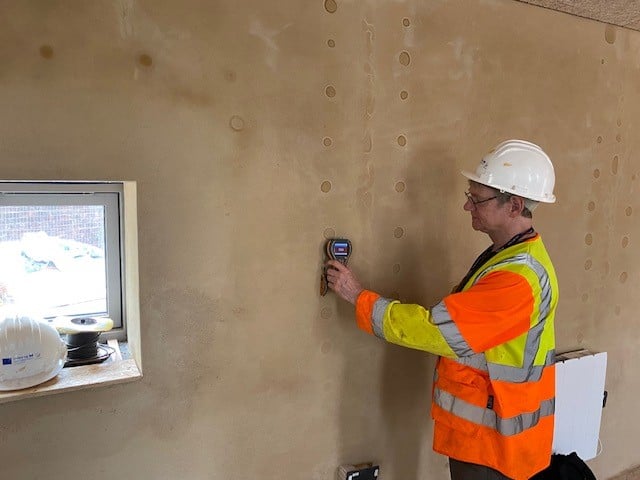
Step 3: Non-Invasive Moisture Scanning
Moisture meters scan drywall and ceilings without opening walls.
This defines wet and dry boundaries.
Surface dryness does not confirm structural dryness.
Mapping moisture spread prevents unnecessary demolition.
Step 4: Thermal Imaging
Thermal imaging cameras detect temperature differences caused by hidden moisture.
This is especially useful for:
Tracing water movement along framing
Identifying damp insulation
Locating moisture behind walls
Thermal imaging narrows down precise areas requiring attention.
Step 5: Pinpoint Moisture Testing
Pin-type meters confirm internal moisture content.
This determines:
If materials can dry naturally
If removal is required
Extent of saturation
Accurate readings guide cost-effective repair decisions.
Why Water Leak Detection Saves Money
Prevents Hidden Structural Damage
Moisture trapped in insulation and framing weakens materials over time.
Early detection preserves structural integrity.
Reduces Mold Risk
Florida’s warm climate allows mold to develop quickly in damp conditions.
If moisture is identified and dried within 24 to 48 hours, contamination risk drops significantly.
Avoids Unnecessary Reconstruction
Detection clarifies exactly which materials are wet.
Homeowners avoid removing unaffected drywall or insulation.
Precision reduces repair costs.
Common Roof Leak Scenarios in Palm Bay
Flashing Failures
Metal flashing around vents and chimneys can loosen after storms.
Small gaps allow rain to enter.
Shingle Damage
Wind may lift shingles without removing them entirely.
Water seeps beneath roofing layers.
Poor Attic Ventilation
Limited airflow traps humid air in attic spaces.
Moisture remains even after roof repair.
Professional detection identifies these contributing factors.
Preventing Future Roof-Related Moisture Problems
Palm Bay homeowners can reduce recurrence by:
Inspecting roofs annually
Checking attic insulation after heavy storms
Ensuring soffit and ridge vents remain clear
Monitoring indoor humidity
Addressing minor stains immediately
Maintaining HVAC systems
Keeping indoor humidity below 60 percent supports drying and prevents condensation buildup.
Routine inspection is far less costly than structural repair.
The Importance of Local Experience
Palm Bay homes range from older properties with limited attic ventilation to newer concrete block construction.
Florida’s humidity creates moisture behavior different from drier regions.
Professionals familiar with Brevard County construction understand common roof designs, slab foundations, and HVAC layouts found throughout Palm Bay neighborhoods.
Palm Bay Mold Removal has worked extensively throughout Palm Bay and surrounding communities, helping homeowners identify and correct roof-leak-related moisture issues.
Protecting Your Home After a Roof Leak
Water leak detection in Palm Bay after roof leaks is not simply about finding a stain. It’s about understanding how water traveled, confirming structural dryness, and preventing long-term damage.
Ignoring early warning signs such as musty odors or expanding ceiling stains increases repair costs over time.
By combining prompt roof repair, professional moisture mapping, controlled drying, and preventative maintenance, homeowners can protect their properties effectively.
In Florida’s humid climate, early detection remains one of the most reliable ways to prevent hidden structural damage after roof leaks.