
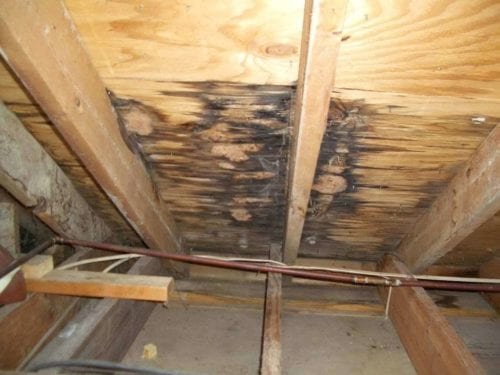
A Local Homeowner Guide: Mold Testing in Merritt Island After Roof Leaks
Roof leaks in Merritt Island homes are rarely dramatic at first. A small flashing gap, lifted shingle, or worn seal around a vent can allow water to enter slowly. You may not notice anything until a faint ceiling stain appears or a musty odor develops after heavy rain.
By the time those signs show up, moisture may already be sitting inside attic insulation or drywall cavities. In Florida’s humid coastal climate, that trapped moisture creates the perfect conditions for mold growth.
Mold testing after a roof leak helps homeowners understand whether contamination is present, how widespread it may be, and what next steps make sense. It replaces guesswork with measurable information — especially important in a moisture-prone environment like Merritt Island.
Why Roof Leaks Lead to Mold So Quickly in Merritt Island
Merritt Island sits between the Indian River Lagoon and the Atlantic coast. The air is humid most of the year, and storms are common.
When roof leaks occur, several factors accelerate mold risk:
Warm attic temperatures
High ambient humidity
Slow natural drying
Saturated insulation
Limited attic ventilation
Even after the roof is repaired, trapped moisture may remain inside the structure.
Homes in nearby Cocoa and Rockledge face similar storm exposure, but attic ventilation design and insulation type can affect how quickly materials dry.
Ignoring hidden dampness often leads to recurring odors or spreading stains.
Early Warning Signs After a Roof Leak
Homeowners should watch for:
Expanding ceiling stains
Peeling paint near roof lines
Musty odors after rain
Soft drywall
Warped trim
Humidity above 60 percent indoors
Sometimes, there are no visible signs at all. Odor may be the only clue.
If a roof leak went unnoticed for days or weeks, mold testing becomes especially valuable.
What Mold Testing Involves After a Roof Leak
Step 1: Structured Visual Inspection
Testing begins with a detailed inspection.
Professionals evaluate:
Ceilings and upper walls
Attic insulation
Roof decking
Framing
HVAC ducts in attic spaces
Dark staining on wood does not automatically confirm mold. Testing clarifies what is present.
Palm Bay Mold Removal often starts Merritt Island roof-leak investigations with moisture detection before sampling begins.
Step 2: Moisture Detection
Moisture meters identify damp materials inside:
Drywall
Framing
Subfloors
Insulation
If materials are still wet, drying must occur before meaningful mold testing.
Surface dryness does not guarantee internal dryness.
Mapping moisture spread helps define affected zones.
Step 3: Air Sampling
Air samples are collected indoors and compared to outdoor control samples.
This determines:
Whether indoor spore levels are elevated
If indoor air differs significantly from outside
Whether hidden mold may be present
Air sampling is especially helpful when growth is not visible.
It provides measurable data for decision-making.
Step 4: Surface Sampling
If staining or spotting is visible, surface samples may be collected.
This identifies:
Type of mold present
Whether staining is active growth or residue
Extent of contamination
Not all discoloration is mold.
Testing confirms what cleaning or remediation steps are appropriate.
Step 5: Laboratory Analysis and Results
Samples are analyzed by a laboratory.
Results typically include:
Spore counts
Mold categories detected
Comparison between indoor and outdoor air
Elevated indoor levels suggest contamination.
Normal readings provide reassurance that moisture did not result in significant growth.
Why Mold Testing Is Important After Roof Repairs
Many homeowners assume that once the roof is fixed, the problem is solved.
However, trapped moisture may remain in:
Attic insulation
Roof decking
Drywall cavities
Ceiling joists
If these materials remain damp for more than 24 to 48 hours, mold may begin developing.
Testing confirms whether further action is necessary.
It prevents both underreaction and overreaction.
Common Roof Leak Scenarios in Merritt Island
Flashing Failures
Metal flashing around vents and chimneys can loosen over time.
Small gaps allow rain to enter during storms.
Shingle Damage
High winds may lift shingles without fully removing them.
Water can seep beneath roofing materials.
Flat or Low-Slope Sections
Some Merritt Island homes have low-slope roof areas where water drains more slowly.
Pooling increases intrusion risk.
Poor Attic Ventilation
Limited airflow traps moisture in attic spaces.
Even small leaks can create persistent dampness.
Professional inspection helps identify these contributing factors.
Preventing Mold After Roof Leaks
Homeowners can reduce future risk by:
Inspecting roofs annually
Checking attic insulation after storms
Monitoring indoor humidity
Ensuring proper attic ventilation
Addressing small ceiling stains immediately
Running dehumidifiers during extended rainy periods
Maintaining indoor humidity below 60 percent reduces mold risk significantly.
Routine inspections after storms prevent small issues from becoming larger repairs.
When Mold Remediation Is Necessary
If testing confirms elevated mold levels and active growth, remediation may be recommended.
Remediation may include:
Selective drywall removal
Insulation replacement
Surface cleaning of framing
HEPA air filtration
Controlled drying
Prompt remediation prevents structural damage and recurring odor issues.
Why Local Experience Matters
Merritt Island homes vary widely in age and roof design. Some older homes have minimal attic ventilation. Newer homes may have tighter building envelopes that trap humidity.
Florida’s coastal climate creates moisture patterns different from drier regions.
Professionals familiar with Brevard County construction understand common roof vulnerabilities and attic airflow challenges in Merritt Island neighborhoods.
Palm Bay Mold Removal has worked extensively throughout Merritt Island and surrounding communities, helping homeowners address roof-leak-related moisture concerns.
Protecting Your Home After a Roof Leak
Mold testing in Merritt Island after roof leaks provides clarity. It determines whether moisture caused contamination and helps guide the next steps.
Ignoring musty odors or minor ceiling stains can lead to larger structural repairs later.
By combining professional inspection, moisture detection, laboratory analysis, and preventative maintenance, homeowners can protect their properties effectively.
In Florida’s humid coastal climate, early mold testing after roof leaks remains one of the most reliable ways to prevent long-term damage.