
Satellite Beach Emergency Water Removal from Poor Ventilation: Complete Guide for Homeowners
When most homeowners in Satellite Beach think about water damage, they picture storms, hurricanes, or plumbing failures. But in many coastal homes, poor ventilation plays a major role in water buildup — especially when combined with Florida’s high humidity.
Inadequate airflow can trap moisture inside walls, ceilings, and attic spaces. Over time, condensation accumulates. During heavy humidity periods or minor leaks, that trapped moisture can escalate into standing water, saturated insulation, and interior damage.
Emergency water removal in these situations is not just about extracting visible water. It’s about correcting the ventilation imbalance that allowed moisture to build up in the first place.
This guide explains how poor ventilation contributes to water issues in Satellite Beach homes, how emergency water removal works, and how to prevent future damage.
Why Poor Ventilation Causes Water Problems in Satellite Beach
Satellite Beach sits directly along the Atlantic coast. Coastal air contains high moisture levels year-round. When homes lack proper ventilation, that moisture has nowhere to go.
Common ventilation-related issues include:
Insufficient attic airflow
Blocked soffit vents
Sealed crawl spaces without dehumidification
Closed interior rooms with limited air circulation
Improper HVAC airflow balance
Garage-mounted air handlers in humid spaces
When warm, humid air gets trapped, condensation forms on cooler surfaces like drywall, ductwork, and windows.
Over time, this moisture accumulates — especially during long stretches of humid weather.
Homes in nearby Indian Harbour Beach and Cocoa Beach experience similar humidity exposure, but ventilation design differences can influence how moisture behaves.
Early Signs of Ventilation-Related Water Issues
Poor ventilation rarely causes sudden flooding. Instead, homeowners may notice:
Persistent musty odors
Ceiling staining without roof leaks
Condensation on vents
Warped trim
Paint bubbling
Indoor humidity consistently above 60 percent
Soft drywall near attic access points
If condensation continues unchecked, moisture can eventually collect in enough volume to require emergency removal.
Ignoring these signs increases restoration costs.
When Emergency Water Removal Becomes Necessary
Emergency water removal may be required when:
Condensation drips accumulate and saturate ceilings
Attic insulation becomes soaked
AC drain pan overflow spreads into flooring
Poor airflow causes pooling near windows
Humidity leads to moisture buildup beneath flooring
In Florida’s climate, once materials are saturated, natural drying is not sufficient.
Immediate action limits structural damage.
Palm Bay Mold Removal frequently responds to Satellite Beach homes where poor ventilation allowed moisture to build up unnoticed for weeks or months.
Step-by-Step Emergency Water Removal Process
Step 1: Identify and Correct the Ventilation Issue
Before water extraction begins, the ventilation source must be addressed.
This may include:
Clearing blocked soffit vents
Adjusting HVAC airflow balance
Repairing attic ventilation
Cleaning condensate drain lines
Installing additional exhaust ventilation
Removing water without correcting airflow will result in recurrence.
Step 2: Water Extraction
Professional extraction equipment removes standing water from:
Tile floors
Carpeted areas
Attic surfaces
Subfloors
Garage spaces
High-powered extraction removes more water than household tools.
Rapid removal reduces saturation depth.
Step 3: Moisture Detection and Mapping
Water rarely stays confined to one location.
Moisture meters measure dampness inside:
Drywall
Framing
Subfloors
Insulation
Ceiling cavities
Thermal imaging may identify hidden condensation pathways.
Mapping helps define wet and dry boundaries.
Surface dryness does not confirm structural dryness.
Step 4: Removal of Saturated Materials
If insulation, drywall, or padding cannot dry effectively, selective removal may be necessary.
Porous materials hold moisture longer in humid coastal climates.
Removing only affected areas limits overall repair costs.
Leaving damp materials increases mold risk.
Step 5: Controlled Drying and Dehumidification
Drying requires:
Commercial dehumidifiers
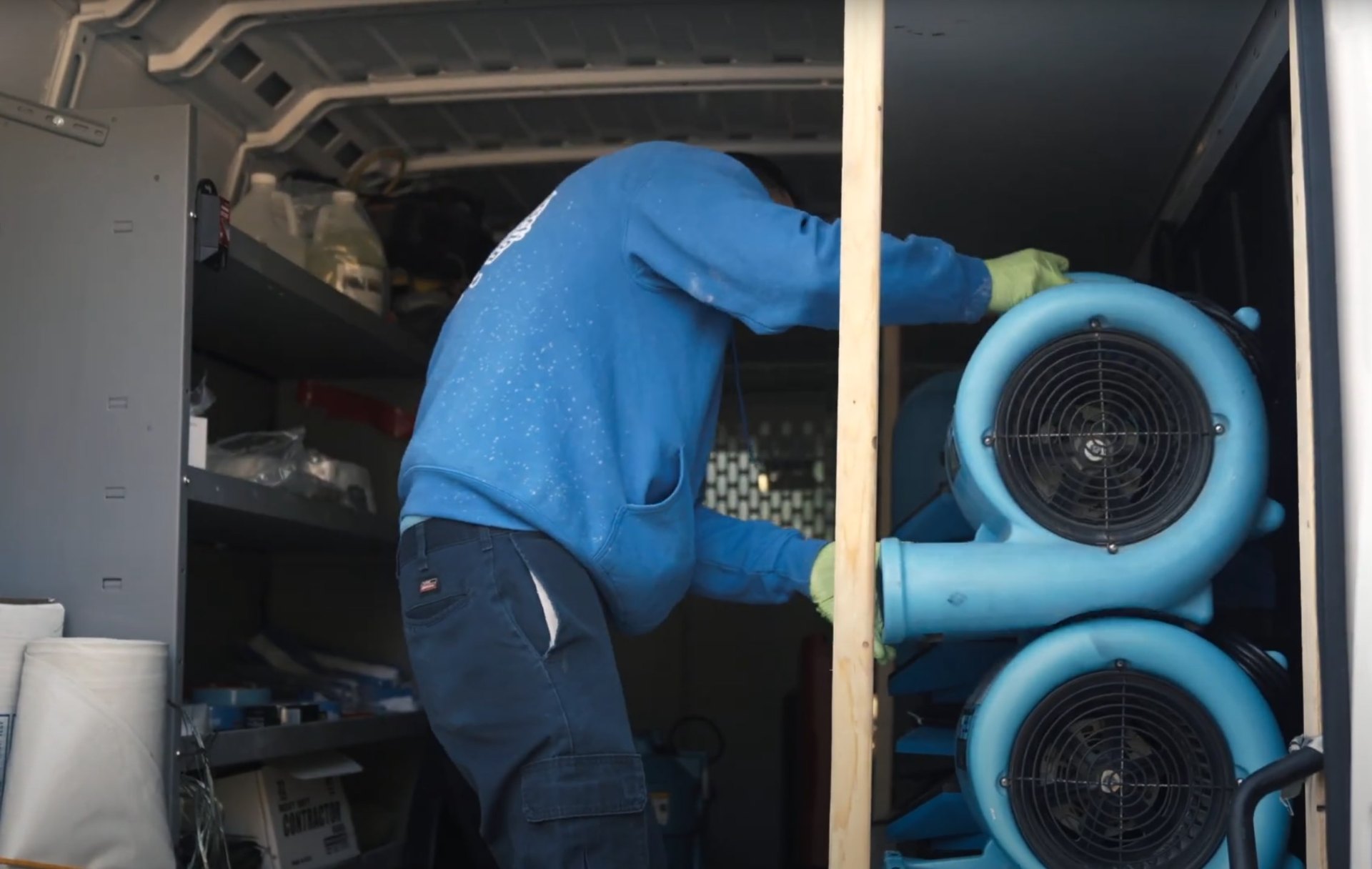
High-velocity air movers
Humidity monitoring
Airflow balancing
In Satellite Beach’s humid air, dehumidification is essential.
Indoor humidity must remain below 60 percent during drying.
Drying may take several days depending on saturation levels.
Verification readings confirm stability before reconstruction begins.
HVAC and Duct Considerations
Poor ventilation often affects HVAC systems.
Inspection should include:
Checking condensate drain lines
Replacing filters
Inspecting duct insulation
Ensuring balanced airflow
Damp duct insulation may require replacement.
Balanced HVAC systems help prevent future condensation.
Preventing Future Ventilation-Related Water Damage
Homeowners can reduce risk by:
Inspecting attic ventilation annually
Keeping soffit vents clear
Monitoring indoor humidity levels
Flushing AC condensate lines regularly
Ensuring bathroom exhaust fans vent outdoors
Balancing supply and return airflow
Using a hygrometer provides real-time humidity tracking.
Maintaining humidity below 60 percent is critical in coastal homes.
Slab Foundations and Ground Moisture
Many Satellite Beach homes are built on slab foundations.
Poor ventilation combined with ground moisture can cause dampness to migrate upward into flooring.
Professional moisture detection confirms slab-related dampness.
Improving exterior drainage and airflow reduces recurrence risk.
Mold Risk from Poor Ventilation
When moisture remains trapped for extended periods, mold growth becomes more likely.
Florida’s warm temperatures accelerate this process.
Emergency water removal combined with ventilation correction significantly reduces contamination risk.
Prompt response limits the need for extensive remediation.
Why Local Experience Matters
Satellite Beach homes face unique environmental pressures. Salt air, heavy coastal humidity, and long cooling seasons create constant moisture stress.
Professionals familiar with Brevard County construction styles understand attic layouts, slab behavior, and HVAC configurations common in Satellite Beach neighborhoods.
Palm Bay Mold Removal has worked extensively throughout Satellite Beach and surrounding communities, addressing ventilation-related moisture issues specific to Florida’s coastal climate.
Protecting Your Coastal Home
Emergency water removal in Satellite Beach from poor ventilation requires more than extracting water. It demands correcting airflow issues, stabilizing humidity, and ensuring structural materials are fully dry.
Ignoring early warning signs such as musty odors or ceiling staining increases repair costs over time.
By combining proper ventilation maintenance, rapid extraction, accurate moisture detection, and controlled drying, homeowners can protect their properties effectively.
In Florida’s humid coastal environment, balanced airflow and proactive moisture management remain the strongest defenses against ventilation-related water damage.