
A Local Homeowner Guide: Mold Removal in Viera in Coastal Homes
Living in Viera offers proximity to the coast, warm weather, and well-designed residential communities. But even though Viera is slightly inland compared to beachside neighborhoods, coastal humidity still plays a major role in how homes perform. High moisture levels, frequent summer storms, and extended air conditioning use create ongoing pressure inside walls, attics, and HVAC systems.
When moisture lingers, mold can develop — often in places homeowners don’t immediately see.
Mold removal in Viera coastal homes is not just about cleaning visible discoloration. It requires identifying moisture sources, correcting ventilation issues, and stabilizing humidity levels long-term. This local guide explains how mold develops in Viera homes, how professional removal works, and what homeowners can do to prevent future problems.
Why Coastal Humidity Affects Viera Homes
Although Viera is not directly on the beach like Cocoa Beach or Satellite Beach, it still experiences high humidity due to its proximity to the Indian River Lagoon and Atlantic weather patterns.
Common moisture contributors include:
Heavy seasonal rain
High year-round humidity
Extended AC operation
Attic heat buildup
Poor ventilation
Minor roof or plumbing leaks
When indoor humidity regularly exceeds 60 percent, moisture can accumulate on cooler surfaces such as drywall, ductwork, and window frames.
Over time, that dampness creates conditions where mold can grow — even without flooding.
Homes in nearby Rockledge and Melbourne experience similar humidity patterns, but each property’s ventilation and construction style influence risk.
Common Areas Where Mold Develops in Viera Homes
Mold often forms in predictable areas.
Attics with limited ventilation
Behind bathroom walls
Under kitchen sinks
Around AC air handlers
Inside closet corners
Near exterior-facing walls
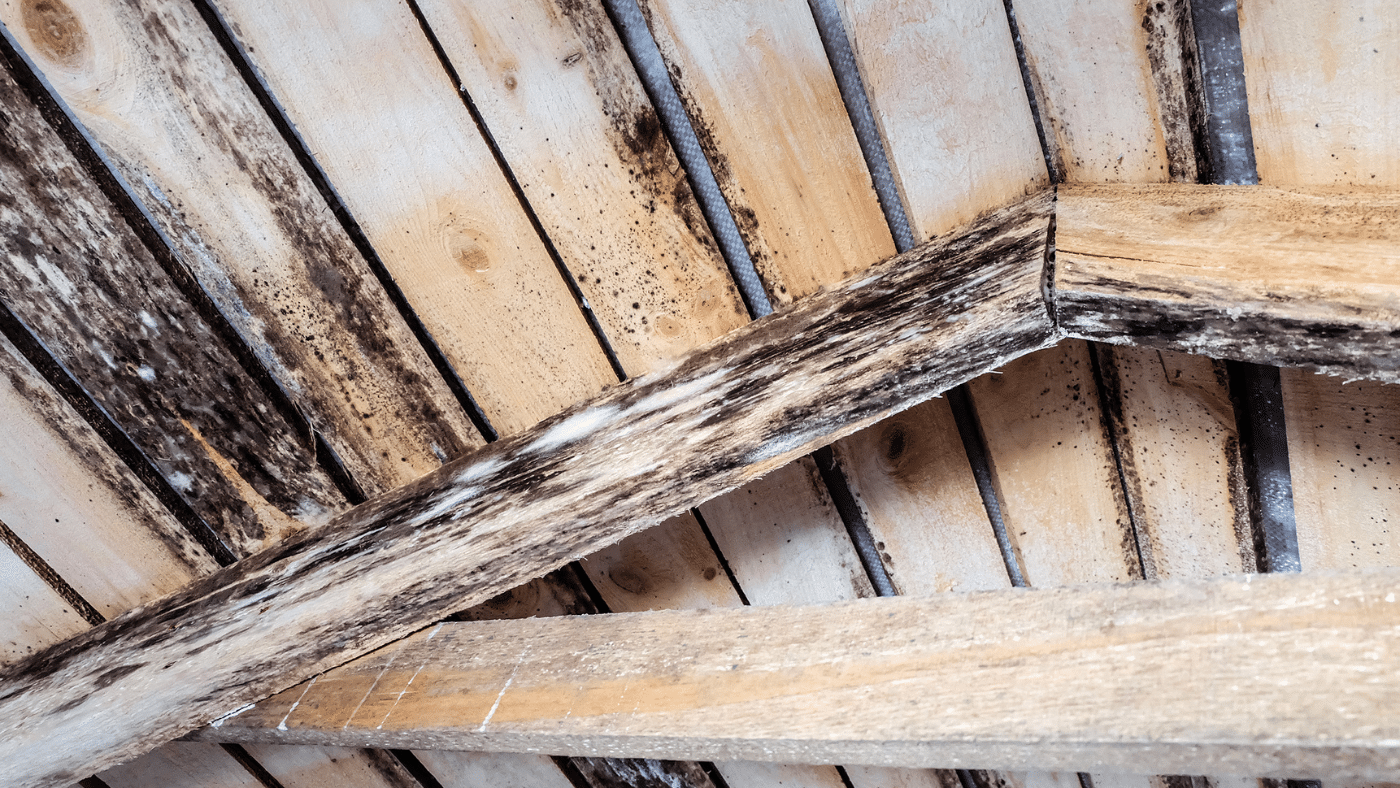
Attics are especially vulnerable. During summer, attic temperatures rise significantly. If ventilation is inadequate, condensation may form when warm humid air meets cooler surfaces.
In slab foundation homes, minor plumbing leaks can cause moisture to migrate upward into lower drywall sections.
Early Warning Signs You Should Not Ignore
Mold growth usually begins quietly.
Watch for:
Musty or earthy odors
Dark spots along drywall seams
Peeling paint
Soft baseboards
Condensation around vents
Persistent indoor humidity
If odors intensify when the AC runs, duct-related moisture may be present.
Addressing early signs reduces the scope of remediation.
Step 1: Identify and Stop the Moisture Source
Before mold removal begins, the moisture source must be corrected.
This may involve:
Repairing roof leaks
Fixing plumbing failures
Clearing clogged condensate lines
Improving attic ventilation
Sealing exterior penetrations
Removing mold without addressing moisture leads to recurrence.
Palm Bay Mold Removal often begins projects in Viera with detailed moisture detection to confirm the source is fully resolved.
Step 2: Professional Mold Inspection
Inspection determines the extent of contamination.
This may include:
Visual assessment
Moisture meter readings
Thermal imaging
Attic evaluation
HVAC inspection
Surface discoloration rarely shows the full scope of damage.
Hidden moisture inside walls or insulation must be identified before removal begins.
Step 3: Containment of Affected Areas
Containment prevents mold spores from spreading during removal.
Plastic sheeting isolates contaminated rooms. Negative air machines create controlled airflow.
HEPA filtration units help maintain indoor air quality.
Containment is especially important in open floor plan homes common in Viera communities.
Step 4: Removal of Contaminated Materials
Porous materials heavily affected by mold often require removal.
These may include:
Drywall
Insulation
Carpet padding
Baseboards
Cabinet backing
Structural framing can often be cleaned if contamination is surface-level.
Complete removal prevents moisture from remaining trapped inside building materials.
Step 5: Cleaning and Surface Treatment
After removal, structural components are cleaned thoroughly.
HEPA vacuuming removes residual particles.
Targeted cleaning methods are applied where appropriate.
Odors often improve significantly once contaminated materials are eliminated.
Step 6: Structural Drying and Humidity Stabilization
Drying is critical in Florida’s climate.
Commercial dehumidifiers and air movers reduce ambient moisture.
Humidity must remain below 60 percent during and after remediation.
Moisture readings confirm when materials are stable before rebuilding begins.
Rushing reconstruction can trap residual moisture.
HVAC and Duct Considerations in Coastal Homes
Air conditioning systems play a major role in humidity control.
Inspection may include:
Clearing condensate drain lines
Replacing air filters
Checking duct insulation
Ensuring airflow balance
Damp duct insulation may require replacement.
Maintaining proper airflow reduces condensation buildup.
Routine HVAC maintenance supports long-term moisture control.
Slab Foundations and Ground Moisture
Many Viera homes sit on slab foundations.
During heavy rain, groundwater levels may rise.
Moisture can migrate upward into flooring and lower drywall sections.
Professional moisture detection confirms slab-related dampness.
Improving exterior drainage reduces recurrence risk.
Preventing Future Mold in Viera Coastal Homes
Prevention requires ongoing maintenance.
Inspect roofing annually.
Replace aging plumbing components.
Maintain HVAC systems regularly.
Monitor indoor humidity levels.
Improve attic ventilation.
Inspect attics after heavy storms.
Using a hygrometer helps track humidity levels year-round.
Addressing small leaks immediately prevents larger remediation projects later.
Why Local Experience Matters
Viera homes are built in planned communities, but even newer construction can experience humidity-related mold issues if ventilation is unbalanced.
Florida’s climate creates moisture patterns different from inland states.
Professionals familiar with Brevard County construction styles understand common attic layouts, slab foundation behavior, and HVAC configurations in Viera homes.
Palm Bay Mold Removal has worked extensively throughout Viera and surrounding communities, addressing mold concerns tied directly to Florida’s humid coastal environment.
Protecting Your Home Long-Term
Mold removal in Viera coastal homes requires more than surface cleaning. It demands accurate moisture detection, controlled removal, and humidity stabilization.
Ignoring early warning signs often leads to recurring problems and higher repair costs.
By combining professional inspection, structured remediation, ventilation improvements, and routine maintenance, homeowners can protect their properties effectively.
In Florida’s humid climate, proactive moisture management remains the most reliable defense against mold growth.