
Viera Air Duct Cleaning After Storm Damage: A Local Homeowner Guide
Storm season in Viera can leave behind more than fallen branches and roof repairs. Heavy rain, wind-driven moisture, and extended humidity often impact areas of the home that are not immediately visible — especially attic spaces where ductwork is installed.
After a significant storm event, many homeowners focus on drywall, flooring, and exterior damage. But HVAC duct systems may also be affected, particularly if roof leaks occurred or attic humidity spiked during the storm.
Air duct cleaning after storm damage is not always required — but inspection should never be skipped. This guide explains how storms affect duct systems in Viera homes, when cleaning is appropriate, and how to prevent recurring problems in Florida’s humid climate.
Why Storm Damage Impacts Duct Systems in Viera
Viera experiences strong thunderstorms, tropical systems, and occasional hurricane conditions. Even without flooding, wind-driven rain can enter attic spaces through:
Damaged shingles
Compromised flashing
Roof vent penetrations
Soffit openings
Gutter overflow
Most residential duct systems in Viera run through attic spaces. If moisture enters the attic, duct insulation can absorb humidity quickly.
In Florida’s climate, natural drying is slow — especially when outdoor humidity remains elevated after a storm.
Homes in nearby Rockledge and Melbourne face similar weather patterns, but each property’s attic ventilation and duct layout influence how moisture affects the system.
Early Signs Ducts May Be Affected After a Storm
Storm-related duct issues often develop gradually.
Homeowners should watch for:
Musty odors when the AC runs
Visible dust rings around vents
Dark staining near ceiling registers
Uneven airflow in certain rooms
Elevated indoor humidity
If airflow feels weaker in certain areas, insulation inside ducts may have absorbed moisture and begun sagging.
Even minor roof leaks can impact attic-installed duct systems.
Step 1: Confirm Roof and Structural Repairs Are Complete
Before duct cleaning begins, storm-related roof damage must be fully repaired.
Active leaks allow continued moisture intrusion.
Inspection should confirm:
Roofing materials are secure
Flashing is sealed
Attic penetrations are closed
Gutters are functioning
Without correcting the moisture source, duct cleaning will not provide lasting results.
Palm Bay Mold Removal often begins post-storm duct evaluations in Viera with attic moisture detection to confirm stabilization.
Step 2: Attic and Duct Inspection
Inspection focuses on identifying whether moisture impacted duct insulation or internal surfaces.
This includes checking:
Flexible duct insulation
Connection points and seams
Evidence of sagging duct runs
Water staining
HVAC air handler components
Moisture meters may be used to determine whether insulation remains damp.
Thermal imaging can reveal hidden moisture pockets in attic spaces.
Surface dryness does not confirm internal dryness.
Step 3: Airflow Assessment
Storm damage can indirectly impact airflow.
If insulation absorbs moisture, ducts may sag or partially collapse.
Airflow testing determines whether:
Supply vents are balanced
Return airflow is adequate
HVAC components are functioning efficiently
Restricted airflow increases condensation risk and strains the system.
Correcting airflow imbalance reduces recurrence risk.
Step 4: Containment and Cleaning Process
If inspection confirms contamination or debris buildup, professional cleaning may be recommended.
The cleaning process typically includes:
Sealing duct sections
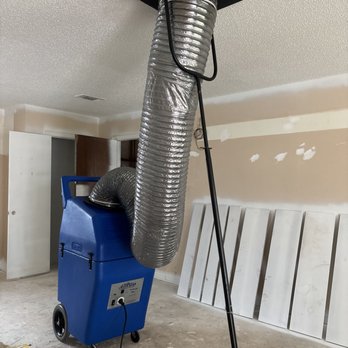
Using high-powered negative air machines
Agitating interior duct surfaces
Extracting accumulated debris
Cleaning supply and return vents
Containment measures protect unaffected areas during cleaning.
HEPA filtration equipment may operate to maintain indoor air stability.
Cleaning restores airflow and removes contaminants.
Step 5: Duct Insulation Repair or Replacement
Cleaning alone may not resolve storm-related damage.
If insulation is saturated or deteriorated, replacement may be necessary.
Damaged insulation can trap moisture against duct surfaces, increasing future condensation risk.
Replacing compromised sections improves system efficiency and prevents recurring problems.
Step 6: HVAC and Drain Line Inspection
Storm debris and high humidity can affect HVAC components.
Inspection should include:
Clearing condensate drain lines
Replacing air filters
Checking drain pans
Ensuring blower compartments are dry
Proper drainage prevents water from accumulating inside the air handler.
Maintaining airflow supports long-term system stability.
Preventing Future Storm-Related Duct Problems
Proactive maintenance reduces risk in Viera’s storm-prone environment.
Inspect roofs annually.
Seal attic penetrations properly.
Maintain gutter systems.
Replace HVAC filters regularly.
Monitor indoor humidity levels.
Inspect attic duct runs after heavy storms.
Improving attic ventilation reduces heat and moisture buildup.
Maintaining humidity below 60 percent minimizes condensation risk.
When Duct Replacement Is Necessary
In severe cases, cleaning may not be sufficient.
Replacement may be recommended if:
Flexible ducts are heavily water-damaged
Insulation has collapsed
Metal ducts show corrosion
Air leaks are present
Attempting to salvage severely compromised ducts often leads to recurring issues.
Professional evaluation ensures cost-effective decisions.
Why Local Experience Matters
Viera homes vary in age and construction style. Many newer homes have tightly sealed envelopes, which can trap humidity if ventilation is not balanced properly.
Florida’s climate creates moisture patterns different from inland states.
Professionals familiar with Brevard County construction understand common attic layouts and duct configurations in Viera subdivisions.
Palm Bay Mold Removal has worked extensively throughout Viera and surrounding communities, addressing duct concerns specific to Florida’s storm conditions.
Protecting Indoor Comfort After Storms
Air duct cleaning after storm damage in Viera is part of a broader recovery process.
Ignoring early warning signs such as musty odors or reduced airflow can lead to increased maintenance costs and reduced HVAC efficiency.
By combining professional inspection, targeted cleaning, insulation repair, and proactive maintenance, homeowners can protect indoor comfort year-round.
In Florida’s humid climate, post-storm duct inspection is one of the most effective ways to prevent long-term moisture-related issues.